Balayage method
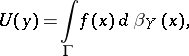
A method for solving the Dirichlet problem for the Laplace equation, developed by H. Poincaré ([1], [2], see also [4]), which will now be described. Let <img align="absmiddle" border="0" src="https://www.encyclopediaofmath.org/legacyimages/b/b015/b015110/b0151101.png" /> be a bounded domain of the Euclidean space <img align="absmiddle" border="0" src="https://www.encyclopediaofmath.org/legacyimages/b/b015/b015110/b0151102.png" />, <img align="absmiddle" border="0" src="https://www.encyclopediaofmath.org/legacyimages/b/b015/b015110/b0151103.png" />, let <img align="absmiddle" border="0" src="https://www.encyclopediaofmath.org/legacyimages/b/b015/b015110/b0151104.png" /> be the boundary of <img align="absmiddle" border="0" src="https://www.encyclopediaofmath.org/legacyimages/b/b015/b015110/b0151105.png" />. Let <img align="absmiddle" border="0" src="https://www.encyclopediaofmath.org/legacyimages/b/b015/b015110/b0151106.png" /> be the Dirac measure concentrated at the point <img align="absmiddle" border="0" src="https://www.encyclopediaofmath.org/legacyimages/b/b015/b015110/b0151107.png" />, let <img align="absmiddle" border="0" src="https://www.encyclopediaofmath.org/legacyimages/b/b015/b015110/b0151108.png" /> be the Newton potential of the measure <img align="absmiddle" border="0" src="https://www.encyclopediaofmath.org/legacyimages/b/b015/b015110/b0151109.png" /> for <img align="absmiddle" border="0" src="https://www.encyclopediaofmath.org/legacyimages/b/b015/b015110/b01511010.png" />, or the logarithmic potential of the measure <img align="absmiddle" border="0" src="https://www.encyclopediaofmath.org/legacyimages/b/b015/b015110/b01511011.png" /> if <img align="absmiddle" border="0" src="https://www.encyclopediaofmath.org/legacyimages/b/b015/b015110/b01511012.png" />. A balayage (or sweeping) of the measure <img align="absmiddle" border="0" src="https://www.encyclopediaofmath.org/legacyimages/b/b015/b015110/b01511013.png" /> from the domain <img align="absmiddle" border="0" src="https://www.encyclopediaofmath.org/legacyimages/b/b015/b015110/b01511014.png" /> to the boundary <img align="absmiddle" border="0" src="https://www.encyclopediaofmath.org/legacyimages/b/b015/b015110/b01511015.png" /> is a measure <img align="absmiddle" border="0" src="https://www.encyclopediaofmath.org/legacyimages/b/b015/b015110/b01511016.png" /> on <img align="absmiddle" border="0" src="https://www.encyclopediaofmath.org/legacyimages/b/b015/b015110/b01511017.png" /> whose potential <img align="absmiddle" border="0" src="https://www.encyclopediaofmath.org/legacyimages/b/b015/b015110/b01511018.png" /> coincides outside <img align="absmiddle" border="0" src="https://www.encyclopediaofmath.org/legacyimages/b/b015/b015110/b01511019.png" /> with <img align="absmiddle" border="0" src="https://www.encyclopediaofmath.org/legacyimages/b/b015/b015110/b01511020.png" /> and is not larger than <img align="absmiddle" border="0" src="https://www.encyclopediaofmath.org/legacyimages/b/b015/b015110/b01511021.png" /> inside <img align="absmiddle" border="0" src="https://www.encyclopediaofmath.org/legacyimages/b/b015/b015110/b01511022.png" />; this measure <img align="absmiddle" border="0" src="https://www.encyclopediaofmath.org/legacyimages/b/b015/b015110/b01511023.png" /> is unique and coincides with the harmonic measure on <img align="absmiddle" border="0" src="https://www.encyclopediaofmath.org/legacyimages/b/b015/b015110/b01511024.png" /> for the point <img align="absmiddle" border="0" src="https://www.encyclopediaofmath.org/legacyimages/b/b015/b015110/b01511025.png" />. The balayage of an arbitrary positive measure, concentrated on <img align="absmiddle" border="0" src="https://www.encyclopediaofmath.org/legacyimages/b/b015/b015110/b01511026.png" />, is defined in a similar manner. If <img align="absmiddle" border="0" src="https://www.encyclopediaofmath.org/legacyimages/b/b015/b015110/b01511027.png" /> is a sphere, the density of the mass distribution <img align="absmiddle" border="0" src="https://www.encyclopediaofmath.org/legacyimages/b/b015/b015110/b01511028.png" />, i.e. the derivative of the measure <img align="absmiddle" border="0" src="https://www.encyclopediaofmath.org/legacyimages/b/b015/b015110/b01511029.png" />, is identical with the Poisson kernel (cf. Poisson integral). In general, if the boundary <img align="absmiddle" border="0" src="https://www.encyclopediaofmath.org/legacyimages/b/b015/b015110/b01511030.png" /> is sufficiently smooth, the measure <img align="absmiddle" border="0" src="https://www.encyclopediaofmath.org/legacyimages/b/b015/b015110/b01511031.png" /> is absolutely continuous, and the density of the mass distribution <img align="absmiddle" border="0" src="https://www.encyclopediaofmath.org/legacyimages/b/b015/b015110/b01511032.png" /> coincides with the normal derivative of the Green function for <img align="absmiddle" border="0" src="https://www.encyclopediaofmath.org/legacyimages/b/b015/b015110/b01511033.png" />. The measure <img align="absmiddle" border="0" src="https://www.encyclopediaofmath.org/legacyimages/b/b015/b015110/b01511034.png" /> serves to write down the solution of the Dirichlet problem as the so-called formula of de la Vallée-Poussin:
| <img align="absmiddle" border="0" src="https://www.encyclopediaofmath.org/legacyimages/b/b015/b015110/b01511035.png" /> |
where <img align="absmiddle" border="0" src="https://www.encyclopediaofmath.org/legacyimages/b/b015/b015110/b01511036.png" /> is a function defined on <img align="absmiddle" border="0" src="https://www.encyclopediaofmath.org/legacyimages/b/b015/b015110/b01511037.png" />.
In his original publication on the balayage method, Poincaré began by demonstrating the geometrical construction of the process for a sphere. Then, basing himself on Harnack's theorems (cf. Harnack theorem) and on the fact that it is possible to exhaust the domain <img align="absmiddle" border="0" src="https://www.encyclopediaofmath.org/legacyimages/b/b015/b015110/b01511038.png" /> by a sequence of spheres <img align="absmiddle" border="0" src="https://www.encyclopediaofmath.org/legacyimages/b/b015/b015110/b01511039.png" />, he constructed an infinite sequence of potentials <img align="absmiddle" border="0" src="https://www.encyclopediaofmath.org/legacyimages/b/b015/b015110/b01511040.png" /> in which each potential <img align="absmiddle" border="0" src="https://www.encyclopediaofmath.org/legacyimages/b/b015/b015110/b01511041.png" /> is obtained from the preceding one, <img align="absmiddle" border="0" src="https://www.encyclopediaofmath.org/legacyimages/b/b015/b015110/b01511042.png" />, by the balayage method of moving the masses from the domain <img align="absmiddle" border="0" src="https://www.encyclopediaofmath.org/legacyimages/b/b015/b015110/b01511043.png" /> to its boundary, and which reduces to solving the Dirichlet problem for a sufficiently smooth domain <img align="absmiddle" border="0" src="https://www.encyclopediaofmath.org/legacyimages/b/b015/b015110/b01511044.png" /> (for a detailed discussion of the conditions of applicability of the balayage method, see [3]).
In modern potential theory [5], [6] the balayage problem is treated as an independent problem, resembling the Dirichlet problem, and it turns out that the balayaged measure can be considered on sets of a general nature. For instance, the balayage problem in its simplest form is to find, for a given mass distribution <img align="absmiddle" border="0" src="https://www.encyclopediaofmath.org/legacyimages/b/b015/b015110/b01511045.png" /> inside a closed domain <img align="absmiddle" border="0" src="https://www.encyclopediaofmath.org/legacyimages/b/b015/b015110/b01511046.png" />, a mass distribution <img align="absmiddle" border="0" src="https://www.encyclopediaofmath.org/legacyimages/b/b015/b015110/b01511047.png" /> on <img align="absmiddle" border="0" src="https://www.encyclopediaofmath.org/legacyimages/b/b015/b015110/b01511048.png" /> such that the potentials of both distributions coincide outside <img align="absmiddle" border="0" src="https://www.encyclopediaofmath.org/legacyimages/b/b015/b015110/b01511049.png" />. If the boundary <img align="absmiddle" border="0" src="https://www.encyclopediaofmath.org/legacyimages/b/b015/b015110/b01511050.png" /> is smooth, the solution of the balayage problem for <img align="absmiddle" border="0" src="https://www.encyclopediaofmath.org/legacyimages/b/b015/b015110/b01511051.png" /> will be an absolutely continuous measure <img align="absmiddle" border="0" src="https://www.encyclopediaofmath.org/legacyimages/b/b015/b015110/b01511052.png" />. Its density, or the derivative <img align="absmiddle" border="0" src="https://www.encyclopediaofmath.org/legacyimages/b/b015/b015110/b01511053.png" />, <img align="absmiddle" border="0" src="https://www.encyclopediaofmath.org/legacyimages/b/b015/b015110/b01511054.png" />, may be written down in terms of the Green function <img align="absmiddle" border="0" src="https://www.encyclopediaofmath.org/legacyimages/b/b015/b015110/b01511055.png" /> of the domain <img align="absmiddle" border="0" src="https://www.encyclopediaofmath.org/legacyimages/b/b015/b015110/b01511056.png" /> in the form
| <img align="absmiddle" border="0" src="https://www.encyclopediaofmath.org/legacyimages/b/b015/b015110/b01511057.png" /> | (*) |
where <img align="absmiddle" border="0" src="https://www.encyclopediaofmath.org/legacyimages/b/b015/b015110/b01511058.png" /> is the derivative of <img align="absmiddle" border="0" src="https://www.encyclopediaofmath.org/legacyimages/b/b015/b015110/b01511059.png" /> in the direction of the interior normal to <img align="absmiddle" border="0" src="https://www.encyclopediaofmath.org/legacyimages/b/b015/b015110/b01511060.png" /> at the point <img align="absmiddle" border="0" src="https://www.encyclopediaofmath.org/legacyimages/b/b015/b015110/b01511061.png" />. Inside the domain <img align="absmiddle" border="0" src="https://www.encyclopediaofmath.org/legacyimages/b/b015/b015110/b01511062.png" /> the potentials satisfy the inequality <img align="absmiddle" border="0" src="https://www.encyclopediaofmath.org/legacyimages/b/b015/b015110/b01511063.png" />, i.e. balayage inside the domain results in a decrease of the potential. If <img align="absmiddle" border="0" src="https://www.encyclopediaofmath.org/legacyimages/b/b015/b015110/b01511064.png" /> is the Dirac measure at the point <img align="absmiddle" border="0" src="https://www.encyclopediaofmath.org/legacyimages/b/b015/b015110/b01511065.png" />, formula (*) yields <img align="absmiddle" border="0" src="https://www.encyclopediaofmath.org/legacyimages/b/b015/b015110/b01511066.png" />, i.e. the normal derivative of the Green function is the density of the measure obtained by balayage of the unit mass concentrated at the point <img align="absmiddle" border="0" src="https://www.encyclopediaofmath.org/legacyimages/b/b015/b015110/b01511067.png" />. Generalization of formula (*) yields an expression for the balayaged measure <img align="absmiddle" border="0" src="https://www.encyclopediaofmath.org/legacyimages/b/b015/b015110/b01511068.png" /> of an arbitrary Borel set <img align="absmiddle" border="0" src="https://www.encyclopediaofmath.org/legacyimages/b/b015/b015110/b01511069.png" /> for an arbitrary domain <img align="absmiddle" border="0" src="https://www.encyclopediaofmath.org/legacyimages/b/b015/b015110/b01511070.png" />:
| <img align="absmiddle" border="0" src="https://www.encyclopediaofmath.org/legacyimages/b/b015/b015110/b01511071.png" /> |
where <img align="absmiddle" border="0" src="https://www.encyclopediaofmath.org/legacyimages/b/b015/b015110/b01511072.png" /> is the harmonic measure of <img align="absmiddle" border="0" src="https://www.encyclopediaofmath.org/legacyimages/b/b015/b015110/b01511073.png" /> with respect to the domain <img align="absmiddle" border="0" src="https://www.encyclopediaofmath.org/legacyimages/b/b015/b015110/b01511074.png" /> at the point <img align="absmiddle" border="0" src="https://www.encyclopediaofmath.org/legacyimages/b/b015/b015110/b01511075.png" />.
If <img align="absmiddle" border="0" src="https://www.encyclopediaofmath.org/legacyimages/b/b015/b015110/b01511076.png" /> is an arbitrary compact set in <img align="absmiddle" border="0" src="https://www.encyclopediaofmath.org/legacyimages/b/b015/b015110/b01511077.png" /> and <img align="absmiddle" border="0" src="https://www.encyclopediaofmath.org/legacyimages/b/b015/b015110/b01511078.png" /> is a bounded positive Borel measure, the balayage (or sweeping) of the measure <img align="absmiddle" border="0" src="https://www.encyclopediaofmath.org/legacyimages/b/b015/b015110/b01511079.png" /> onto the compact set <img align="absmiddle" border="0" src="https://www.encyclopediaofmath.org/legacyimages/b/b015/b015110/b01511080.png" /> is a measure <img align="absmiddle" border="0" src="https://www.encyclopediaofmath.org/legacyimages/b/b015/b015110/b01511081.png" /> on <img align="absmiddle" border="0" src="https://www.encyclopediaofmath.org/legacyimages/b/b015/b015110/b01511082.png" /> such that <img align="absmiddle" border="0" src="https://www.encyclopediaofmath.org/legacyimages/b/b015/b015110/b01511083.png" /> everywhere, and such that quasi-everywhere on <img align="absmiddle" border="0" src="https://www.encyclopediaofmath.org/legacyimages/b/b015/b015110/b01511084.png" />, i.e. with the possible exception of a set of points of exterior capacity zero, <img align="absmiddle" border="0" src="https://www.encyclopediaofmath.org/legacyimages/b/b015/b015110/b01511085.png" />. Such a formulation of the balayage problem, which is more general than balayage from a domain, may also be extended to potentials of other types, e.g. Bessel potentials or Riesz potentials (cf. Bessel potential; Riesz potential). Balayage of measures onto arbitrary Borel sets <img align="absmiddle" border="0" src="https://www.encyclopediaofmath.org/legacyimages/b/b015/b015110/b01511086.png" /> is also considered.
The problem of balayage for superharmonic functions (cf. Superharmonic function) has been similarly formulated. Let <img align="absmiddle" border="0" src="https://www.encyclopediaofmath.org/legacyimages/b/b015/b015110/b01511087.png" /> be a non-negative superharmonic function on a domain <img align="absmiddle" border="0" src="https://www.encyclopediaofmath.org/legacyimages/b/b015/b015110/b01511088.png" />. The balayage of the function <img align="absmiddle" border="0" src="https://www.encyclopediaofmath.org/legacyimages/b/b015/b015110/b01511089.png" /> onto a compact set <img align="absmiddle" border="0" src="https://www.encyclopediaofmath.org/legacyimages/b/b015/b015110/b01511090.png" /> is the largest superharmonic function <img align="absmiddle" border="0" src="https://www.encyclopediaofmath.org/legacyimages/b/b015/b015110/b01511091.png" /> such that 1) its associated measure is concentrated on <img align="absmiddle" border="0" src="https://www.encyclopediaofmath.org/legacyimages/b/b015/b015110/b01511092.png" />; 2) <img align="absmiddle" border="0" src="https://www.encyclopediaofmath.org/legacyimages/b/b015/b015110/b01511093.png" /> everywhere; and 3) <img align="absmiddle" border="0" src="https://www.encyclopediaofmath.org/legacyimages/b/b015/b015110/b01511094.png" /> quasi-everywhere on <img align="absmiddle" border="0" src="https://www.encyclopediaofmath.org/legacyimages/b/b015/b015110/b01511095.png" />.
In abstract potential theory (cf. Potential theory, abstract) the balayage problem in both its formulations is solved for sets <img align="absmiddle" border="0" src="https://www.encyclopediaofmath.org/legacyimages/b/b015/b015110/b01511096.png" /> in an arbitrary harmonic space <img align="absmiddle" border="0" src="https://www.encyclopediaofmath.org/legacyimages/b/b015/b015110/b01511097.png" />, i.e. in a locally compact topological space <img align="absmiddle" border="0" src="https://www.encyclopediaofmath.org/legacyimages/b/b015/b015110/b01511098.png" /> which permits the isolation of an axiomatically defined sheaf of harmonic functions. This axiomatic approach makes it possible to consider the balayage problem for potentials connected with partial differential equations of a more general nature [7]. For the balayage method in stochastics cf. [8].
References
| [1] | H. Poincaré, "Sur les équations aux dérivees partielles de la physique mathématique" Amer. J. Math. , 12 : 3 (1890) pp. 211–294 |
| [2] | H. Poincaré, "Theorie du potentiel Newtonien" , Paris (1899) |
| [3] | Ch.J. de la Vallée-Poussin, "Le potentiel logarithmique, balayage et répresentation conforme" , Gauthier-Villars (1949) |
| [4] | L.N. Sretenskii, "Theory of the Newton potential" , Moscow-Leningrad (1946) (In Russian) |
| [5] | N.S. Landkof, "Foundations of modern potential theory" , Springer (1972) (Translated from Russian) |
| [6] | M. Brélot, "Eléments de la théorie classique du potentiel" , Sorbonne Univ. Centre Doc. Univ. , Paris (1965) |
| [7] | C. Constantinescu, A. Cornea, "Potential theory on harmonic spaces" , Springer (1972) |
| [8] | P.A. Meyer, "Probability and potentials" , Blaisdell (1966) |
Comments
Balayage is also referred to as sweeping of a measure. A classic reference for problems in potential theory related to Green functions is [a1].
In probabilistic potential theory the swept measure <img align="absmiddle" border="0" src="https://www.encyclopediaofmath.org/legacyimages/b/b015/b015110/b01511099.png" /> on <img align="absmiddle" border="0" src="https://www.encyclopediaofmath.org/legacyimages/b/b015/b015110/b015110100.png" /> of a probability measure <img align="absmiddle" border="0" src="https://www.encyclopediaofmath.org/legacyimages/b/b015/b015110/b015110101.png" /> concentrated on <img align="absmiddle" border="0" src="https://www.encyclopediaofmath.org/legacyimages/b/b015/b015110/b015110102.png" /> turns out to be the distribution of a standard Brownian motion on <img align="absmiddle" border="0" src="https://www.encyclopediaofmath.org/legacyimages/b/b015/b015110/b015110103.png" />, which has initial distribution <img align="absmiddle" border="0" src="https://www.encyclopediaofmath.org/legacyimages/b/b015/b015110/b015110104.png" />, at the moment of first hitting <img align="absmiddle" border="0" src="https://www.encyclopediaofmath.org/legacyimages/b/b015/b015110/b015110105.png" />.
Another link with probabilistic potential theory is provided by the fact that, for each sufficiently nice harmonic space, there exists a Hunt process <img align="absmiddle" border="0" src="https://www.encyclopediaofmath.org/legacyimages/b/b015/b015110/b015110106.png" /> whose excessive functions are the positive hyper-harmonic functions. If <img align="absmiddle" border="0" src="https://www.encyclopediaofmath.org/legacyimages/b/b015/b015110/b015110107.png" /> denotes the hitting distribution of a compact set <img align="absmiddle" border="0" src="https://www.encyclopediaofmath.org/legacyimages/b/b015/b015110/b015110108.png" />, then <img align="absmiddle" border="0" src="https://www.encyclopediaofmath.org/legacyimages/b/b015/b015110/b015110109.png" /> for positive superharmonic functions <img align="absmiddle" border="0" src="https://www.encyclopediaofmath.org/legacyimages/b/b015/b015110/b015110110.png" />, and the balayage of a measure <img align="absmiddle" border="0" src="https://www.encyclopediaofmath.org/legacyimages/b/b015/b015110/b015110111.png" /> on <img align="absmiddle" border="0" src="https://www.encyclopediaofmath.org/legacyimages/b/b015/b015110/b015110112.png" /> is given by <img align="absmiddle" border="0" src="https://www.encyclopediaofmath.org/legacyimages/b/b015/b015110/b015110113.png" />. Therefore, the notion of balayage of a function or a measure can also be defined in terms of the potential kernel of a semi-group of kernels, see [a3].
References
| [a1] | M. Tsuji, "Potential theory in modern function theory" , Chelsea, reprint (1975) |
| [a2] | J.L. Doob, "Classical potential theory and its probabilistic counterpart" , Springer (1984) pp. 390 |
| [a3] | C. Dellacherie, P.A. Meyer, "Probabilités et potentiel" , 1–2 , Hermann (1975–1983) |
 |  |