Biology:Vaccinium ovalifolium
| Vaccinium ovalifolium | |
|---|---|

| |
| Mount Baker–Snoqualmie National Forest, Washington | |
Scientific classification 
| |
| Kingdom: | Plantae |
| Clade: | Tracheophytes |
| Clade: | Angiosperms |
| Clade: | Eudicots |
| Clade: | Asterids |
| Order: | Ericales |
| Family: | Ericaceae |
| Genus: | Vaccinium |
| Section: | Vaccinium sect. Myrtillus |
| Species: | V. ovalifolium
|
| Binomial name | |
| Vaccinium ovalifolium | |
| Varieties[2][3][4][5] | |
| |
| Synonyms[2][3][4] | |
|
Synonymy
| |
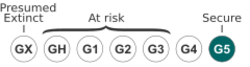
Vaccinium ovalifolium (commonly known as Alaska blueberry, early blueberry, oval-leaf bilberry, oval-leaf blueberry, and oval-leaf huckleberry)[2] is a plant in the heath family with three varieties, all of which grow in northerly regions (e.g. the subarctic).[2]
Description

V. ovalifolium is a spreading shrub which may grow to 2 metres (6 1⁄2 ft) tall. The leaves are 2.5–3.5 centimetres (1–1 1⁄2 in) long, green on top and pale below.[6] It has pink, 0.64 cm (1⁄4 in), urn-shaped flowers. Berries are dark blue, often black, .5–1 cm (1⁄4–3⁄8 in) across,[6] sometimes with a waxy coating.[7][8]
Cytology is 2n = 24, 72.[9]
Distribution
The original variety (i.e. the automatically named V. o. var. ovalifolium) is found on both the eastern and western sides of the Pacific Ocean. In North America, it is distributed throughout Canada (Alberta, British Columbia, Newfoundland, Nova Scotia, southern Ontario, southeast Quebec, and southern Yukon) and the United States (southern Alaska, Idaho, northern Michigan, Oregon, western South Dakota, and Washington).[2][10] In Asia, it is distributed throughout Russia (Kamchatka, the southern Kuril Islands, Primorsky Krai, and Sakhalin) and Japan (Hokkaido and central and northern Honshu).[2]
The two other varieties are confined to Japan and Russia:
- V. o. var. sachalinense is only found in Sakhalin in Russia, and Hokkaido in Japan.[5]
- V. o. var. alpinum is distributed only within the Daisetsu and Hidaka Mountains, both on the island of Hokkaido.[3]
Ecology
In the winter, V. ovalifolium is an important food source for grazing deer, goats, and elk, and in the summer the nectar feeds hummingbirds.[7]
Uses
V. ovalifolium is used in jams and jellies and for making liqueur. Blueberry herbal tea can be made from the leaves, or from the juice of the blueberries themselves,[7] which are edible.[6]
V. ovalifolium has been used in Russia in the making of dyes, including the use of its tannin.[2]
References
- ↑ "Vaccinium ovalifolium | NatureServe Explorer". 2016-05-13. https://explorer.natureserve.org/Taxon/ELEMENT_GLOBAL.2.145179/Vaccinium_ovalifolium.
- ↑ 2.0 2.1 2.2 2.3 2.4 2.5 2.6 {{citation | mode = cs1 | title = Vaccinium ovalifolium | work = Germplasm Resources Information Network (GRIN) | url = | publisher = [[Organization:Agricultural Research ServAgricultural Research Service (ARS), United States Department of Agriculture (USDA) | access-date = 2012-11-10 }}
- ↑ 3.0 3.1 3.2 {{citation | mode = cs1 | title = Vaccinium ovalifolium var. alpinum | work = Germplasm Resources Information Network (GRIN) | url = https://npgsweb.ars-grin.gov/gringlobal/taxonomydetail.aspx?460010 | publisher = [[Organization:Agricultural Research ServAgricultural Research Service (ARS), United States Department of Agriculture (USDA) | access-date = 2012-11-10 }}
- ↑ 4.0 4.1 {{citation | mode = cs1 | title = Vaccinium ovalifolium var. ovalifolium | work = Germplasm Resources Information Network (GRIN) | url = https://npgsweb.ars-grin.gov/gringlobal/taxonomydetail.aspx?460009 | publisher = [[Organization:Agricultural Research ServAgricultural Research Service (ARS), United States Department of Agriculture (USDA) | access-date = 2012-11-10 }}
- ↑ 5.0 5.1 {{citation | mode = cs1 | title = Vaccinium ovalifolium var. sachalinense | work = Germplasm Resources Information Network (GRIN) | url = https://npgsweb.ars-grin.gov/gringlobal/taxonomydetail.aspx?460011 | publisher = [[Organization:Agricultural Research ServAgricultural Research Service (ARS), United States Department of Agriculture (USDA) | access-date = 2012-11-10 }}
- ↑ 6.0 6.1 6.2 Turner, Mark; Kuhlmann, Ellen (2014). Trees & Shrubs of the Pacific Northwest (1st ed.). Portland, OR: Timber Press. pp. 177, 181. ISBN 978-1-60469-263-1. https://books.google.com/books?id=VLbAAwAAQBAJ.
- ↑ 7.0 7.1 7.2 Ewing, Susan (1996). The Great Alaska Nature Factbook. Portland, Oregon: Alaska Northwest Books. ISBN 0-88240-454-7.
- ↑ Vander Kloet, Sam P. (2009), "Vaccinium ovalifolium", in Flora of North America Editorial Committee, Flora of North America North of Mexico (FNA), 8, New York and Oxford, http://www.efloras.org/florataxon.aspx?flora_id=1&taxon_id=250065711
- ↑ Redpath, Lauren E.; Aryal, Rishi; Lynch, Nathan; Spencer, Jessica A.; Hulse-Kemp, Amanda M.; Ballington, James R.; Green, Jaimie; Bassil, Nahla et al. (2022). "Nuclear DNA contents and ploidy levels of North American Vaccinium species and interspecific hybrids". Scientia Horticulturae (Elsevier BV) 297. doi:10.1016/j.scienta.2022.110955. ISSN 0304-4238.
- ↑ "Vaccinium ovalifolium" (PNG). 2014. http://bonap.net/MapGallery/State/Vaccinium%20ovalifolium.png.
External links
- Photo of herbarium specimen at Missouri Botanical Garden, collected in Russian America (now Alaska) in 1787, isotype of V. ovalifolium
- Rating Criteria for Non-Timber Quality Codes. 2010. V. ovalifolium. Common name: Mountain blueberry; oval-leaved blueberry. 1 MacKinnon, A., J. Pojar, and R. Coupe. 1992. Plants of northern British Columbia. B.C. Ministry of Forests and Long Pine Publishing. Victoria, British Columbia, Canada description, criteria for judging quality of fruit
- University of Alaska @ Fairbanks, Native Plants of Alaska, Oval-leafed Blueberry photos, description, propagation information
- Черника овальнолистная (V. ovalifolium, Ericaceae) in Russian with photos
Wikidata ☰ Q143673 entry
 |  |


