Contraction of a Lie algebra
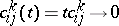
An operation inverse to deformation of a Lie algebra. Let <img align="absmiddle" border="0" src="https://www.encyclopediaofmath.org/legacyimages/c/c025/c025850/c0258501.png" /> be a finite-dimensional real Lie algebra, let <img align="absmiddle" border="0" src="https://www.encyclopediaofmath.org/legacyimages/c/c025/c025850/c0258502.png" /> be its set of structure constants with respect to a fixed basis <img align="absmiddle" border="0" src="https://www.encyclopediaofmath.org/legacyimages/c/c025/c025850/c0258503.png" /> and let <img align="absmiddle" border="0" src="https://www.encyclopediaofmath.org/legacyimages/c/c025/c025850/c0258504.png" />, <img align="absmiddle" border="0" src="https://www.encyclopediaofmath.org/legacyimages/c/c025/c025850/c0258505.png" />, be a curve in the group of non-singular linear transformations of <img align="absmiddle" border="0" src="https://www.encyclopediaofmath.org/legacyimages/c/c025/c025850/c0258506.png" /> such that <img align="absmiddle" border="0" src="https://www.encyclopediaofmath.org/legacyimages/c/c025/c025850/c0258507.png" />. Let <img align="absmiddle" border="0" src="https://www.encyclopediaofmath.org/legacyimages/c/c025/c025850/c0258508.png" /> and let <img align="absmiddle" border="0" src="https://www.encyclopediaofmath.org/legacyimages/c/c025/c025850/c0258509.png" /> be the structure constants of <img align="absmiddle" border="0" src="https://www.encyclopediaofmath.org/legacyimages/c/c025/c025850/c02585010.png" /> with respect to the basis <img align="absmiddle" border="0" src="https://www.encyclopediaofmath.org/legacyimages/c/c025/c025850/c02585011.png" />. If <img align="absmiddle" border="0" src="https://www.encyclopediaofmath.org/legacyimages/c/c025/c025850/c02585012.png" /> tends to some limit <img align="absmiddle" border="0" src="https://www.encyclopediaofmath.org/legacyimages/c/c025/c025850/c02585013.png" /> as <img align="absmiddle" border="0" src="https://www.encyclopediaofmath.org/legacyimages/c/c025/c025850/c02585014.png" />, then the algebra <img align="absmiddle" border="0" src="https://www.encyclopediaofmath.org/legacyimages/c/c025/c025850/c02585015.png" /> defined by these constants relative to the original basis is called a contraction of the initial algebra <img align="absmiddle" border="0" src="https://www.encyclopediaofmath.org/legacyimages/c/c025/c025850/c02585016.png" />. The contraction <img align="absmiddle" border="0" src="https://www.encyclopediaofmath.org/legacyimages/c/c025/c025850/c02585017.png" /> is also a Lie algebra, moreover <img align="absmiddle" border="0" src="https://www.encyclopediaofmath.org/legacyimages/c/c025/c025850/c02585018.png" /> can be obtained by means of a deformation of <img align="absmiddle" border="0" src="https://www.encyclopediaofmath.org/legacyimages/c/c025/c025850/c02585019.png" />. If <img align="absmiddle" border="0" src="https://www.encyclopediaofmath.org/legacyimages/c/c025/c025850/c02585020.png" /> is the Lie algebra of a Lie group <img align="absmiddle" border="0" src="https://www.encyclopediaofmath.org/legacyimages/c/c025/c025850/c02585021.png" />, then the Lie group <img align="absmiddle" border="0" src="https://www.encyclopediaofmath.org/legacyimages/c/c025/c025850/c02585022.png" /> corresponding to <img align="absmiddle" border="0" src="https://www.encyclopediaofmath.org/legacyimages/c/c025/c025850/c02585023.png" /> is called a contraction of the group <img align="absmiddle" border="0" src="https://www.encyclopediaofmath.org/legacyimages/c/c025/c025850/c02585024.png" />.
Although <img align="absmiddle" border="0" src="https://www.encyclopediaofmath.org/legacyimages/c/c025/c025850/c02585025.png" />, in general these algebras are not isomorphic. For example, if <img align="absmiddle" border="0" src="https://www.encyclopediaofmath.org/legacyimages/c/c025/c025850/c02585026.png" />, then <img align="absmiddle" border="0" src="https://www.encyclopediaofmath.org/legacyimages/c/c025/c025850/c02585027.png" />, so for this contraction the limit algebra is always commutative. The natural generalization of this example is the following: Let <img align="absmiddle" border="0" src="https://www.encyclopediaofmath.org/legacyimages/c/c025/c025850/c02585028.png" /> be a subalgebra in <img align="absmiddle" border="0" src="https://www.encyclopediaofmath.org/legacyimages/c/c025/c025850/c02585029.png" />, let <img align="absmiddle" border="0" src="https://www.encyclopediaofmath.org/legacyimages/c/c025/c025850/c02585030.png" /> be a subspace complementary to <img align="absmiddle" border="0" src="https://www.encyclopediaofmath.org/legacyimages/c/c025/c025850/c02585031.png" />, let, moreover, <img align="absmiddle" border="0" src="https://www.encyclopediaofmath.org/legacyimages/c/c025/c025850/c02585032.png" /> and <img align="absmiddle" border="0" src="https://www.encyclopediaofmath.org/legacyimages/c/c025/c025850/c02585033.png" /> for each <img align="absmiddle" border="0" src="https://www.encyclopediaofmath.org/legacyimages/c/c025/c025850/c02585034.png" />, <img align="absmiddle" border="0" src="https://www.encyclopediaofmath.org/legacyimages/c/c025/c025850/c02585035.png" /> for <img align="absmiddle" border="0" src="https://www.encyclopediaofmath.org/legacyimages/c/c025/c025850/c02585036.png" />. Then in the limit <img align="absmiddle" border="0" src="https://www.encyclopediaofmath.org/legacyimages/c/c025/c025850/c02585037.png" /> becomes a commutative ideal of <img align="absmiddle" border="0" src="https://www.encyclopediaofmath.org/legacyimages/c/c025/c025850/c02585038.png" />, while at the same time multiplication in <img align="absmiddle" border="0" src="https://www.encyclopediaofmath.org/legacyimages/c/c025/c025850/c02585039.png" /> and the operation of <img align="absmiddle" border="0" src="https://www.encyclopediaofmath.org/legacyimages/c/c025/c025850/c02585040.png" /> on <img align="absmiddle" border="0" src="https://www.encyclopediaofmath.org/legacyimages/c/c025/c025850/c02585041.png" /> remain the same.
In particular, let <img align="absmiddle" border="0" src="https://www.encyclopediaofmath.org/legacyimages/c/c025/c025850/c02585042.png" /> be the Lorentz group, <img align="absmiddle" border="0" src="https://www.encyclopediaofmath.org/legacyimages/c/c025/c025850/c02585043.png" /> its Lie algebra and <img align="absmiddle" border="0" src="https://www.encyclopediaofmath.org/legacyimages/c/c025/c025850/c02585044.png" /> the subalgebra corresponding to the subgroup of rotations of <img align="absmiddle" border="0" src="https://www.encyclopediaofmath.org/legacyimages/c/c025/c025850/c02585046.png" />-dimensional space. Then the described contraction of <img align="absmiddle" border="0" src="https://www.encyclopediaofmath.org/legacyimages/c/c025/c025850/c02585047.png" /> gives the Lie algebra of the Galilean group <img align="absmiddle" border="0" src="https://www.encyclopediaofmath.org/legacyimages/c/c025/c025850/c02585048.png" /> (see Galilean transformation; Lorentz transformation). Hence the Lorentz algebra is a deformation of the Galilean algebra, and it can be shown that the complexification of the Galilean algebra has no other deformations; in the real case the Galilean algebra can also be a contraction of the orthogonal Lie algebra <img align="absmiddle" border="0" src="https://www.encyclopediaofmath.org/legacyimages/c/c025/c025850/c02585049.png" />. An equivalent method of obtaining the Galilean algebra from the Lorentz algebra is to define the Lorentz algebra as the algebra preserving the Minkowski form <img align="absmiddle" border="0" src="https://www.encyclopediaofmath.org/legacyimages/c/c025/c025850/c02585050.png" />, and then letting the velocity of light tend to <img align="absmiddle" border="0" src="https://www.encyclopediaofmath.org/legacyimages/c/c025/c025850/c02585051.png" />. As long as <img align="absmiddle" border="0" src="https://www.encyclopediaofmath.org/legacyimages/c/c025/c025850/c02585052.png" />, the algebra arising is isomorphic to <img align="absmiddle" border="0" src="https://www.encyclopediaofmath.org/legacyimages/c/c025/c025850/c02585053.png" />. Analogously, deforming the Poincaré algebra (the inhomogeneous Lorentz algebra), it is possible to obtain the de Sitter algebras <img align="absmiddle" border="0" src="https://www.encyclopediaofmath.org/legacyimages/c/c025/c025850/c02585054.png" /> and <img align="absmiddle" border="0" src="https://www.encyclopediaofmath.org/legacyimages/c/c025/c025850/c02585055.png" /> of motions of a space of constant curvature. Correspondingly, setting the curvature to 0, one obtains the Poincaré group as a contraction of the de Sitter group.
The connection between these algebras can be extended to representations. If, as in the described examples, there is a matrix <img align="absmiddle" border="0" src="https://www.encyclopediaofmath.org/legacyimages/c/c025/c025850/c02585056.png" />, then each representation <img align="absmiddle" border="0" src="https://www.encyclopediaofmath.org/legacyimages/c/c025/c025850/c02585057.png" /> of <img align="absmiddle" border="0" src="https://www.encyclopediaofmath.org/legacyimages/c/c025/c025850/c02585058.png" /> generates a representation <img align="absmiddle" border="0" src="https://www.encyclopediaofmath.org/legacyimages/c/c025/c025850/c02585059.png" /> of the contraction algebra by the formula
| <img align="absmiddle" border="0" src="https://www.encyclopediaofmath.org/legacyimages/c/c025/c025850/c02585060.png" /> |
for any <img align="absmiddle" border="0" src="https://www.encyclopediaofmath.org/legacyimages/c/c025/c025850/c02585061.png" />. The inverse operation (deformation of a representation) is not possible, in general.
References
| [1] | A.O. Barut, R. Raçzka, "Theory of group representations and applications" , 1–2 , PWN (1977) |
| [2] | E. Inönü, E.P. Wigner, "On the contraction of groups and their representations" Proc. Nat. Acad. Sci. USA , 39 (1953) pp. 510–524 |
| [3] | E.J. Saletan, "Contraction of Lie groups" J. Math. Phys. , 2 (1961) pp. 1–22; 742 |
 |  |