Biology:Anahit
Anahit (Armenian: Անահիտ) was the goddess of fertility and healing, wisdom and water in Armenian mythology.[1] In the early periods, she was the goddess of war. By the 5th century BCE, she was the main deity in Armenia along with Aramazd.[2] The Armenian goddess Anahit is related to the similar Iranian goddess Anahita. Artaxias I erected statues of Anahit, and promulgated orders to worship them.[3]
Armenian Anahit and Persian Anahita
According to Strabo, the "Armenians shared in the religion of the Perses and the Medes and particularly honored Anaitis".[4] The kings of Armenia were "steadfast supporters of the cult"[5] and Tiridates III, before his conversion to Christianity, "prayed officially to the triad Aramazd-Anahit-Vahagn but is said to have shown a special devotion to 'the great lady Anahit, (...) the benefactress of the whole human race, mother of all knowledge, daughter of the great Aramazd'"[6] According to Agathangelos, tradition required the Kings of Armenia to travel once a year to the temple at Eriza (Erez) in Acilisene in order to celebrate the festival of the divinity; Tiridates made this journey in the first year of his reign where he offered sacrifice and wreaths and boughs.[7] The temple at Eriza appears to have been particularly famous, "the wealthiest and most venerable in Armenia",[8] staffed with priests and priestesses, the latter from eminent families who would serve at the temple before marrying.[4] This practice may again reveal Semitic syncretic influences,[5] and is not otherwise attested in other areas. Pliny reports that Mark Antony's soldiers smashed an enormous statue of the divinity made of solid gold and then divided the pieces amongst themselves.[9] Also according to Pliny, supported by Dio Cassius, Acilisene eventually came to be known as Anaïtica.[10][11] Dio Cassius also mentions that another region along the Cyrus River, on the borders of Albania and Iberia, was also called "the land of Anaïtis."[12]
Anahit's worship, most likely borrowed from the Iranians during the Median invasion or the early Achaemenid period or from Urartian goddess Arubani possibly an early form of Anahit.[13], was of paramount significance in Armenia. According to Matthew Canepa, Anahit as well as Aramazd, Vahagn, Mihr, and Tir were of Iranian origin and that Iranian religions heavily influenced major Armenian deities.[14][15] Melik Pashayan's research[16][17] states that the cult of Anahit originates from Hayasa-Azzi with Middle Eastern influence, this research is cited by Armen Petrosyan[18] and Hamazasp Khachatryan.[19] Petrosyan also connected Anahit with Hayasan goddess Inanna.[20] M. Kavokjian also connected Anahit with Inanna and Early Armenian Nvard.[21]
Temples dedicated to Anahit
In Armenia, worship of Anahit was established in Erez, Armavir, Artashat and Ashtishat.[2] A mountain in the Sophene district was known as Anahit's throne (Athor Anahta). The entire district of Erez, in the province of Akilisene (Ekeghiats), was called Anahtakan Gavar.[2]
According to Plutarch, the temple of Erez was the wealthiest and the noblest in Armenia. During the expedition of Mark Antony in Armenia, the statue was broken to pieces by the Roman soldiers. Pliny the Elder gives us the following story about it: Emperor Augustus, being invited to dinner by one of his generals, asked him if it were true that the wreckers of Anahit's statue had been punished by the wrathful goddess. "No!" answered the general, "on the contrary, I have today the good fortune of treating you with one part of the hip of that gold statue."[9] The Armenians erected a new golden statue of Anahit in Erez, which was worshiped before the time of St. Gregory Illuminator.
The annual festivity of the month Navasard, held in honor of Anahit, was the occasion of great gatherings, attended with dance, music, recitals, competitions, etc. The sick went to the temples in pilgrimage, asking for recovery. The symbol of ancient Armenian medicine was the head of the bronze gilded statue of the goddess Anahit.[2]
-
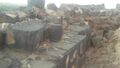
-
Ruins of the temple of Anahit in Armavir

Historians' accounts of Anahit
-
 Commemorative coin issued by the Central Bank of Armenia devoted to Goddess Anahit
 -
 5000 Armenian Dram
 -
Anahit in Stamp of Armenia, 2007
-
Copy of Satala Aphrodite in History Museum of Armenia
-
Anahit sculpture by Hagop Ishkanian

.png)
According to Agathangelos, King Trdat extolls the "great Lady Anahit, the glory of our nation and vivifier ...; mother of all chastity, and issue of the great and valiant Aramazd." The historian Berossus identifies Anahit with Aphrodite, while medieval Armenian scribes identify her with Artemis. According to Strabo, Anahit's worship included rituals of sacred prostitution,[4] but later Christian writers do not mention such a custom.[22] There is a corona on Venus named after Anahit.[23]
See also
References
- ↑ Agop Jack Hacikyan; Gabriel Basmajian; Edward S. Franchuk; Nourhan Ouzounian (2000). The heritage of Armenian literature. Wayne State University Press. p. 67. ISBN 978-0814328156. https://archive.org/details/heritageofarmeni00ajha. Retrieved 2016-10-18.
- ↑ 2.0 2.1 2.2 2.3 Hastings, James (2001). Encyclopaedia of Religion and Ethics: Algonquins-Art. Elibron Classics. p. 797. ISBN 978-1-4021-9433-7. https://books.google.com/books?id=NyzDrkPG2nIC&q=Anahit&pg=PA797. Retrieved 2010-12-19.
- ↑ Boyce 1983, p. 1003.
- ↑ 4.0 4.1 4.2 Strabo, Geography XI.14.16
- ↑ 5.0 5.1 Boyce 1983, p. 1007.
- ↑ Boyce 1983, p. 1007 Cit. Agathangelos 22.
- ↑ Agathangelos 21.
- ↑ Cicero, [no title] 9.23.
- ↑ 9.0 9.1 Pliny the Elder, Naturalis Historia XXXIII.24.
- ↑ Pliny the Elder, Naturalis Historia V.20.
- ↑ Cassius Dio, Historia Romana XXXVI.48.1
- ↑ Cassius Dio, Historia Romana XXXVI.53.5. Dio calls the river "Cyrnus" rather than "Cyrus".
- ↑ Piotrovsky, Boris B. (1969) The Ancient Civilization of Urartu: An Archaeological Adventure. Cowles Book Co. ISBN 9780214667930
- ↑ Canepa, Matthew P. (2020). The Iranian Expanse: Transforming Royal Identity Through Architecture, Landscape, and the Built Environment, 550 BCE–642 CE. University of California Press. p. 199. ISBN 9780520379206.
- ↑ Baumer, Christoph (2021). History of the Caucasus. 1: At the Crossroads of Empires. Bloomsbury Publishing. pp. 130-131. ISBN 9780755639694.
- ↑ K. V. Melik-Pashayan. Անահիտ Դիցուհու Պաշտամունքը. p. 162. https://ia601203.us.archive.org/9/items/MelikPashayanAnahit/Melik-Pashayan_Anahit.pdf. "В этой работе пересматриваются мнения тех ученых, которые считали что все боги и богини армянского языческого пантеона привнесены из Персии и Месопатамии. Мы утвержадем что армянская языческая религия имела слабые связи с Месопотамией и в особености с Персией и что Анаит-кореная армянская богиня, культ который был вполне оформлен ещё в стране Хайаса-Аззи..."
- ↑ Vard Bdoyan. Կ. Վ. Մելիք-Փաշայան, Անահիտ դիցուհու պաշտամունքը, Հայկ.ՍՍՌ ԳԱ հրատարակչություն, Երևան, 1963, 163 էջ. p. 2. https://arar.sci.am/dlibra/publication/188286/edition/170961?language=en.
- ↑ Petrosyan 2015, p. 92.
- ↑ ԱՆԱՀԻՏ ԱՍՏՎԱԾՈՒՀՈՒ ՊԱՇՏԱՄՈՒՆՔԻ ՄԻ ԴՐՍԵՎՈՐՈՒՄ ԱՆՏԻԿ ՇԻՐԱԿՈՒՄ. Hamazasp Khachatryan. p. 3. https://arar.sci.am/Content/197453. ""մեր Անահիտը, պարսկական Անահիտից չի ծագում, այլ հին արևելյան ընդհանուր ծագումով հանդերձ, տեղական աստվածուհի է, նրա պաշտամունքը ձևավորվել է շատ հնում Հայասա-Ազզի երկրռւմ՛ կրելով Փոքր Ասիայի ազդեցությունը""
- ↑ Petrosyan 2002, p. 130.
- ↑ Kavoukjian, Martiros Armenia, Subartu and Sumer [1] Montreal. (1987) pp. 71-72
- ↑ Hastings, James (2001). Encyclopaedia of Religion and Ethics: Algonquins-Art. Elibron Classics. p. 797. ISBN 978-1-4021-9433-7. https://books.google.com/books?id=NyzDrkPG2nIC&q=Anahit&pg=PA797. Retrieved 2010-12-19.
- ↑ "Planetary Names". https://planetarynames.wr.usgs.gov/Feature/248.
Bibliography
- Boyce, Mary (1983), "Anāhīd", Encyclopædia Iranica, 1, New York: Routledge & Kegan Paul, pp. 1003–1009
- Petrosyan, Armen (2002). The Indo‑european and Ancient Near Eastern Sources of the Armenian Epic. Washington, D.C. : Institute for the Study of Man. ISBN 9780941694810. https://www.academia.edu/3656244.
- Petrosyan, Armen (2007). "State Pantheon of Greater Armenia: Earliest Sources". Aramazd: Armenian Journal of Near Eastern Studies 2: 174–201. ISSN 1829-1376.
- Gelzer, Heiner (1896). "Zur armenischen Götterlehre". Berichte über die Verhandlungen der Königlich Sächsischen Gesellschaft der Wissenschaften zu Leipzig: 99–148. OCLC 665221528. https://archive.org/details/berichteberdiev39klasgoog/page/n141/mode/2up.
Further reading
- Petrosyan, Armen (2015). State Pantheon of Greater Armenia: Earliest Sources. pp. 82-115. https://archive.org/details/petrosyan-2015-armenian-state-pantheon.
- Cereti, Carlo G. (2023). "Armenia and Iran: Anāhitā's Worship in the Caucasus". Iran and the Caucasus 27 (4–5): 337–347. doi:10.1163/1573384X-02704002.
External links
 |  |


