Biology:Breynia retusa
| Breynia retusa | |
|---|---|

| |
Scientific classification 
| |
| Kingdom: | Plantae |
| Clade: | Tracheophytes |
| Clade: | Angiosperms |
| Clade: | Eudicots |
| Clade: | Rosids |
| Order: | Malpighiales |
| Family: | Phyllanthaceae |
| Genus: | Breynia |
| Species: | B. retusa
|
| Binomial name | |
| Breynia retusa (Dennst.) Alston
| |
| Synonyms[2] | |
| |
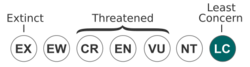
Breynia retusa is a species of plant in the family Phyllanthaceae.
Distribution
It grows naturally in Bangladesh,[3] China,[4] Bhutan, Cambodia, India, Laos, Malaysia (peninsular), Myanmar, Nepal, Sri Lanka, Thailand, Vietnam[5] and Réunion where it is considered as an invasive weed.[6]
The synonysation of Sauropus elegantissimus that is known to be endemic to Malaysia is disputed. Under this name, this plant is listed as critically endangered,[7] but it is unclear what effect an updated taxonomy would have on that rating.
The plant has been recorded to be a host plant for the moth Buzara onelia in Maharashtra, India.[8]
All parts of the plant are used in traditional medicine including for the treatment of dysentry, toothache and hastening suppuration.[9][10] The chemical and nutritional composition of fruits and leaves of the plant have been deemed suitable and promising as a food additive towards preventing diabetes in humans.[11]
References
- ↑ Ye, J.F.; Botanic Gardens Conservation International (BGCI).; IUCN SSC Global Tree Specialist Group (2019). "Breynia retusa". IUCN Red List of Threatened Species 2019. doi:10.2305/IUCN.UK.2019-2.RLTS.T147631294A147631296.en. https://www.iucnredlist.org/species/147631294/147631296. Retrieved 15 November 2021.
- ↑ "Breynia retusa (Dennst.) Alston". The Plant List. http://www.theplantlist.org/tpl1.1/record/kew-24438?ref=tpl1.
- ↑ Shaikh Bokhtear Uddin. "Medicinal Plants of Bangladesh". http://www.mpbd.info/plants/breynia-retusa.php.
- ↑ www.tropicos.org
- ↑ Bingtao Li and Hans-Joachim Esser. "Breynia retusa". Flora of China. 11. http://www.efloras.org/florataxon.aspx?flora_id=2&taxon_id=242309070.
- ↑ www.especesinvasives.re Groupe Espèces Invasives de La Réunion
- ↑ World Conservation Monitoring Centre (1998). "Sauropus elegantissimus". IUCN Red List of Threatened Species 1998. doi:10.2305/IUCN.UK.1998.RLTS.T31491A9632844.en. https://www.iucnredlist.org/species/31491/9632844. Retrieved 15 November 2021.
- ↑ Bhatt, Chintan; Pattanshetty, Shreyas; Gund, Shrikant (2024). "BREYNIA RETUSA (PHYLLANTHACEAE) AS THE LARVAL HOST PLANT OF BUZARA ONELIA (LEPIDOPTERA: EREBIDAE)". Bionotes 26 (2): 71-73. https://www.researchgate.net/publication/382448130_BREYNIA_RETUSA_PHYLLANTHACEAE_AS_THE_LARVAL_HOST_PLANT_OF_BUZARA_ONELIA_LEPIDOPTERA_EREBIDAE.
- ↑ Laloo, R. C.; Kharlukhi, L.; Jeeva, S.; Mishra, B. P. (2006). "Status of medicinal plants in the disturbed and the undisturbed sacred forests of Meghalaya, northeast India: population structure and regeneration efficacy of some important species". Current Science 90: 225-232. https://www.currentscience.ac.in/Volumes/90/02/0225.pdf.
- ↑ Verma, C.; Bhatia, S.; Srivastava, S. (2010). "Traditional medicine of the Nicobarese". Ind. J. Tradit. Knowl. (9): 779-785.
- ↑ Murugan, R.; Prabu, J.; Chandran, R.; Sajeesh, T.; Iniyavan, M.; Parimelazhagan, T. (2016). "Nutritional composition, in vitro antioxidant and anti-diabetic potentials of Breynia retusa (Dennst.) Alston". Food Science and Human Wellness 5 (1): 30-38. https://doi.org/10.1016/j.fshw.2015.12.001.
Wikidata ☰ Q3281470 entry
 |  |


