Biology:Cecropia longipes
From HandWiki
Short description: Species of flowering plant
| Cecropia longipes | |
|---|---|
Scientific classification 
| |
| Kingdom: | Plantae |
| Clade: | Tracheophytes |
| Clade: | Angiosperms |
| Clade: | Eudicots |
| Clade: | Rosids |
| Order: | Rosales |
| Family: | Urticaceae |
| Genus: | Cecropia |
| Species: | C. longipes
|
| Binomial name | |
| Cecropia longipes Pittier
| |
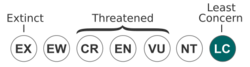
Cecropia longipes is a species of flowering plant in the family Urticaceae. It is a tree native to northwestern Colombia and eastern Panama,[2] where it grows in lowland rain forests. It is threatened by habitat loss.[1]
The tree is mostly wind-pollinated. Inflorescences are breeding sites for some species of flies and small beetles, which may also have a role in pollination. Seeds are dispersed by fruit-eating animals including opossums, toucans, bats, and monkeys. The tree has a symbiotic relationship with the ant species Azteca alfari, which forms colonies in the tree's hollow stems.[1]
The species was first described by Henri François Pittier in 1917.[2]
References
- ↑ 1.0 1.1 1.2 Lopez-Gallego, C. & Morales M, P.A. (2023). "Cecropia longipes". IUCN Red List of Threatened Species 2023. doi:10.2305/IUCN.UK.2023-1.RLTS.T30625A221267824.es.{{cite iucn}}: error: malformed |doi= identifier (help)
- ↑ 2.0 2.1 "Cecropia longipes Pittier". Royal Botanic Gardens, Kew. https://powo.science.kew.org/taxon/urn:lsid:ipni.org:names:50883-2.
Wikidata ☰ Q5056536 entry
 |  |


