Biology:Ficus platyphylla
| Ficus platyphylla | |
|---|---|
| File:Ficus platyphylla-Jardin botanique Meise (4).jpg | |
Scientific classification 
| |
| Kingdom: | Plantae |
| Clade: | Tracheophytes |
| Clade: | Angiosperms |
| Clade: | Eudicots |
| Clade: | Rosids |
| Order: | Rosales |
| Family: | Moraceae |
| Genus: | Ficus |
| Species: | F. platyphylla
|
| Binomial name | |
| Ficus platyphylla Delile
| |
| Synonyms[2] | |
| |
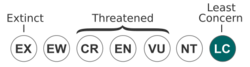
Ficus platyphylla is a deciduous tree within the family Moraceae. Common local names include Gamji in Hausa and Gaba or Kobo in Bambara.[3] It is native to western and eastern tropical Africa.[2]
Description
Species grows up to 20 metres (66 ft) tall, the crown is large and spreading while the bark is pale brown with scales and fissures, the species sometimes grows as an Epiphyte.[4] Leaves, alternate, petioles and stipules are present; leaflets are ovate to elliptic in outline, up to 25 centimetres (10 in) long and 17 centimetres (7 in) wide. The fruits are globose in shape, reddish and small, usually between 1–1.5 centimetres (0.4–0.6 in) in diameter, they are arranged in clusters of 1–5 in leaf axils on peduncles that can reach 5 centimetres (2 in) in length.[4]
Distribution and habitat
Commonly found in the savanna regions of West and East Africa south of the Sahara and north of the equatorial rainforests, ranging from Senegal eastwards to Somalia.[5]
Uses
The species is used as an antidote to poison in different cultures.[6] In Nigeria, the stem bark extracts of the plant is used in ethnomedicine to treat a variety of ailments including depression, epilepsy and psychosis.[7] It is also used to expel parasitic worms from the body.[5]
References
- ↑ Botanic Gardens Conservation International (BGCI).; IUCN SSC Global Tree Specialist Group. (2019). "Ficus platyphylla" (in en). IUCN Red List of Threatened Species 2019. doi:10.2305/IUCN.UK.2019-1.RLTS.T143276987A143297281.en. https://www.iucnredlist.org/species/143276987/143297281. Retrieved 6 September 2026.
- ↑ 2.0 2.1 "Ficus platyphylla Delile" (in en). Royal Botanic Gardens, Kew. http://www.plantsoftheworldonline.org/taxon/853433-1.
- ↑ "M.M.P.N.D. - Sorting Ficus names". https://www.plantnames.unimelb.edu.au/Sorting/Ficus.html.
- ↑ 4.0 4.1 Flora of Somalia. 2: Angiospermae (Tiliaceae - Apiaceae) (1. publ ed.). Kew: Royal Botanic Gardens. 1999. p. 102. ISBN 978-1-900347-77-8.
- ↑ 5.0 5.1 Lansky, Ephraim Philip; Paavilainen, Helena Maaria (2011). Figs: the genus Ficus. Traditional herbal medicines for modern times. Boca Raton: CRC press. ISBN 978-1-4200-8966-0.
- ↑ Shi, Yinxian; Mon, Aye Mya; Fu, Yao; Zhang, Yu; Wang, Chen; Yang, Xuefei; Wang, Yuhua (2018). "The genus Ficus (Moraceae) used in diet: Its plant diversity, distribution, traditional uses and ethnopharmacological importance" (in en). Journal of Ethnopharmacology 226: 185–196. doi:10.1016/j.jep.2018.07.027. https://linkinghub.elsevier.com/retrieve/pii/S0378874118300023.
- ↑ Chindo, Ben A.; Anuka, Joseph A.; McNeil, Lilly; Yaro, Abdullahi H.; Adamu, Simon S.; Amos, Samson; Connelly, William K.; Lees, George et al. (2009-03-30). "Anticonvulsant properties of saponins from Ficus platyphylla stem bark". Brain Research Bulletin 78 (6): 276–282. doi:10.1016/j.brainresbull.2008.12.005. ISSN 0361-9230. https://www.sciencedirect.com/science/article/pii/S0361923008004152.
Wikidata ☰ Q15475926 entry
 |  |


