Biology:Fraxinus longicuspis
From HandWiki
Short description: Species of plant in the family Oleaceae
| Fraxinus longicuspis | |
|---|---|
Scientific classification 
| |
| Kingdom: | Plantae |
| Clade: | Tracheophytes |
| Clade: | Angiosperms |
| Clade: | Eudicots |
| Clade: | Asterids |
| Order: | Lamiales |
| Family: | Oleaceae |
| Genus: | Fraxinus |
| Species: | F. longicuspis
|
| Binomial name | |
| Fraxinus longicuspis Siebold & Zucc.
| |
| Synonyms[2] | |
|
List
| |
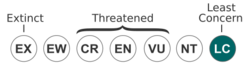
Fraxinus longicuspis (syn. Fraxinus pubinervis), the taper-tip ash or Japanese ash (a name it shares with other members of its genus), is a species of flowering plant in the family Oleaceae, native to the mountains of central and southern Japan.[2][3] A deciduous tree, it is hardy to USDA zone 5.[3] It is used as a street tree in a few cities around the world.[4]
References
- ↑ Barstow, M.; Rivers, M.C.; Beech, E. (2018). "Fraxinus longicuspis". IUCN Red List of Threatened Species 2018: e.T96444214A96444216. doi:10.2305/IUCN.UK.2018-1.RLTS.T96444214A96444216.en. https://www.iucnredlist.org/species/96444214/96444216. Retrieved 2 August 2023.
- ↑ 2.0 2.1 "Fraxinus longicuspis Siebold & Zucc." (in en). Royal Botanic Gardens, Kew. http://www.plantsoftheworldonline.org/taxon/609077-1.
- ↑ 3.0 3.1 "Fraxinus longicuspis". The Dawes Arboretum. 21 November 2022. https://dawesarb.arboretumexplorer.org/taxon-22211.aspx.
- ↑ Ossola, Alessandro; Hoeppner, Malin J.; Burley, Hugh M.; Gallagher, Rachael V.; Beaumont, Linda J.; Leishman, Michelle R. (2020). "The Global Urban Tree Inventory: A database of the diverse tree flora that inhabits the world's cities". Global Ecology and Biogeography 29 (11): 1907–1914. doi:10.1111/geb.13169.
Wikidata ☰ Q1632808 entry
 |  |


