Biology:Lecanora epibryon
| Lecanora epibryon | |
|---|---|
| A lichen with black apothecia and white thallus | |
| Lecanora epibryon in Lake Hāwea | |
Scientific classification 
| |
| Kingdom: | Fungi |
| Division: | Ascomycota |
| Class: | Lecanoromycetes |
| Order: | Lecanorales |
| Family: | Lecanoraceae |
| Genus: | Lecanora |
| Species: | L. epibryon
|
| Binomial name | |
| Lecanora epibryon (Ach.) Ach.
| |
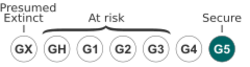
Lecanora epibryon is a species of lichen in the family Lecanoraceae. It is known from New Zealand, Antarctica, and several regions across the Northern Hemisphere, including Europe, Asia, and South America.[2][3]
Description
The thallus is thin, white to pale grey, and crustose. It may appear areolate or verruculose and often lacks soredia. The apothecia are crowded, lecanorine, and range in colour from yellow to dark brown or black. They are typically sessile and strongly constricted at the base. The disk is plane or slightly excavate and epruinose.[4]
Range
This species is known from New Zealand and Antarctica.[5] The lectotype is from Mt Tapuaenuku.[6]
Outside of New Zealand, the nominate subspecies has a bipolar distribution and is found in alpine and arctic habitats across Europe (Austria, Switzerland, Italy), Asia (China), and South America (Tierra del Fuego).[7][8]
Habitat
Lecanora epibryon is graminicolous (growing on dead tussock bases) and terricolous (growing on soil). It is also found over bryophytes in alpine and tundra environments. The species prefers open, exposed habitats with minimal canopy cover and is often associated with mossy or grassy substrates.[9]
Taxonomy
Lecanora epibryon contains the following subspecies:[6]
- Lecanora epibryon subsp. xanthophora
- Lecanora epibryon subsp. broccha
Both subspecies are considered Not Threatened under the New Zealand Threat Classification System.[10][11]
The nominate subspecies was originally described by Erik Acharius in 1810 and is documented from Austria and Switzerland.[12]
References
- ↑ NatureServe. "Lecanora epibryon" (in en). Arlington, Virginia. https://explorer.natureserve.org/Taxon/ELEMENT_GLOBAL.2.126554/.
- ↑ "Lecanora epibryon". https://lichenportal.org/portal/taxa/index.php?tid=53802.
- ↑ "Eight lecanoroid lichen species new to China". https://sciencepress.mnhn.fr/sites/default/files/articles/pdf/cryptogamie-mycologie2013v34f4a5.pdf.
- ↑ "Lecanora epibryon". https://lichenportal.org/portal/taxa/index.php?tid=53802.
- ↑ "Lecanora epibryon (Ach.) Ach. - Biota of NZ". https://biotanz.landcareresearch.co.nz/scientific-names/0B4395BD-4EB9-443D-AA3A-6AB0974FB5AD.
- ↑ 6.0 6.1 "Lecanora epibryon - Flora of New Zealand Series". https://floraseries.landcareresearch.co.nz/taxa/f426ddde-4b71-4406-9594-d34c4015c477.
- ↑ "Lecanora epibryon". https://britishlichensociety.org.uk/resources/species-accounts/lecanora-epibryon.
- ↑ "Eight lecanoroid lichen species new to China". https://sciencepress.mnhn.fr/sites/default/files/articles/pdf/cryptogamie-mycologie2013v34f4a5.pdf.
- ↑ "Lecanora epibryon". https://lichenportal.org/portal/taxa/index.php?tid=53802.
- ↑ "Lecanora epibryon subsp. broccha (Nyl.) Lumbsch". https://nztcs.org.nz/assessments/62681.
- ↑ "Lecanora epibryon subsp. xanthophora Lumbsch". https://nztcs.org.nz/assessments/62680.
- ↑ Acharius, Erik (1810). Lichenographia universalis. Gottingae: Apud Iust. Frid. Danckwerts. https://www.biodiversitylibrary.org/item/151576. Retrieved 9 August 2025.
Wikidata ☰ Q10436320 entry
 |  |


