Biology:Limnephilidae
Limnephilidae is a family of caddisflies with about 100 genera and almost 900 described species.[1] They belong to the main lineage of case-constructing caddisflies, the Integripalpia or tube-case caddisflies.[2] The Limnephilidae is one of the most species-rich Trichoptera families of northern temperate regions, but only a few are known from tropical areas and the Southern Hemisphere.[2] For this reason they are often known as northern caddisflies.[3]
Description and ecology
The adults are usually brown in colour, often with narrow mottled or patterned forewings and much broader, transparent hindwings.[4] The aquatic larvae construct portable cases from a wide variety of plant and mineral materials, sometimes even snail shells.[5] Cases of young larvae often look completely different from those of larger instars.[5] The general trend in the family is that larvae in cool running waters use mineral material for their cases, while those in warmer lentic habitats use plant material.[3] Larvae tend to be eruciform (with a thickset head and thorax), rather slow-moving, and usually feed by browsing algae or scavenging animal remains.[4][3] They pupate within the larval case, the pupa swimming to the surface before flying away as an adult.[4] For most species the life cycle is completed within one year.[4]
This is arguably the most ecologically diverse caddisfly family, as larvae occupy the full range of freshwater habitats, including lakes, streams, marshes, and temporary pools.[3] The family includes one extraordinary aberrant genus, Enoicyla, whose larvae are terrestrial, living among moss and leaf litter on the woodland floor.[6] In Britain, Enoicyla pusilla is found chiefly in and around Wyre Forest, Worcestershire and neighbouring counties.[6] The females of Enoicyla have only vestigial wings and are flightless.[6]
-
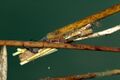 Larval case of Anabolia nervosa
 -
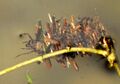 Larval case of Limnephilus flavicornis
 -
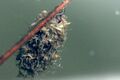 Larval case of Limnephilus stigma
 -
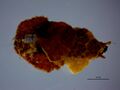 Larval case of Glyphotaelius pellucidus


Systematics

The monophyly of Limnephilidae is supported by multiple independent genes, including nuclear rRNA and mitochondrial COI, as well as combined molecular and morphological data.[7][2]
The Limnephilidae are divided among the four subfamilies listed here (with some notable genera also given). A few genera are not presently assignable to subfamily.[2]
- Dicosmoecinae
- Drusinae
- Drusus
- Limnephilinae
- Pseudostenophylacinae
- Aplatyphylax
- Astenophylina
- Astratodina
- Phylostenax
- Pseudostenophylax
- Incertae sedis
- Allomyia
- Manophylax
- Moselyana
- Pedomoecus
References
- ↑ Morse, John C. (2009). "Trichoptera (Caddisflies)". Encyclopedia of Inland Waters. Academic Press. pp. 443–453. doi:10.1016/B978-012370626-3.00168-7. ISBN 978-0-12-370626-3.
- ↑ 2.0 2.1 2.2 2.3 Holzenthal, Ralph W.; Blahnik, Roger J.; Prather, Aysha L.; Kjer, Karl M. (2007). "Order Trichoptera Kirby, 1813 (Insecta), Caddisflies". Zootaxa 1668: 639–698. doi:10.11646/zootaxa.1668.1.29.
- ↑ 3.0 3.1 3.2 3.3 Holzenthal, Ralph W.; Blahnik, Roger J.; Prather, Aysha; Kjer, Karl (20 July 2010). "Limnephilidae". Tree of Life Web Project. http://tolweb.org/Limnephilidae/14615.
- ↑ 4.0 4.1 4.2 4.3 Chinery, Michael (1986). Collins Guide to the Insects of Britain and Western Europe. Collins. ISBN 0-00-219137-7.
- ↑ 5.0 5.1 Wiggins, Glenn B. (1996). Larvae of the North American Caddisfly Genera (Trichoptera) (2nd ed.). University of Toronto Press. ISBN 0-8020-2723-7.
- ↑ 6.0 6.1 6.2 "Land Caddisfly (Enoicyla pusilla)". Woodland Trust. https://www.woodlandtrust.org.uk/trees-woods-and-wildlife/animals/flies/land-caddisfly/.
- ↑ Kjer, Karl M.; Blahnik, Roger J.; Holzenthal, Ralph W. (2001). "Phylogeny of Trichoptera (Caddisflies): Characterization of Signal and Noise Within Multiple Datasets". Systematic Biology 50 (6): 781–816. doi:10.1080/106351501753462812. PMID 12116633.
External links
 |
Wikispecies has information related to Limnephilidae |
Template:Trichoptera Wikidata ☰ Q1949962 entry
 |  |


