Biology:Oenothera curtiflora
| Oenothera curtiflora | |
|---|---|

| |
Scientific classification 
| |
| Kingdom: | Plantae |
| Clade: | Tracheophytes |
| Clade: | Angiosperms |
| Clade: | Eudicots |
| Clade: | Rosids |
| Order: | Myrtales |
| Family: | Onagraceae |
| Genus: | Oenothera |
| Species: | O. curtiflora
|
| Binomial name | |
| Oenothera curtiflora W.L.Wagner & Hoch
| |
| Synonyms[2] | |
|
List
| |
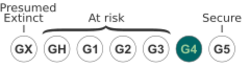
Oenothera curtiflora (syn. Gaura parviflora), known as velvetweed, velvety gaura, downy gaura, or smallflower gaura, is a species of flowering plant native to the central United States and northern Mexico, from Nebraska and Wyoming south to Durango and Nuevo Leon.[3]
Taxonomy
Oenothera curtiflora was long known as Gaura parviflora, this name being published in 1830 and for a long time considered the correct name for the species. However, an overlooked but validly published name G. mollis had been published earlier by Edwin James in 1823. A proposal was made to conserve the name G. parviflora over G. mollis,[4] and this was accepted by the International Botanical Congress Committee for Spermatophyta.[5] In 2007 it was moved to the genus Oenothera by Warren Lambert Wagner and Peter Coonan Hoch as Oenothera curtiflora.[2] The genus Gaura created by Carl Linnaeus in 1753 is a synonym of Oenothera according to Plants of the World Online (POWO).[6]
Oenothera curtiflora has 9 synonyms, six of them species, according to POWO.[2]
| Name | Year | Rank | Notes |
|---|---|---|---|
| Gaura australis Griseb. | 1879 | species | = het. |
| Gaura hirsuta Scheele | 1848 | species | = het. |
| Gaura micrantha (Spach) D.Dietr. | 1840 | species | = het. |
| Gaura mollis E.James | 1823 | species | = het., nom. utique rej. |
| Gaura parviflora Douglas ex Lehm. | 1830 | species | ≡ hom. |
| Gaura parviflora var. typica Munz | 1938 | variety | ≡ hom. |
| Gaura parviflora f. glabra Munz | 1938 | form | = het. |
| Gaura parviflora var. lachnocarpa Weath. | 1925 | variety | = het. |
| Schizocarya micrantha Spach | 1835 | species | = het. |
| Notes: ≡ homotypic synonym; = heterotypic synonym | |||
Description
It is an annual plant growing to 0.2–2 m (rarely 3 m) tall, unbranched, or if branched, only below the flower spikes. The leaves are 2–20 cm (0.79–7.87 in) long, lance-shaped, and are covered with soft hair. The flower spikes are 20–30 cm (7.9–11.8 in) long, covered with green flower buds, which open at night or before dawn with small flowers 5 mm (0.20 in) diameter with four pink petals.[7][8][9]
Uses
Among the Zuni people, fresh or dried root would be chewed by medicine man before sucking snakebite and poultice applied to wound.[10]
Introduction
It is naturalized and often invasive in other parts of the United States, and in Australia, China, Japan, and South America.[1][11][12]
References
- ↑ 1.0 1.1 NatureServe (1 August 2025). "Gaura mollis" (in en). Arlington, Virginia. https://explorer.natureserve.org/Taxon/ELEMENT_GLOBAL.2.138121/.
- ↑ 2.0 2.1 2.2 "Oenothera curtiflora W.L.Wagner & Hoch" (in en). Royal Botanic Gardens, Kew. http://www.plantsoftheworldonline.org/taxon/77092903-1.
- ↑ {{citation | mode = cs1 | title = Oenothera curtiflora | work = Germplasm Resources Information Network (GRIN) | url = | publisher = [[Organization:Agricultural Research ServAgricultural Research Service (ARS), United States Department of Agriculture (USDA) | access-date = 21 January 2018 }}
- ↑ Wagner, W. L., & Hoch, P. (2000). Proposal to Reject the Name Gaura mollis (Onagraceae). Taxon 49 (1): 101-102.
- ↑ Brummitt, R. K. (2001). Report of the Committee for Spermatophyta: 52. Taxon 50 (4): 1179-1182.
- ↑ "Gaura L." (in en). Royal Botanic Gardens, Kew. http://www.plantsoftheworldonline.org/taxon/30005178-2.
- ↑ Jepson Flora: Gaura parviflora
- ↑ Southwest Environmental Information Network: Gaura mollis
- ↑ Wildflowers of Tucson: Gaura mollis
- ↑ Camazine, Scott and Robert A. Bye 1980 A Study Of The Medical Ethnobotany Of The Zuni Indians of New Mexico. Journal of Ethnopharmacology 2:365-388 (p. 377)
- ↑ Flora of China: Gaura parviflora
- ↑ PlantNet (Australia): Gaura parviflora
Wikidata ☰ {{{from}}} entry
 |  |


