Biology:Pyrus hakkiarica
| Pyrus hakkiarica | |
|---|---|

| |
Scientific classification 
| |
| Kingdom: | Plantae |
| Clade: | Tracheophytes |
| Clade: | Angiosperms |
| Clade: | Eudicots |
| Clade: | Rosids |
| Order: | Rosales |
| Family: | Rosaceae |
| Genus: | Pyrus |
| Species: | P. hakkiarica
|
| Binomial name | |
| Pyrus hakkiarica Browicz
| |
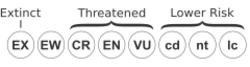
Pyrus hakkiarica (Turkish: Çölemerik ahlatı[2]) is a species of wild pear in the family Rosaceae. It is endemic to the Hakkari area of Turkey,[3] and is assessed as data deficient on the IUCN Red List.
Description
Pyrus hakkiarica is a small, thorny tree reaching up to about 5 m in height. Young shoots are hairless (glabrous), while branches bear stout spines. Leaves are broadly ovate, variable even on the same plant, typically up to 7 cm long and 4–5 cm wide, with margins that may be entire or lightly crenate to serrate. Both surfaces of the leaf are smooth and green, and the leaf base is usually cordate (heart‑shaped) but may sometimes appear rounded. Petioles measure 2.5–5 cm in length. Flowers appear in clusters of one to three, each developing into a single pyriform (pear‑shaped) fruit up to 3 cm in diameter; the fruit retains its calyx lobes and is borne on a thick stalk 3–5 cm long Wikipedia.[4]
Analysis of the mineral content of P. hakkiarica has found the fruit higher than other pears in sodium, potassium, calcium, magnesium, and iron.[5]
Habitat and distribution
This species is known only from montane scrub and open woodland in and around the Hakkâri Province of Turkey, typically on well‑drained slopes within a subtropical continental climate. Its restricted range and specialised habitat contribute to its uncertain conservation status.[4]
Taxonomy
Pyrus hakkarica was first described by the Polish chorologist and taxonomist Kazimierz Browicz (pl) in 1972, based on material collected by Peter Hadland Davis on 16 June 1966 at 1550 m elevation on the road from Şemdinli to Yüksekova in Hakkâri Province, Turkey.[6]
References
- ↑ Güner, A. (1998). "Pyrus hakkiarica". IUCN Red List of Threatened Species 1998. doi:10.2305/IUCN.UK.1998.RLTS.T31326A9626704.en. https://www.iucnredlist.org/species/31326/9626704. Retrieved 15 November 2021.
- ↑ (in tr) Hakkari İli 2023 Yılı Çevre Durum Raporu (Report). Türkiye Cumhuriyeti Hakkari Valiliği Çevre, Şehircilik ve İklim Değişikliği İl Müdürlüğü. 2024. p. 92. https://webdosya.csb.gov.tr/db/ced/icerikler/hakkar-_cdr2023-20240802104343.pdf. Retrieved 26 October 2024.
- ↑ Şenkul, Mehmet Şirin (2022). Hakkari'den Toplanan Çölemerik Ahlatının (Pyrus hakkiarica Browicz.) Bazı Biyokimyasal Değerlerinin Tespit Edilmesi [Determination of Biochemical Values of Çölemerik Wild Pear (Pyrus hakkiarica Browicz.) Collected in Hakkari] (master's thesis) (in Türkçe). Bingöl Üniversitesi. p. 7. Retrieved 26 October 2024.
- ↑ 4.0 4.1 Zamani, Asghar; Attar, Farideh; Maroofi, Hosein (2012). "A synopsis of the genus Pyrus (Rosaceae) in Iran". Nordic Journal of Botany 30 (3): 310–332. doi:10.1111/j.1756-1051.2012.00989.x. Bibcode: 2012NorJB..30..310Z.
- ↑ Şenkul, Hakkari'den Toplanan Çölemerik Ahlatının (Pyrus hakkiarica Browicz.) Bazı Biyokimyasal Değerlerinin Tespit Edilmesi, p. 31, http://acikerisim.bingol.edu.tr:8080/xmlui/handle/20.500.12898/5449
- ↑ Browicz, Kazimierz (1972). "Materials for a flora of Turkey XXVI: New taxa of woody Rosaceae". Notes Roy. Bot. Gard. Edinburgh 31 (2): 321. https://archive.org/details/notes-from-royal-botanic-garden-edinburgh-31-002-321-324.
Template:Pyrus Wikidata ☰ Q5502695 entry
 |  |


