Biology:Salix argyrocarpa
| Salix argyrocarpa | |
|---|---|

| |
Scientific classification 
| |
| Kingdom: | Plantae |
| Clade: | Tracheophytes |
| Clade: | Angiosperms |
| Clade: | Eudicots |
| Clade: | Rosids |
| Order: | Malpighiales |
| Family: | Salicaceae |
| Genus: | Salix |
| Species: | S. argyrocarpa
|
| Binomial name | |
| Salix argyrocarpa Andersson
| |
| Synonyms[2] | |
| |
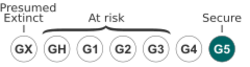
Salix argyrocarpa is a species of willow native to northeastern North America.[2]
Description
Salix argyrocarpa grows as a shrub[3] and can sometimes form clones by layering.[4] The branches are red to brown in color with little to no hair.[4] The leaves generally lack functioning stipules and are narrow and elliptic, oblong, or oblanceolate in shape, measuring 25–65 by 7–15 millimetres (0.98 in–2.56 in × 0.28 in–0.59 in).[4] The catkins flower in June to early August as the leaves emerge, and the capsules measure 2–4 millimetres (0.079–0.157 in).[4]
Habitat and distribution
Salix argyrocarpa grows naturally in Newfoundland and Labrador, Quebec, Nunavut (on the Belcher Islands[4]), Maine, and New Hampshire.[2] It inhabits wet areas, including floodplains, edges of lakes and streams, and snowbeds, as well as subarctic and subalpine habitats.[4] It prefers granitic, sandstone, and limestone soils.[4]
Hybridization
The species hybridizes naturally with Salix herbacea, S. pedicellaris, and S. planifolia.[4]
Names
Common names include Labrador willow[5][6] and Northern willow.[1] The plant also has several taxonomic synonyms.[2]
References
- ↑ 1.0 1.1 "Salix argyrocarpa | Northern Willow". https://explorer.natureserve.org/Taxon/ELEMENT_GLOBAL.2.149544/Salix_argyrocarpa.
- ↑ 2.0 2.1 2.2 2.3 "Salix argyrocarpa Andersson". https://powo.science.kew.org/taxon/urn%3Alsid%3Aipni.org%3Anames%3A302636-2.
- ↑ "Salix argyrocarpa Andersson". https://plants.sc.egov.usda.gov/plant-profile/SAAR7.
- ↑ 4.0 4.1 4.2 4.3 4.4 4.5 4.6 4.7 "Salix argyrocarpa in Flora of North America". http://www.efloras.org/florataxon.aspx?flora_id=1&taxon_id=242445641.
- ↑ "Labrador Willow - Encyclopedia of Life". https://eol.org/pages/585414.
- ↑ "Salix argyrocarpa Andersson". https://www.gbif.org/species/5372851.
Wikidata ☰ Q17562579 entry
 |  |


