Biology:Viola palustris
| Viola palustris | |
|---|---|

| |
Scientific classification 
| |
| Kingdom: | Plantae |
| Clade: | Tracheophytes |
| Clade: | Angiosperms |
| Clade: | Eudicots |
| Clade: | Rosids |
| Order: | Malpighiales |
| Family: | Violaceae |
| Genus: | Viola |
| Species: | V. palustris
|
| Binomial name | |
| Viola palustris L.
| |
| Subspecies[2] | |
| |
| Synonyms[3][4] | |
|
List
| |
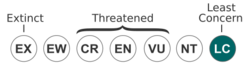
Viola palustris (marsh violet or alpine marsh violet) is a perennial forb of the genus Viola. It inhabits moist meadows, marshes, and stream banks in northern parts of North America and Eurasia. The species epithet palustris means "marsh-loving".
Description

Viola palustris is a perennial plant that grow to 3 to 21.5 centimeters.[5] During the summer they often form small colonies connected together by pale stolons that root frequently and that are leafy at the nodes.[6][5] Plants will also have slender and fleshy rhizomes, modified underground stems.[5]
All the leaves are basal, attached to the base of the plant rather than to stems, by hairless petioles that are 1 to 17 centimeters long. The leaves do not have lobes, but do have hairless edges that are crenulate, a very fine rounded tooth edge. Their shape varies between reniform, ovate, and orbiculate; like a kidney with an indentation on the side of the leaf attachment, egg shaped with the wider portion towards the base, and circular in shape. They are 0.5–6.4 cm long and 0.5–5.5 cm wide and more or less as long as wide.[5]
The flowers are usually lilac, pale blue, or pale violet on both sides, but are sometimes very pale approaching white.[5] They measure 10 to 13 millimeters across.[7]
The bottom middle petal and sometimes the two petals to either side have violet floral guides.[5] The lateral pair are lightly bearded.[7]
Taxonomy
Viola palustris was given its scientific name by Carl Linnaeus in 1753. It has two accepted subspecies, juressi and the autonym palustris. It is part of the genus Viola in the family Violaceae.[2]
The species has 29 synonyms of the species or one of its two subspecies.[2][3][4]
| Name | Year | Rank | Synonym of: | Notes |
|---|---|---|---|---|
| Viola inodora Gilib. | 1782 | species | subsp. palustris | = het., opus utique oppr. |
| Viola juressi Link ex Cout. | 1892 | species | subsp. juressi | ≡ hom. |
| Viola macloskeyi subsp. pallens (Banks ex Ging.) M.S.Baker | 1953 | subspecies | subsp. palustris | = het. |
| Viola macloskeyi var. pallens (Banks ex Ging.) C.L.Hitchc. | 1961 | variety | subsp. palustris | = het. |
| Viola pallens (Banks ex Ging.) Brainerd | 1905 | species | subsp. palustris | = het. |
| Viola paludosa Clairv. | 1811 | species | subsp. palustris | = het. |
| Viola palustris var. angustata Wahlenb. | 1826 | variety | subsp. palustris | = het. |
| Viola palustris proles bourgaei Rouy | 1908 | proles | subsp. palustris | = het. |
| Viola palustris subsp. brevipes M.S.Baker | 1936 | subspecies | subsp. palustris | = het. |
| Viola palustris var. brevipes (M.S.Baker) R.J.Davis | 1951 | variety | subsp. palustris | = het. |
| Viola palustris var. dimorpha Rouy & Foucaud | 1896 | variety | subsp. palustris | = het. |
| Viola palustris subsp. epipsila Rouy & Foucaud | 1896 | subspecies | subsp. palustris | = het. |
| Viola palustris subsp. herminii (Wein) Samp. | 1935 | subspecies | subsp. palustris | = het. |
| Viola palustris f. herminii (Wein) Franco & P.Silva | 1950 | form | subsp. palustris | = het. |
| Viola palustris proles herminii Wein | 1906 | proles | subsp. palustris | = het. |
| Viola palustris var. integrifolia Caball. | 1947 | variety | subsp. palustris | = het. |
| Viola palustris proles juressi (Link ex Cout.) Samp. | 1909 | proles | subsp. juressi | ≡ hom. |
| Viola palustris f. juressi (Link ex Cout.) Samp. | 1911 | form | subsp. juressi | ≡ hom. |
| Viola palustris var. leimonia J.K.Henry | 1915 | variety | subsp. palustris | = het. |
| Viola palustris f. minor Nyman ex Cout. | 1926 | form | subsp. palustris | = het., nom. illeg. |
| Viola palustris var. pensylvanica Ging. | 1824 | variety | subsp. palustris | = het. |
| Viola palustris subsp. pubifolia E.Kuta | 1991 | subspecies | subsp. palustris | = het. |
| Viola palustris var. rubra Gray | 1821 | variety | subsp. palustris | = het. |
| Viola palustris subsp. typica M.S.Baker | 1936 | subspecies | V. palustris | ≡ hom., not validly publ. |
| Viola palustris f. uliginosa Welw. ex Merino | 1913 | form | subsp. palustris | = het., nom. illeg. |
| Viola palustris var. uliginosa Fr. | 1817 | variety | subsp. palustris | = het. |
| Viola pubifolia (E.Kuta) G.H.Loos | 2010 | species | subsp. palustris | = het. |
| Viola pubinervis Rehmann & Woł. | 1893 | species | subsp. palustris | = het. |
| Viola rotundifolia var. pallens Banks ex Ging. | 1824 | variety | subsp. palustris | = het. |
| Notes: ≡ homotypic synonym; = heterotypic synonym | ||||
Names
The species name, palustris, is listed in texts about Botanical Latin with the meaning "marsh loving".[8] It is known by the common names marsh violet or alpine marsh violet.[9][10] It is also sometimes called the northern marsh violet.[10]
Range and habitat
Marsh violets are native to Europe and North America as well as a small area in northern Africa and a portion of western Asia. In Asia it grows just in Western Siberia in Russia. To the east in Europe it is native to almost every country, but is absent from southern Russia, Crimea in Ukraine, European Turkey, Albania, the islands of Sicily, Sardinia, the archipelago of Svalbard, and the Balearic Islands. It is recorded as locally extinct in Hungary. They are found in the Azores in the Atlantic Ocean.[2]
In north America their range includes Greenland and most of Canada except for the Yukon, Nova Scotia, New Brunswick, and Prince Edward Island.[2] In the western United States it grows in mountainous areas of Washington, Oregon, northern coastal California, Idaho, Montana, and Wyoming. It also grows in parts of Nevada and Utah and is reported without specific locations in Arizona, Colorado, and South Dakota. It also has been recorded by the Natural Resources Conservation Service as native to the northeastern states of New York, Vermont, New Hampshire, and Maine.[9]
Marsh violets grow in marshes, fens, swamps, wet forests, and along stream banks. They grow at sea level all the way to 1800 meters in elevation.[5]
Ecology
It is used as a larval foodplant by the pearl-bordered fritillary (Boloria euphrosyne) and the small pearl-bordered fritillary (Boloria selene), though the small pearl-bordered fritillary prefers the marsh violet and the pearl-bordered fritillary prefers common dog-violet (Viola riviniana). It is also used as a host plant by the dark green fritillary (Speyeria aglaja).[11] It is a known host for Hendersonia violae and Puccinia fergussonii, two pathogenic fungi.[12]
References
- ↑ Maiz-Tome, L. (2016). "Viola palustris". IUCN Red List of Threatened Species 2016. doi:10.2305/IUCN.UK.2016-1.RLTS.T64326289A67731242.en. https://www.iucnredlist.org/species/64326289/67731242. Retrieved 17 June 2022.
- ↑ 2.0 2.1 2.2 2.3 2.4 "Viola palustris L." (in en). Royal Botanic Gardens, Kew. http://www.plantsoftheworldonline.org/taxon/868891-1.
- ↑ 3.0 3.1 "Viola palustris subsp. juressi (Link ex Cout.) Cout." (in en). Royal Botanic Gardens, Kew. http://www.plantsoftheworldonline.org/taxon/77130719-1.
- ↑ 4.0 4.1 "Viola palustris subsp. palustris" (in en). Royal Botanic Gardens, Kew. http://www.plantsoftheworldonline.org/taxon/77225864-1.
- ↑ 5.0 5.1 5.2 5.3 5.4 5.5 5.6 Little, R. John; McKinney, Landon E. (5 November 2020). "Viola palustris" (in en). p. 142. https://floranorthamerica.org/Viola_palustris.
- ↑ Little, R. John (2012). "Viola palustris". University of California, Berkeley. https://ucjeps.berkeley.edu/eflora/eflora_display.php?tid=48266.
- ↑ 7.0 7.1 Hitchcock, C. Leo; Cronquist, Arthur (1977) (in en). Vascular Plants of the Pacific Northwest. 3: Saxifragaceae to Ericaceae (First ed.). Seattle, Washington: University of Washington Press. p. 450. ISBN 978-0-295-73985-4. OCLC 1331012853. https://archive.org/details/vascularplantsof0000leoc. Retrieved 25 June 2025.
- ↑ Smith, Archibald William (1963) (in en). A Gardener's Book of Plant Names: A Handbook of the Meaning and Origins of Plant Names (First ed.). New York: Harper & Row. p. 270. OCLC 710612. https://archive.org/details/gardenersbookofp00smit. Retrieved 24 June 2025.
- ↑ 9.0 9.1 Template:Cite usda plants
- ↑ 10.0 10.1 Acadia University; Université de Montréal Biodiversity Centre; University of Toronto Mississauga; University of British Columbia (2025). "Viola palustris Linnaeus - Database of Vascular Plants of Canada (VASCAN)" (in en). https://data.canadensys.net/vascan/taxon/9503?lang=en.
- ↑ Porter, Keith; Steel, Caroline A.; Thomas, Jeremy A. (1992). "7: Butterflies and communities". in Dennis, Roger L.H.. The Ecology of Butterflies in Britain. Oxford; New York: Oxford University Press. pp. 143, 278. ISBN 978-0-19-854025-0. https://archive.org/details/ecologyofbutterf0000unse_m2f2. Retrieved 25 June 2025.
- ↑ Hallgrímsson, Helgi; Eyjólfsdóttir, Guðríður Gyða (2004). "Íslenskt sveppatal I - smásveppir" (in is, en). Fjölrit Náttúrufræðistofnunar (Náttúrufræðistofnun Íslands [Icelandic Institute of Natural History]) 45: 151. https://rafhladan.is/bitstream/handle/10802/4090/Fjolrit_45.pdf?sequence=1. Retrieved 24 June 2025.
External links
- Viola in Southwestern Colorado Wildflowers
Wikidata ☰ Q628878 entry
 |  |


