Biology:Agriocnemis argentea
| Silver wisp | |
|---|---|

| |
| Male, Queensland | |
Scientific classification 
| |
| Kingdom: | Animalia |
| Phylum: | Arthropoda |
| Class: | Insecta |
| Order: | Odonata |
| Suborder: | Zygoptera |
| Family: | Coenagrionidae |
| Genus: | Agriocnemis |
| Species: | A. argentea
|
| Binomial name | |
| Agriocnemis argentea | |

| |
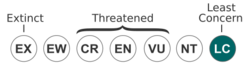
Agriocnemis argentea is a species of damselfly in the family Coenagrionidae,[3] commonly known as a silver wisp.[4] It is a small damselfly; the male, when mature, is covered in a white pruinescence.[4] It is endemic to northern Australia[5] where it inhabits both still and flowing waters.[6]
Etymology
The genus name Agriocnemis is derived from two Greek words: agrion or ἄγριος, meaning wild, and cnemis or κνημίς, meaning legging. Agrion was the name given in 1775 by Johan Fabricius for all damselflies. cnemis is commonly used for many damselflies in the family Coenagrionidae.[7]
The species name argentea is a Latin word meaning the colour of silver. In 1906 Robin Tillyard named this species of damselfly after the beautiful silvery white bloom covering of mature adults, which when flying ... appears as a bright silver streak, darting in and out of the grass.[2][7]
Gallery
-
 Male Silver Wisp
 -
 Male in foreground
 -
 Female in background
 -
 Female wings
 -
 Male wings


.jpg)
.jpg)
See also
- List of Odonata species of Australia
References
- ↑ Dow, R.A. (2017). "Agriocnemis argentea". IUCN Red List of Threatened Species 2017. doi:10.2305/IUCN.UK.2017-1.RLTS.T87533167A87534056.en. https://www.iucnredlist.org/species/87533167/87534056. Retrieved 19 November 2021.
- ↑ 2.0 2.1 Tillyard, R.J. (1906). "New Australian species of the family Agrionidae (Neuroptera: Odonata)". Proceedings of the Linnean Society of New South Wales 31: 177–194 [192]. https://www.biodiversitylibrary.org/page/39342437.
- ↑ "Species Agriocnemis argentea Tillyard, 1906". Australian Biological Resources Study. 2012. https://biodiversity.org.au/afd/taxa/Agriocnemis_argentea.
- ↑ 4.0 4.1 Theischinger, Günther; Hawking, John (2006). The Complete Field Guide to Dragonflies of Australia. Collingwood, Victoria, Australia: CSIRO Publishing. p. 100. ISBN 978-0-64309-073-6.
- ↑ Watson, J.A.L.; Theischinger, G.; Abbey, H.M. (1991). The Australian Dragonflies: A Guide to the Identification, Distributions and Habitats of Australian Odonata. Melbourne: CSIRO. ISBN 0-643-05136-8.
- ↑ Theischinger, Gunther; Endersby, Ian (2009). Identification Guide to the Australian Odonata. Department of Environment, Climate Change and Water NSW. p. 188. ISBN 978-1-74232-475-3. http://www.environment.nsw.gov.au/resources/publications/09730AustOdonata.pdf.
- ↑ 7.0 7.1 Endersby, Ian; Fliedner, Heinrich (2015). The Naming of Australia's Dragonflies. Eltham, Victoria, Australia: Busybird Publishing. ISBN 978-1-925260-62-5. https://www.researchgate.net/publication/283318421.
 |
Wikimedia Commons has media related to Agriocnemis argentea. |
Wikidata ☰ Q2335121 entry
 |  |


