Biology:Diplacus aridus
From HandWiki
Short description: Species of flowering plant
| Diplacus aridus | |
|---|---|

| |
| San Diego County, California, 2022 | |
Scientific classification 
| |
| Kingdom: | Plantae |
| Clade: | Tracheophytes |
| Clade: | Angiosperms |
| Clade: | Eudicots |
| Clade: | Asterids |
| Order: | Lamiales |
| Family: | Phrymaceae |
| Genus: | Diplacus |
| Species: | D. aridus
|
| Binomial name | |
| Diplacus aridus Abrams
| |
| Synonyms[2] | |
| |
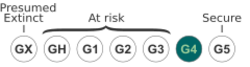
Diplacus aridus, is a species of monkeyflower with yellow blossoms. It was formerly known as Mimulus aridus.[3][4][5][6]
Distribution
This species is native to San Diego County in Southern California, and to Baja California. In Baja California, Mimulus aridus occurs in association with Daucus pusillus and Adiantum jordanii.[7]
Notes
- ↑ NatureServe (2026). "Diplacus aridus" (in en). Arlington, Virginia. https://explorer.natureserve.org/Taxon/ELEMENT_GLOBAL.2.138540/.
- ↑ "Diplacus aridus Abrams" (in en). Royal Botanic Gardens, Kew. http://www.plantsoftheworldonline.org/taxon/81392-2.
- ↑ Barker, W.R.; Nesom, G.L.; Beardsley, P.M.; Fraga, N.S. (2012), "A taxonomic conspectus of Phrymaceae: A narrowed circumscriptions for Mimulus, new and resurrected genera, and new names and combinations", Phytoneuron 2012–39: 1–60, http://www.phytoneuron.net/PhytoN-Phrymaceae.pdf
- ↑ Beardsley, P. M.; Yen, Alan; Olmstead, R. G. (2003). "AFLP Phylogeny of Mimulus Section Erythranthe and the Evolution of Hummingbird Pollination". Evolution 57 (6): 1397–1410. doi:10.1554/02-086. PMID 12894947.
- ↑ Beardsley, P. M.; Olmstead, R. G. (2002). "Redefining Phrymaceae: the placement of Mimulus, tribe Mimuleae, and Phryma". American Journal of Botany 89 (7): 1093–1102. doi:10.3732/ajb.89.7.1093. PMID 21665709.
- ↑ Beardsley, P. M.; Schoenig, Steve E.; Whittall, Justen B.; Olmstead, Richard G. (2004). "Patterns of Evolution in Western North American Mimulus (Phrymaceae)". American Journal of Botany 91 (3): 474–4890. doi:10.3732/ajb.91.3.474. PMID 21653403.
- ↑ C. Michael Hogan. 2008
References
- C. Michael Hogan. 2008. Coastal Woodfern (Dryopteris arguta), GlobalTwitcher, ed. N. Stromberg
- Sunset Western Garden Book. 1995. pp. 606–607
External links
- Jepson eFlora: "Diplacus aridus"
- USDA Plants Profile - Diplacus aridus (San Diego bush monkeyflower)
Wikidata ☰ Q17746284 entry
 |  |


