Biology:Plantago lanceolata
| Ribwort plantain | |
|---|---|

| |
Scientific classification 
| |
| Kingdom: | Plantae |
| Clade: | Tracheophytes |
| Clade: | Angiosperms |
| Clade: | Eudicots |
| Clade: | Asterids |
| Order: | Lamiales |
| Family: | Plantaginaceae |
| Genus: | Plantago |
| Species: | P. lanceolata
|
| Binomial name | |
| Plantago lanceolata | |
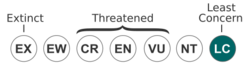
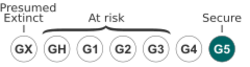
Plantago lanceolata is a species of flowering plant in the plantain family Plantaginaceae. It is known by the common names ribwort plantain,[3] narrowleaf plantain,[4] English plantain,[5] ribleaf, lamb's tongue, and buckhorn.[6] It is a common weed on cultivated or disturbed land.
Description

The plant is a rosette-forming perennial herb, with leafless, silky, hairy flower stems, growing to 45 centimetres (17 1⁄2 in) tall,[7] exceptionally 100 cm (39 in).[8] The basal leaves are lanceolate spreading or erect, scarcely toothed with 3–5 strong parallel veins narrowed to a short petiole. The flower stalk is deeply furrowed, ending in an ovoid inflorescence of many small flowers each with a pointed bract.[9] Each inflorescence can produce up to 200 seeds. Flowers are 4 millimetres (1⁄8 in), with a green calyx and brownish corolla, four bent-back lobes with brown midribs and long white stamens.
Reproduction
The mode of reproduction can vary among populations.[10] Reproduction occurs sexually, with the pollen being wind dispersed for the most part, though the plant is occasionally pollinated by bees.[10]
Chemistry
Plantago lanceolata contains phenylethanoids such as acteoside (verbascoside), cistanoside F, lavandulifolioside, plantamajoside and isoacteoside.[11] It also contains the iridoid glycosides aucubin and catalpol.[12]
Distribution and habitat
Plantago lanceolata is native to Europe and western Asia and is common across this range, including in Britain.[7][13] It is widespread throughout the British Isles, but scarce on the most acidic soils (pH < 4.5).[citation needed] It has been introduced elsewhere in the world, including North America, Oceania and Japan at least 200 years ago and South Africa and Chile 150 years ago.[13]
Considered to be an indicator of agriculture in pollen diagrams, P. lanceolata has been found in western Norway from the Early Neolithic onwards, which is considered an indicator of grazing in that area at the time.[14]
Invasiveness
One of the plant's most notable traits is its ability to remain in a quiescent 'lag period' between introduction to an area and rapid expansion.[15] Ribwort's lag period between its initial introduction to the US and manifestation as a noxious invasive was 177 years. This ability allows the plant to remain unnoticed for long periods, before suddenly expanding and becoming problematic. The plant is now considered a noxious weed in states such as Iowa and Michigan, and its spread continues to affect local flora and fauna. Ribwort's long lag period makes it a particularly tricky invader, as it can seem to emerge suddenly and expand rapidly when conditions become more favorable, contributing to its success as a persistent and disruptive species.[16][17]

Ecology
Songbirds eat the seeds, and the leaves are eaten by rabbits.[18]
Insect predation
Plantago lanceolata is host to many different species of the order Lepidoptera. Species such as Junonia coenia, Spilosoma congrua, and Melitaea cinxia lay their eggs on P. lanceolata plants so they can serve as a food source for the larvae when they hatch.[19][20] The iridoid glycosides in the plant leaves accumulate in the caterpillars and make them unpalatable to predators.
Infection by powdery mildew
Resistance to powdery mildew
After the populations are infected, they react in different ways. Some populations of P. lanceolata are more susceptible to different strains of powdery mildew. Also, some populations have multiple resistance phenotypes, where on the other hand, others may only have one resistance phenotype.[21] Overall, the populations that have the highest variety of resistance phenotypes will have the highest survival rates particularly when rates of infection are high.[21]
Uses
Plantago lanceolata is used frequently in herbal teas and other herbal remedies.[22] A tea from the leaves is used as a cough medicine. In traditional Austrian medicine, the leaves have been used internally (as syrup or tea) or externally (fresh leaves) for treatment of disorders of the respiratory tract, skin, insect bites, and infections.[23] The leaves can be eaten when very young.[24] The flower buds have a mushroom-like flavour and can be used to make stock.[7]
100g of fresh leaves provides 21.989 kcal from 2.12 g protein, 2.81 g net carbohydrates and 0.33 g fat. They are high in fiber with 3.71 g fiber per 100g.[25]
In culture
Children use the plant in a game where the flower's head is shot off the end of stalk; it has been called "rifle", "1 o'clock gun" (after the gun that fires every day from Edinburgh Castle), and other names. To play the game, one would pluck a stalk and wrap a loop of the distal end of the stem around the section of stem closest to the flowerhead. The loop is tightened so it stops up behind the flowerhead and the stem is pulled backward until the flowerhead pops off. The stalk is slightly elastic so when the flowerhead separates it flies off in the direction in which the stalk is pointed like a gun, hence the gun-related names given to it.[26][27]
In the West Country of England, the same game is called 'cannonballs'. Another game played with the plant in Britain and Ireland is a variation of conkers: a child tries to knock off the flowerhead of their friendly rival's stalk using their own stalk with a fast downward thrust. This pastime is known vernacularly as 'dongers' in Kent and 'Carl doddies' (along with the plant itself) in Scotland.[28]
References
- ↑ Khela, S. (2012). "Plantago lanceolata (Europe assessment)". IUCN Red List of Threatened Species 2012.
- ↑ NatureServe. "Plantago lanceolata" (in en). Arlington, Virginia. https://explorer.natureserve.org/Taxon/ELEMENT_GLOBAL.2.133397/.
- ↑ (xls) BSBI List 2007, Botanical Society of Britain and Ireland, https://bsbi.org/download/3542/, retrieved 2014-10-17
- ↑ "Plantago lanceolata". Natural Resources Conservation Service PLANTS Database. USDA. https://plants.usda.gov/core/profile?symbol=PLLA.
- ↑ "Plants Profile for Plantago lanceolata (Narrowleaf plantain)". http://plants.usda.gov/plant-profile?symbol=plla.
- ↑ "Ribwort". http://vro.agriculture.vic.gov.au/dpi/vro/vrosite.nsf/pages/sip_ribwort.
- ↑ 7.0 7.1 7.2 Francis-Baker, Tiffany (2021). Concise Foraging Guide. The Wildlife Trusts. London: Bloomsbury. pp. 78. ISBN 978-1-4729-8474-6.
- ↑ Schmelzer, G.H. & Gurib-Fakim, A. (Editors), 2008. Plant Resources of Tropical Africa 11(1)- Medicinal plants 1. PROTA Foundation, Wageningen, Netherlands / Backhuys Publishers, Leiden, Netherlands / CTA, Wageningen, Netherlands. 791 pp.
- ↑ Blamey, M.; Fitter, R.; Fitter, A (2003). Wild flowers of Britain and Ireland: The Complete Guide to the British and Irish Flora.. London: A & C Black. pp. 248. ISBN 978-1408179505.
- ↑ 10.0 10.1 Jousimo, Jussi. 2014. Ecological and evolutionary effects of fragmentation on infectious disease dynamics. Science AAAS Journal. Science 344, 1289-1293.
- ↑ Phenylethanoids in the Herb of Plantago lanceolata and Inhibitory Effect on Arachidonic Acid-Induced Mouse Ear Edema. Michiko Murai (nee Sasahara), Yasuhiko Tamayama and Sansei Nishibe, Planta Med., 1995;, volume 61, issue 5, pages 479-480, doi:10.1055/s-2006-958143
- ↑ Genetic variation in defensive chemistry in Plantago lanceolata (Plantaginaceae) and its effect on the specialist herbivore Junonia coenia (Nymphalidae). Lynn S. Adler, Johanna Schmitt and M. Deane Bowers, Oecologia, January 1995, Volume 101, Issue 1, pages 75-85, doi:10.1007/BF00328903
- ↑ 13.0 13.1 Medina-van Berkum, Pamela; Schmöckel, Eric; Bischoff, Armin; Carrasco-Farias, Natalia; Catford, Jane A.; Feldmann, Reinart; Groten, Karin; Henry, Hugh A. L. et al. (April 2024). "Plant geographic distribution influences chemical defences in native and introduced Plantago lanceolata populations". New Phytologist 38 (4): 883–896. doi:10.1111/1365-2435.14535. Bibcode: 2024FuEco..38..883M. https://besjournals.onlinelibrary.wiley.com/doi/10.1111/1365-2435.14535.
- ↑ Hjelle, K. L.; Hufthammer, A. K.; Bergsvik, K. A. (2006). "Hesitant hunters: a review of the introduction of agriculture in western Norway". Environmental Archaeology 11 (2): 147–170. doi:10.1179/174963106x123188. Bibcode: 2006EnvAr..11..147H.
- ↑ Robeck, Philipp; Essl, Franz; van Kleunen, Mark; Pyšek, Petr; Pergl, Jan; Weigelt, Patrick; Mesgaran, Mohsen B. (February 8, 2024). "Invading plants remain undetected in a lag phase while they explore suitable climates" (in en). Nature Ecology & Evolution 8 (3): 477–488. doi:10.1038/s41559-023-02313-4. ISSN 2397-334X. PMID 38332027. Bibcode: 2024NatEE...8..477R. https://www.nature.com/articles/s41559-023-02313-4.
- ↑ "US being invaded by "time bomb" weed" (in en). 2024-03-11. https://www.newsweek.com/invasive-plant-species-weeds-lay-dormant-centuries-1876844.
- ↑ "buckhorn plantain: Plantago lanceolata (Plantaginales: Plantaginaceae): Invasive Plant Atlas of the United States". https://www.invasiveplantatlas.org/subject.cfm?sub=6200.
- ↑ Niering, William A.; Olmstead, Nancy C. (1985). The Audubon Society Field Guide to North American Wildflowers, Eastern Region. Knopf. p. 681. ISBN 0-394-50432-1.
- ↑ Stamp, Nancy E.; Bowers, M. Deane (1993-09-01). "Presence of predatory wasps and stinkbugs alters foraging behavior of cryptic and non-cryptic caterpillars on plantain (Plantago lanceolata)" (in en). Oecologia 95 (3): 376–384. doi:10.1007/BF00320992. ISSN 0029-8549. PMID 28314014. Bibcode: 1993Oecol..95..376S.
- ↑ Van Nouhuys, Saskya; Singer, Michael C.; Nieminen, Marko (2003-04-01). "Spatial and temporal patterns of caterpillar performance and the suitability of two host plant species" (in en). Ecological Entomology 28 (2): 193–202. doi:10.1046/j.1365-2311.2003.00501.x. ISSN 1365-2311. Bibcode: 2003EcoEn..28..193V.
- ↑ 21.0 21.1 Cite error: Invalid
<ref>tag; no text was provided for refs namedLaiine-2005 - ↑ Val plantes herbal ice tea
- ↑ "Ethnopharmacological in vitro studies on Austria's folk medicine--an unexplored lore in vitro anti-inflammatory activities of 71 Austrian traditional herbal drugs". Journal of Ethnopharmacology 149 (3): 750–71. October 2013. doi:10.1016/j.jep.2013.06.007. PMID 23770053.
- ↑ Benoliel, Doug (2011). Northwest Foraging: The Classic Guide to Edible Plants of the Pacific Northwest (Rev. and updated ed.). Seattle, WA: Skipstone. pp. 75. ISBN 978-1-59485-366-1. OCLC 668195076.
- ↑ Guil-Guerrero, José Luis (August 2010). "Nutritional composition of Plantago species (P-major L., P-lanceolata, L., and P-media L.)". Ecology of Food and Nutrition 40 (5): 481-495. https://www.researchgate.net/publication/261618820_Nutritional_composition_of_Plantago_species_P-major_L_P-lanceolata_L_and_P-media_L.
- ↑ "Ribwort Plantain Shoot Em Up". 11 August 2012. http://atomicshrimp.com/post/2012/08/11/Ribwort-Plantain-Shoot-Em-Up.
- ↑ Dosan, Adina (20 July 2011). "Funny Weeds For Funny Games". https://davesgarden.com/guides/articles/view/3291.
- ↑ Mabey R. 1996. Flora Britannica. Sinclair Stevenson ISBN 1-85-619377-2
External links
 |
Wikimedia Commons has media related to Plantago lanceolata. |
 |
Wikispecies has information related to Plantago lanceolata |
Wikidata ☰ Q157408 entry
 |  |


