Biology:Red-faced cisticola
| Red-faced cisticola | |
|---|---|

| |
| Singing near the Crocodile River in Mpumalanga, South Africa | |
| File:Red-faced Cisticola (Cisticola erythrops) (W1CDR0000939 BD22).ogg | |
| Song recorded in Limpopo, South Africa | |
Scientific classification 
| |
| Kingdom: | Animalia |
| Phylum: | Chordata |
| Class: | Aves |
| Order: | Passeriformes |
| Family: | Cisticolidae |
| Genus: | Cisticola |
| Species: | C. erythrops
|
| Binomial name | |
| Cisticola erythrops (Hartlaub, 1857)
| |

The red-faced cisticola (Cisticola erythrops) is a species of bird in the family Cisticolidae. It is widely present across sub-Saharan Africa (rare in southern Africa). Its natural habitats are subtropical or tropical seasonally wet or flooded lowland grassland and swamps.
Taxonomy
The red-faced cisticola was formally described in 1857 by the German ornithologist Gustav Hartlaub under the binomial name Drymoeca erythrops based on a specimen collected near Calabar in Nigeria.[2][3] The specific epithet erythrops combines the Ancient Greek ερυθρος/eruthros meaning "red" with ωψ/ōps meaning "eye" or "face".[4] The red-faced cisticola is now one of 53 species placed in the genus Cisticola that was introduced in 1829 by the German naturalist Johann Jakob Kaup.[5]
Six subspecies are recognised:[5]
- C. e. erythrops (Hartlaub, 1857) – Mauritania, Senegal and Gambia to Central African Republic, Congo and Gabon
- C. e. pyrrhomitra Reichenow, 1916 – southeast Sudan and Ethiopia
- C. e. niloticus Madarász, G, 1914 – central Sudan
- C. e. sylvia Reichenow, 1904 – northeast DR Congo and south Sudan to Kenya and central Tanzania
- C. e. nyasa Lynes, 1930 – southeast DR Congo and south Tanzania to east South Africa
- C. e. lepe Lynes, 1930 – Angola
The race C. e. lepe, found in Angola and possibly the southeast of the Democratic Republic of Congo, has sometimes been regarded as a separate species.[6][7]
Gallery
-
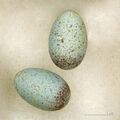 Cisticola erythrops - MHNT
 -
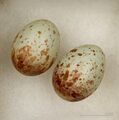 Cisticola erythrops sylvia - MHNT
 -
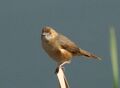 Non-breeding adult at Pietermaritzburg, South Africa
 -
 In Cuanza Norte Province, northern Angola


.jpg)

References
- ↑ BirdLife International (2016). "Cisticola erythrops". IUCN Red List of Threatened Species 2016. doi:10.2305/IUCN.UK.2016-3.RLTS.T22713268A94368373.en. https://www.iucnredlist.org/species/22713268/94368373. Retrieved 12 November 2021.
- ↑ Hartlaub, Gustav (1857) (in German). System der Ornithologie Westafrica's. Bremen: C. Schünemann. p. 58. https://www.biodiversitylibrary.org/page/48048881.
- ↑ Mayr, Ernst; Cottrell, G. William, eds (1986). Check-List of Birds of the World. 11. Cambridge, Massachusetts: Museum of Comparative Zoology. p. 85-86. https://www.biodiversitylibrary.org/page/14483786.
- ↑ Jobling, James A.. "erythrop". The Key to Scientific Names. Cornell Lab of Ornithology. https://birdsoftheworld.org/bow/key-to-scientific-names/search?q=erythrop.
- ↑ 5.0 5.1 Gill, Frank; Donsker, David; Rasmussen, Pamela, eds (February 2025). "Grassbirds, Donacobius, tetrakas, cisticolas, allies". IOC World Bird List Version 15.1. International Ornithologists' Union. https://www.worldbirdnames.org/bow/grassbirds/.
- ↑ Mayr, Ernst; Cottrell, G. William, eds (1986). Check-List of Birds of the World. 11. Cambridge, Massachusetts: Museum of Comparative Zoology. p. 87. https://www.biodiversitylibrary.org/page/14483788.
- ↑ Ryan, P.G. (2006). "Family Cisticolidae (Cisticolas and allies)". in del Hoyo, J.; Elliott, A.; Sargatal, J.. Handbook of the Birds of the World. 11: Old Word flycatchers to Old World Warblers. Barcelona, Spain: Lynx Edicions. pp. 378-491 [441]. ISBN 978-84-96553-06-4. https://archive.org/details/handbookofbirdso0011unse/page/441/mode/1up.
Wikidata ☰ Q1590193 entry
 |  |


