Biology:Verbena canadensis
| Verbena canadensis | |
|---|---|

| |
Scientific classification 
| |
| Kingdom: | Plantae |
| Clade: | Tracheophytes |
| Clade: | Angiosperms |
| Clade: | Eudicots |
| Clade: | Asterids |
| Order: | Lamiales |
| Family: | Verbenaceae |
| Genus: | Verbena |
| Species: | V. canadensis
|
| Binomial name | |
| Verbena canadensis | |
| Synonyms[1] | |
|
List
| |
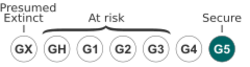
Verbena canadensis (syn. Glandularia canadensis), commonly known as rose mock vervain,[2] rose verbena,[3] clump verbena[4] or rose vervain[5] is a perennial herbaceous flowering plant in the verbena family (Verbenaceae) with showy pink to purple flowers. It is native to the eastern and south-central areas of the United States.[1] This species is widely cultivated as an ornamental, and naturalized populations have been established outside its native range, such as in the northeastern U.S.[6][7]
Description
V. canadensis is a perennial herb[8] that grows low to the ground, typically to about 1 foot (30 cm) high. Roots will form where stems touch the ground, and over time the plant will spread to form a low mound.[9] Leaves, up to 8 centimetres (3 in)long, are dark green on the upper surface and lighter green below. Leaves are semi-evergreen, opposite and pinnately-lobed.[4] Flowers are pink to purple, and consist of a tubular corolla that opens up into 4 or 5 spreading lobes. Flowers bloom in the spring and can persist until fall.[7] The plant attracts butterflies, rabbits, and deer.[8]
Distribution and habitat
Its natural habitat is in sunny areas such as glades, forest openings, and on bluffs.[7][10] It is tolerant of dry conditions.[11] In some areas, the presence of Verbena canadensis is indicative of high-quality natural communities.[10]
References
- ↑ 1.0 1.1 "Verbena canadensis (L.) Britton" (in en). Royal Botanic Gardens, Kew. http://www.plantsoftheworldonline.org/taxon/262956-2.
- ↑ "Glandularia canadensis (L.) Nutt.". Natural Resources Conservation Service. n.d.. https://plants.usda.gov/plant-profile/GLCA2.
- ↑ Denison, Edgar (2017). Missouri Wildflowers (Sixth ed.). Conservation Commission of the State of Missouri. pp. 55. ISBN 978-1-887247-59-7.
- ↑ 4.0 4.1 "Verbena canadensis (Clump Verbena, Rosa Verbena, Rose Vervain) North Carolina Extension Gardener Plant Toolbox". n.d.. https://plants.ces.ncsu.edu/plants/verbena-canadensis/.
- ↑ "Glandularia canadensis - Plant Finder". n.d.. https://www.missouribotanicalgarden.org/PlantFinder/PlantFinderDetails.aspx?kempercode=f204.
- ↑ "Glandularia canadensis". n.d.. https://gobotany.nativeplanttrust.org/species/glandularia/canadensis/.
- ↑ 7.0 7.1 7.2 Yatskievych, George (2013). Flora of Missouri, Volume 3. Missouri Botanical Garden Press. pp. 1208.
- ↑ 8.0 8.1 "Glandularia canadensis". n.d.. https://www.wildflower.org/plants/result.php?id_plant=glca2.
- ↑ ANPS Webmaster (13 February 2018). "Know Your Natives – Rose Vervain" (in en). https://anps.org/2018/02/13/know-your-natives-rose-vervain/.
- ↑ 10.0 10.1 "Rose Vervain (Glandularia canadensis)". n.d.. http://www.illinoiswildflowers.info/prairie/plantx/rs_vervainx.htm.
- ↑ "Glandularia canadensis". n.d.. https://missouriplants.com/Glandularia_canadensis_page.html.
Wikidata ☰ {{{from}}} entry
 |  |


