Biology:Bacidia rubella
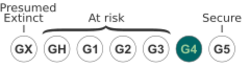
| Bacidia rubella | |
|---|---|

| |
Scientific classification 
| |
| Kingdom: | Fungi |
| Division: | Ascomycota |
| Class: | Lecanoromycetes |
| Order: | Lecanorales |
| Family: | Ramalinaceae |
| Genus: | Bacidia |
| Species: | B. rubella
|
| Binomial name | |
| Bacidia rubella (Hoffm.) A.Massal. (1852)
| |
| Synonyms[2] | |
|
List
| |
Bacidia rubella is a species of corticolous (bark-dwelling), crustose lichen in the family Ramalinaceae.[3] First described in 1796, it features a grey to yellow-green thallus with small granular structures covering its surface. When present, its distinctive fruiting bodies (apothecia) range from pale to dark red-brown in colour, measuring up to 1 mm in diameter. The species occurs widely throughout Britain and Ireland and is also broadly distributed across lowland central and northern Europe, typically inhabiting nutrient-rich bark of mature trees such as maple, ash, and elm in parklands, roadsides, and fertile woodlands. It generally avoids heavily polluted areas and favours continental, montane habitats in the Mediterranean region. It is known to host several species of fungi that specifically colonise lichens.
Taxonomy
Bacidia rubella was originally described as a new species in 1796 by the German lichenologist Georg Franz Hoffmann, who classified it as a species of Verrucaria.[4] Abramo Bartolommeo Massalongo reclassified it in Bacidia in 1852.[5]
Bacidia rubella belongs to a group of closely related lichens known as the Bacidia rubella group. Species within this group are generally characterised by their orange to red-brown apothecia, which contain Rubella-orange pigment primarily located in the subhymenium and [[Glossary of lichen terms#{{biology:{1}}}|{{Biology:{1}}}]]. Unlike other groups within the genus Bacidia, the [[Glossary of lichen terms#{{biology:{1}}}|{{Biology:{1}}}]] (the outer rim of the apothecium) of the Bacidia rubella group is composed of moderately gelatinised, branching hyphae, often containing clusters of crystals. These crystals vary among species, particularly in their distribution and solubility in chemical tests. Additionally, the pigmentation in the hymenium is faint and diffused, with no distinctly coloured epithecium present.[6]
Other members of the Bacidia rubella group include B. fraxinea, B. rosella, B. parathalassica, B. iberica, and the Mediterranean species B. thyrrenica. These species are differentiated based on subtle anatomical traits such as the arrangement and chemical solubility of crystals within their apothecia, as well as differences in ascospore size and septation.[6]
Description

Bacidia rubella is characterized by a thallus (the main body of the lichen) that ranges in colour from grey to yellow-green. The thallus has a distinctive texture that varies from thinly to richly [[Glossary of lichen terms#{{biology:{1}}}|{{Biology:{1}}}]]-[[Glossary of lichen terms#{{biology:{1}}}|{{Biology:{1}}}]], meaning it is covered with small granular structures (isidia) that measure 60–120 μm in diameter. The [[Glossary of lichen terms#{{biology:{1}}}|{{Biology:{1}}}]] cells (the photosynthetic algal partner in the lichen symbiosis) are 5–17 μm in diameter.[7]
Apothecia (fruiting bodies) are often absent in this species. When present, they typically measure 0.7–1 mm in diameter and are usually distinctly constricted at the base. These apothecia are flat, sometimes becoming convex, and range in colour from pale to dark red-brown. The margin of the apothecia is sometimes covered with a white, powdery coating ([[Glossary of lichen terms#{{biology:{1}}}|{{Biology:{1}}}]]). The [[Glossary of lichen terms#{{biology:{1}}}|{{Biology:{1}}}]] (the rim or margin of the apothecium) is colourless in its lower part, while the upper part is pale yellow-orange or yellow-straw coloured. In pruinose specimens, the exciple sometimes displays radiating streaks of minute crystals. The exciple is composed of hyphae (fungal filaments) with internal spaces ([[Glossary of lichen terms#{{biology:{1}}}|{{Biology:{1}}}]]) measuring 1–2 μm in diameter, or up to 5 μm in diameter toward the outer edge.[7]
The hymenium (the spore-producing layer) is 70–105 μm high and is either colourless or faintly orange-red or yellow in its upper part. The [[Glossary of lichen terms#{{biology:{1}}}|{{Biology:{1}}}]] (the tissue beneath the hymenium) is colourless, or pale yellow or orange-straw coloured in its upper part, and may intensify to yellow when treated with potassium hydroxide solution (K). The paraphyses (sterile filaments among the spore sacs) are 1–1.5 μm in diameter, either unbranched or forked in their upper portion, with their tips often slightly swollen to about 2.5 μm in diameter. The [[Glossary of lichen terms#{{biology:{1}}}|{{Biology:{1}}}]] (fungal spores produced in asci) typically measure 40–70 by 2.5–3 μm and are [[Glossary of lichen terms#{{biology:{1}}}|{{Biology:{1}}}]] (needle-shaped) with 3 to 7 (occasionally up to 13) septa (cross walls). The pycnidia (asexual reproductive structures) are 85–125 μm in diameter and range in colour from pale pink to red-brown. The conidia (asexual spores) measure 16–24 by about 0.5 μm and are curved or S-shaped (sigmoid).[7]
Habitat and distribution
In the United Kingdom, Bacidia rubella occurs mainly on the bark of mature trees, particularly those with nutrient-rich surfaces such as maple Acer, ash (Fraxinus), and elm (Ulmus). It is typically found in parklands, along roadsides, and within woodlands growing on fertile soils. On rare occasions, it may also inhabit sheltered gravestones or walls. This species is widespread throughout Britain and Ireland but becomes less common in western Scotland and is absent from areas affected by pollution.[7]
Bacidia rubella is broadly distributed beyond the United Kingdom, occurring across much of lowland central and northern Europe. Within the Mediterranean region, it typically occupies montane areas with climates that are more continental compared to coastal or lowland species within the group. Its ecological preference is nitrophilous, favouring habitats enriched by nutrients. This ecological adaptability enables Bacidia rubella to grow in a variety of continental environments, although it generally avoids heavily polluted areas.[8] In Nepal, Bacidia rubella has been reported at 300 m elevation in a compilation of published records.[9]
Species interactions
Bacidia rubella is a host species of the lichenicolous (lichen-dwelling) fungus species Muellerella hospitans,[10][8] Sporidesmium bacidiicola,[11] and Zwackhiomyces polischukii.[8]
References
- ↑ NatureServe. "Bacidia rubella" (in en). Arlington, Virginia. https://explorer.natureserve.org/Taxon/ELEMENT_GLOBAL.2.121570/.
- ↑ "GSD Species Synonymy. Current Name: Bacidia rubella (Hoffm.) A. Massal., Ric. auton. lich. crost. (Verona): 118, fig. 231 (1852)". Species Fungorum. https://www.speciesfungorum.org/GSD/GSDspecies.asp?RecordID=378397.
- ↑ "Bacidia rubella (Hoffm.) A. Massal.". Species 2000: Leiden, the Netherlands. https://www.catalogueoflife.org/data/taxon/5VYCW.
- ↑ Hoffmann, G.F. (1796) (in de). Deutschlands Flora oder botanisches Taschenbuch. Zweyter Theil für das Iahr 1795. Cryptogamie. p. 174.
- ↑ Massalongo, A.B. (1852) (in it). Ricerche sull'autonomia dei licheni crostosi. Verona: Dalla tipografia di A. Frizierio. p. 118. https://babel.hathitrust.org/cgi/pt?id=hvd.32044106404916&seq=140.
- ↑ 6.0 6.1 Llop, Esteve; Ekman, Stefan; Hladun, Néstor L. (2007). "Bacidia thyrrenica (Ramalinaceae, lichenized Ascomycota), a new species from the Mediterranean region, and a comparison of European members of the Bacidia rubella group". Nova Hedwigia 85 (3–4): 445–455. doi:10.1127/0029-5035/2007/0085-0445.
- ↑ 7.0 7.1 7.2 7.3 Cannon, P.; Ekman, S.; Kistenich, S.; LaGreca, S.; Printzen, C.; Timdal, E.; Aptroot, A.; Coppins, B. et al. (2023). Lecanorales: Ramalinaceae [revision 1, including the genera Bacidia, Bacidina, Bellicidia, Biatora, Bibbya, Bilimbia, Cliostomum, Kiliasia, Lecania, Megalaria, Mycobilimbia, Phyllopsora, Ramalina, Scutula, Thalloidima, Toninia, Toniniopsis and Tylothallia]. Revisions of British and Irish Lichens. 35. p. 12. https://britishlichensociety.org.uk/sites/default/files/Ramalinaceae%20rev%201a_0.pdf.

- ↑ 8.0 8.1 8.2 Khodosovtsev, Alexander Ye.; Darmostuk, Valeriy V. (2017). "Zwackhiomyces polischukii sp. nov., and other noteworthy lichenicolous fungi from Ukraine". Polish Botanical Journal 62 (1): 27–35. doi:10.1515/pbj-2017-0006. http://archive.sciendo.com/PBJ/pbj.2017.62.issue-1/pbj-2017-0006/pbj-2017-0006.pdf.
- ↑ Baniya, Chitra Bahadur; Solhøy, Torstein; Gauslaa, Yngvar; Palmer, Michael W. (2010). "The elevation gradient of lichen species richness in Nepal". The Lichenologist 42 (1): 83–96. doi:10.1017/S0024282909008627.
- ↑ Hawksworth, D.L. (1975). "Notes on British Lichenicolous Fungi, I". Kew Bulletin 30 (1): 183–203. doi:10.2307/4102884. https://www.jstor.org/stable/4102884.
- ↑ Diederich, Paul; Lawrey, James D.; Ertz, Damien (2018). "The 2018 classification and checklist of lichenicolous fungi, with 2000 non-lichenized, obligately lichenicolous taxa". The Bryologist 121 (3): 340–425 [381]. doi:10.1639/0007-2745-121.3.340. https://www.researchgate.net/publication/328374342.
Wikidata ☰ {{{from}}} entry
 |  |


