Biology:Premna microphylla
 | This article's lead section does not adequately summarize key points of its contents. (September 2024) |
| Premna microphylla | |
|---|---|
| "Premna microphylla" | |
Scientific classification 
| |
| Kingdom: | Plantae |
| Clade: | Tracheophytes |
| Clade: | Angiosperms |
| Clade: | Eudicots |
| Clade: | Asterids |
| Order: | Lamiales |
| Family: | Lamiaceae |
| Genus: | Premna |
| Species: | P. microphylla
|
| Binomial name | |
| Premna microphylla | |
| Synonyms[2] | |
| |
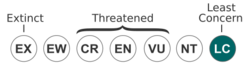
Premna microphylla is a tree[3] in the mint family (Lamiaceae).[2]
Names
P. microphylla has the English common names Japanese premna,[4] (Japanese) musk maple,[5] and Japanese neem tree.[5] It is also called tofu tree because of the tofu-like food made from the leaves.[6]
The specific epithet microphylla derives from Greek μικροϛ (micros) and φυλλον (phyllon) and means 'small leaves'.[5][7] The name for the genus Premna derives from the Greek πρέμνον (premnon, tree stump) refers to the short trunks that some species have.[5]
In Japanese it is called ハマクサギ (hamakusagi).[3] In China, it is known as 豆腐柴 (dòufu chái 'tofu wood'), 斑鸠树 (bānjiū shù 'turtledove tree'),[8] 臭黄荆 (chòu huáng jīng 'stinky yellow thorn'), 腐蜱 (fǔ pí 'rotten tick'), and 观音草 (guānyīn cǎo 'Guanyin grass').[9] In Taiwan it is called 臭黃荊 (chòu huáng jīng)[10] The plant is called cách lá nhỏ in Vietnamese.[11][12]
Description
P. microphylla is a tree[3] and has square, woody, mostly smooth stems and branches.[13] The plant reaches 2–6 m (6 ft 7 in–19 ft 8 in) in height,[9] and around 3 m (9.8 ft) wide.[5] It grows as a nanophanerophyte or phanerophyte.[2]
The leaves are sessile, ovate-lanceolate in shape and tapered near the tip.[13] The leaves grow in an opposite pattern.[5] The leaf margins are serrate from the middle to the apex.[13] Both sides of the leaves are scabrous and covered with very short 'hairs'.[13] The leaves have a strong odor[9] that has been compared to those of Serissa.[14]
The flowers are hermaphroditic[13] and grow in conical panicles.[5] The 5-part calyx is short,[13] cup-shaped, and purplish-green.[5] The calyx surrounds a funnel-shaped corolla[13] that is pale yellow.[9][5] The petals are 0.3–0.4 inches (7.6–10.2 mm) long.[13] The cream-colored and zygomorphic flowers bloom in May and August.[3]
The drupe is obovate to nearly spherical and purple-black when ripe.[9][5]
Major compounds found in the essential oil include blumenol c, β-cedrene, limonene, α-guaiene, cryptone, and α-cyperone.[15]
Distribution
The plant is found in southern China,[13][2][5] central and southern Japan,[2][3] and Taiwan.[2][10][5] The type specimen was collected by Scottish botanist and plant hunter Robert Fortune in China.[13] It prefers growing in slightly acidic to acidic soil mainly on woodland edges or understory at an altitude of 500–1,000 metres (1,600–3,300 ft) in elevation.[9]
Ecology
The growing season is yearly from March to November.[9] The pollination syndrome for P. microphylla is melittophily, with bee and wasp pollinators including Xylocopa amamensis, Cerceris yuwanensis, and Hylaeus insularum.[3] There are no major diseases or insect pests known.[5] There is some evidence that sika deer will nibble on the tree occasionally.[16]
Uses
P. microphylla is used for food. The leaves can be used to make a pectin-rich gel that is something like tofu.[9][8] The jelly is similar to grass jelly but it not usually called that, unlike other grass jelly plants. This green gel is called 神仙豆腐 (shénxiān dòufu, immortal/divine tofu)[8] or 观音豆腐 (Guānyīn dòufu, Guanyin tofu).[9] In English it is sometimes called green leaf tofu.[6] A similar 'fairy tofu' is made from the leaves of Premna puberula.[17] The leaves are high in protein (13.48%),[9] and while not as much as soybeans, it is high for a leaf vegetable and ranks closer to cereal grains like hard wheat (12.6%) rather than spinach (2.9%).[18][19] To make the 'tofu', the leaves are washed and crushed with some water to facilitate grinding.[9] Culinary ash is added to the strained mixture and it is allowed to set.[9] Some cooks burn specific wood for the ash, such as Osmanthus.[20] The dish is considered a refreshing summer treat.[9] Production is small and local, and not done on an industrial scale.[9]
Much effort has been made to develop P. microphylla as an industrial source of pectin.[9] The leaves contain 30-40% pectin,[9] much higher than the typical sources, apple pomace (10-15%) and citrus peel (20-30%).[21]
The plant is also used for bonsai[5] because of its small, strong-smelling leaves.[14] The bonsai trunks are evocative of driftwood, similar to shimpaku juniper.[14] A specimen of P. microphylla was used as an autonomous bonsai in the art installation titled Premna Daemon.[22][23][24][25]
References
- ↑ Zhao, L., Botanic Gardens Conservation International (BGCI) & IUCN SSC Global Tree Specialist Group. 2019. Premna microphylla. The IUCN Red List of Threatened Species 2019: e.T147650548A147650550. https://dx.doi.org/10.2305/IUCN.UK.2019-2.RLTS.T147650548A147650550.en . Accessed on 3 July 2024.
- ↑ 2.0 2.1 2.2 2.3 2.4 2.5 "Premna microphylla" (in en). Kew: Board of Trustees of the Royal Botanic Gardens, Kew. https://wcsp.science.kew.org/synonomy.do?name_id=165046.
- ↑ 3.0 3.1 3.2 3.3 3.4 3.5 Kato, Makoto (31 March 2000). "Anthophilous insect community and plant-pollinator interactions on Amami Islands in the Ryukyu Archipelago, Japan" (in en). Contributions from the Biological Laboratory, Kyoto University 29 (2): 157–254. ISSN 0452-9987. OCLC 957900493.
- ↑ Yang, Xinrong (9 March 2013) (in en). Encyclopedic Reference of Traditional Chinese Medicine. Springer Berlin Heidelberg. p. 325. ISBN 9783662051771. OCLC 1012445569. https://books.google.com/books?id=62n7CAAAQBAJ. Retrieved 3 July 2024.
- ↑ 5.00 5.01 5.02 5.03 5.04 5.05 5.06 5.07 5.08 5.09 5.10 5.11 5.12 5.13 "Premna microphylla" (in en). St. Louis, MO. https://www.missouribotanicalgarden.org/PlantFinder/PlantFinderDetails.aspx?taxonid=359365.
- ↑ 6.0 6.1 "The Tofu That Grows On Trees" (in en). RADII. 30 November 2018. https://www.youtube.com/watch?v=KehOMXg9Wo4.
- ↑ Griffith, Chuck. "micranthiformis – mitissimus" (in en). https://botanicalepithets.net/dictionary/dictionary.121.html.
- ↑ 8.0 8.1 8.2 LI, Gang-feng; YAN, Hong-bo; KANG, Ming; WANG, Huan; HE, Zhi-jun; ZHOU, Qiang-ying; ZHANG, Hua-min (19 February 2017). "豆腐柴叶豆腐的加工工艺优化" (in zh). 食品研究与开发 38 (14): 68–74. doi:10.3969/j.issn.1005-6521.2017.14.015. ISSN 1005-6521. http://www.tjfrad.com.cn/html/2017/14/201714015.htm. Retrieved 3 July 2024.
- ↑ 9.00 9.01 9.02 9.03 9.04 9.05 9.06 9.07 9.08 9.09 9.10 9.11 9.12 9.13 9.14 9.15 LI, Mei-qing; WANG, Yuan-li; DONG, Ming; HE, Jin-ling (2011). "豆腐柴的研究与应用综述" (in zh). Science and Technology of Food Industry (3): 462–464. doi:10.13386/j.issn1002-0306.2011.03.029. ISSN 1002-0306. http://www.spgykj.com/en/article/doi/10.13386/j.issn1002-0306.2011.03.029. Retrieved 3 July 2024.
- ↑ 10.0 10.1 Chung, KF; Shao, KT (17 August 2022). "The National Checklist of Taiwan (Catalogue of Life in Taiwan, TaiCoL)" (in en). https://ipt.taibif.tw/resource?r=taibnet_com_all&v=1.9.
- ↑ "Premna microphylla Turcz." (in en). BotanyVN – Botany Research and Development Group of Vietnam. https://www.botanyvn.com/cnt.asp?param=edir&v=Premna%20microphylla&list=species&lg=en. "Scientific name: Premna microphylla Turcz. Vietnamese name: Cách lá nhỏ"
- ↑ Văn Chi Võ (2007) (in vi). Sách tra cứu tên cây cỏ Việt Nam. Nhà xuất bản Giáo dục. OCLC 271047166. https://books.google.com/books?id=3IHx64XhmPwC&q=%22c%C3%A1ch%20l%C3%A1%20nh%E1%BB%8F%22. Retrieved 6 July 2024.
- ↑ 13.00 13.01 13.02 13.03 13.04 13.05 13.06 13.07 13.08 13.09 Cite error: Invalid
<ref>tag; no text was provided for refs namedTurczaninow - ↑ 14.0 14.1 14.2 Chan, Peter (8 September 2014) (in en). The Bonsai Bible The Definitive Guide to Choosing and Growing Bonsai. Octopus. ISBN 9781784720063. OCLC 897024475. https://books.google.com/books?id=nhKABAAAQBAJ&dq=%22Premna%20microphylla%22%20%22bonsai%22&pg=PT448. Retrieved 3 July 2024.
- ↑ Zhang, Han-Yu; Gao, Yang; Lai, Peng-Xiang (March 2017). Tzakou, Olga. ed. "Chemical Composition, Antioxidant, Antimicrobial and Cytotoxic Activities of Essential Oil from Premna microphylla Turczaninow" (in en). Molecules 22 (3): 381. doi:10.3390/molecules22030381. OCLC 7181596296. PMID 28264507.
- ↑ Terada, Chisato; Tatsuzawa, Shirow; Kawamura, Takashi; Fujioka, Masahiro (15 February 2010). "ヤクシカの餌場としての林道脇植生の評価" (in ja). 保全生態学研究 (Japanese Journal of Conservation Ecology) 15: 197. doi:10.18960/hozen.15.2_193. ISSN 2424-1431. OCLC 9658348117. https://www.jstage.jst.go.jp/article/hozen/15/2/15_KJ00007405310/_article/-char/ja/. Retrieved 7 July 2024.
- ↑ Zhang, Ming-Sheng (2012-09-28). "A Key Component Determination on Forming Fairy Tofu from the Leaf of Premna puberula (Verbenaceae)". Journal of Applied Pharmaceutical Science 2 (9): 031–035. doi:10.7324/JAPS.2012.2906.
- ↑ Steinke, Waggle (1992). New protein foods in human health: nutrition, prevention and therapy. CRC Press. pp. 91–100. ISBN 978-0-8493-6904-9.
- ↑ "Plant proteins in relation to human protein and amino acid nutrition". The American Journal of Clinical Nutrition 59 (5 Suppl): 1203S–1212S. May 1994. doi:10.1093/ajcn/59.5.1203s. PMID 8172124. http://www.ajcn.org/content/59/5/1203S.full.pdf. Retrieved 6 July 2024.
- ↑ "Guanyin Tofu观音豆腐". Mar 3, 2022. https://www.youtube.com/watch?v=3Bh36gZrMBQ.
- ↑ Srivastava, Pranati; Malviya, Rishabha (March 2011). "Sources of pectin, extraction and its applications in pharmaceutical industry − An overview" (in en). Indian Journal of Natural Products and Resources (India: NISCAIR-CSIR) 2 (1): 10–18. ISSN 0975-1033. OCLC 724554396. http://nopr.niscpr.res.in/handle/123456789/11534. Retrieved 6 July 2024.
- ↑ Roth, Christopher; Malik, Suhail; Seidler, Paul; Rafferty, Penny; Noorizadeh, Bahar; Raesaar, Kristel (25 May 2022) (in en). REALTY Beyond the Traditional Blueprints of Art & Gentrification. Hatje Cantz Verlag GmbH. pp. 151–152. ISBN 9783775753432. OCLC 1372166991. https://books.google.com/books?id=sPO9EAAAQBAJ. Retrieved 3 July 2024.
- ↑ "Premna Daemon — An Introduction via a History of Autonomy in the Cryptosphere" (in en). 16 November 2018. https://terra0.medium.com/premna-daemon-an-introduction-via-a-history-of-autonomy-in-the-cryptosphere-3cee15e92fe2.
- ↑ "terra0" (in en). https://github.com/terra0project/source?tab=readme-ov-file#premna-daemon-%EF%B8%8F-.
- ↑ "Premna Daemon – An Introduction via a History of Autonomy in the Cryptosphere" (in en). 9 November 2023. https://generalrelativity.org/blog/premna-daemon-an-introduction-via-a-history-of-autonomy-in-the-cryptosphere/.
External links
Wikidata ☰ Q15244762 entry
 |  |


