Biology:Scarus chameleon
| Scarus chameleon | |
|---|---|

| |
| Terminal phase, in Indonesia | |
Scientific classification 
| |
| Kingdom: | Animalia |
| Phylum: | Chordata |
| Class: | Actinopterygii |
| Order: | Labriformes |
| Family: | Scaridae |
| Genus: | Scarus |
| Species: | S. chameleon
|
| Binomial name | |
| Scarus chameleon Choat & Randall, 1986
| |
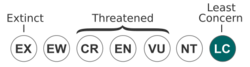
Scarus chameleon, commonly known as the chameleon parrotfish, is a species of marine fish in the subfamily Scarinae. It inhabits reefs in the Pacific and eastern Indian Ocean.[2] It is named after its ability to rapidly change colouration.[3]
Taxonomy
Until 1986, it was misidentified as Scarus lunula, a synonym of Scarus festivus.[3] It is similar in appearance to S. festivus,[3] which is its closest relative and overlaps with it in distribution.[4] The type locality is Sumilon Island in the Philippines.[3]
Description

<div class="thumbimage" style="width: 250px; height: Expression error: Unrecognized punctuation character "[".px; overflow: hidden;">
<div style="position: relative; top: -Expression error: Unrecognized punctuation character "[".px; left: -Expression error: Unrecognized punctuation character "[".px; width: Template:Easy CSS image crop/bSizepx">
The species is known to reach 248 mm (9.8 in) SL. Females may be sexually mature by the time they reach 115 mm (4.5 in) SL. Females may be as small as 149.5 mm (5.89 in) SL before transitioning into terminal phase males, but female as large as 175.5 mm (6.91 in) SL are known. [3]
Like most parrotfish, S. chameleon changes colour phase as it grows. The young juveniles, initial phase, and terminal phases of S. chameleon are all highly variable in colouration and able to rapidly change colouration, which is a challenge when attempting to identifying it.[5][6] The initial phase includes females and primary males,[3] and may appear very similar to northern and inshore populations of the closely related and more common S. rivulatus.[3][4][5] The secondary males of the terminal phase are more distinct, but such terminal phase fish can change rapidly colours between light and dark coloured liveries.[5]
References
- ↑ Choat, J.H.; Russell, B.; Clements, K.D.; Rocha, L.A.; Myers, R.; Lazuardi, M.E.; Muljadi, A.; Pardede, S. et al. (2012). "Scarus chameleon" (in en). IUCN Red List of Threatened Species 2012. doi:10.2305/IUCN.UK.2012.RLTS.T190707A17797851.en. https://www.iucnredlist.org/species/190707/17797851. Retrieved 11 August 2026.
- ↑ Froese, Rainer and Pauly, Daniel, eds. (2026). "Scarus chameleon " in FishBase. April 2026 version.
- ↑ 3.0 3.1 3.2 3.3 3.4 3.5 3.6 Choat, J. Howard; Randall, John E. (1986-12-01). "A revision of the parrotfishes (family Scaridae) of the Great Barrier Reef of Australia with description of a new species" (in en). Records of the Australian Museum 38 (4): 175–239. doi:10.3853/j.0067-1975.38.1986.181. ISSN 0067-1975. https://journals.australian.museum/choat-and-randall-1986-rec-aust-mus-384-175239/.
- ↑ 4.0 4.1 Choat, John. H.; Klanten, Oya. S.; Van Herwerden, Lynne; Robertson, D. Ross; Clements, Kendall D. (2012-11-01). "Patterns and processes in the evolutionary history of parrotfishes (Family Labridae)". Biological Journal of the Linnean Society 107 (3): 529–557. doi:10.1111/j.1095-8312.2012.01959.x. ISSN 0024-4066.
- ↑ 5.0 5.1 5.2 "Scarus chameleon" (in en). https://reeflifesurvey.com/species/scarus-chameleon/.
- ↑ Bellwood, David R.; Choat, J. Howard (1989-06-30). "A description of the juvenile phase colour patterns of 24 parrotfish species (family Scaridae) from the Great Barrier Reef, Australia" (in en). Records of the Australian Museum 41 (1): 1–41. doi:10.3853/j.0067-1975.41.1989.134. ISSN 0067-1975. https://journals.australian.museum/bellwood-and-choat-1989-rec-aust-mus-411-141/.
Wikidata ☰ Q2570964 entry
 |  |


