Biology:Toninia squalida
| Toninia squalida | |
|---|---|

| |
Scientific classification 
| |
| Kingdom: | Fungi |
| Division: | Ascomycota |
| Class: | Lecanoromycetes |
| Order: | Lecanorales |
| Family: | Ramalinaceae |
| Genus: | Toninia |
| Species: | T. squalida
|
| Binomial name | |
| Toninia squalida (Ach.) A.Massal. (1852)
| |
| Synonyms[2] | |
|
List
| |
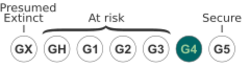
Toninia squalida is a species of lichen in the family Ramalinaceae.[3] It forms small brown scale-like structures that often merge into crusts, typically growing on calcareous rocks or base-rich soils in upland and arctic regions. The species was first described in 1810 by the Swedish lichenologist Erik Acharius as Lecidea squalida, and was transferred to the genus Toninia by Abramo Bartolommeo Massalongo in 1852. Found across the Northern Hemisphere from temperate mountains to arctic zones, it is a scarce alpine species in Britain, mainly recorded from the Scottish Highlands.
Taxonomy
Toninia squalida was first described scientifically in 1810 by the Swedish lichenologist Erik Acharius under the name Lecidea squalida. In his protologue, Acharius characterised the species by its unequal blackish-grey to brownish granular crust with scattered marginal apothecia, these confluent into irregular black conglomerations with white interiors. He cited previous references by Schleicher and noted its occurrence in the Alps and Switzerland on Schleicher's authority. Acharius distinguished L. squalida from the closely related Lecidea miscella (now also in Toninia) and Lecidea conglomerata, noting differences in crustal morphology, colour, and the nature of the apothecial structure. He observed that whilst the powdery crust seldom forms a distinct thallus as in Lecidea miscella, it can nonetheless be granular and uneven, [[Glossary of lichen terms#{{biology:{1}}}|{{Biology:{1}}}]], and range from green to ashen-grey or blackish in colour.[4]
Abramo Bartolommeo Massalongo reclassified the species in Toninia in 1852 to give it the binomial name by which it is now known. Massalongo established Toninia as a new genus to accommodate species previously placed in Lecidea and Biatora that shared distinctive characteristics, including solid, plane apothecia with a prominent margin, and ascospores that are oblong to somewhat club-shaped with eight spores per ascus. In describing Toninia squalida, Massalongo characterised it by its grey-brown to olivaceous-grey thallus that is whitish below, cartilaginous, and squamulose to lobate with a wrinkled to [[Glossary of lichen terms#{{biology:{1}}}|{{Biology:{1}}}]] surface bearing scattered [[Glossary of lichen terms#{{biology:{1}}}|{{Biology:{1}}}]]. He noted the black apothecia with white interiors occurring singly or confluently, with prominent flat margins. Massalongo reported collecting the species on rocks covering an old wooden roof in Verona, and mentioned it had been recorded on Monte Baldo.[5]
Description
The thallus of Toninia squalida is composed of small, scale-like units ([[Glossary of lichen terms#{{biology:{1}}}|{{Biology:{1}}}]]) to about 3 mm across that often multiply and coalesce into a more or less continuous crust. Individual squamules are shallowly concave to slightly convex. Their upper surface is brown to dark brown, sometimes with a greyish cast; it is matte rather than frosted (not [[Glossary of lichen terms#{{biology:{1}}}|{{Biology:{1}}}]]) and may show fine cracking. The margins are the same colour as the surface and there are no pseudocyphellae (the tiny pores some lichens have for gas exchange). In section, the upper [[Glossary of lichen terms#{{biology:{1}}}|{{Biology:{1}}}]] is 25–100 micrometres (μm) thick and includes a 20–30 μm [[Glossary of lichen terms#{{biology:{1}}}|{{Biology:{1}}}]] (a thin skin of dead outer hyphae); calcium oxalate crystals are absent. The lower cortex is pale brown and only weakly developed. The [[Glossary of lichen terms#{{biology:{1}}}|{{Biology:{1}}}]] (green-algal partner) forms a patchy, discontinuous layer, and the medulla lacks crystals.[6]
The fruiting bodies (apothecia) are up to 1.5 mm in diameter, with [[Glossary of lichen terms#{{biology:{1}}}|{{Biology:{1}}}]] that are flat to slightly convex and again not pruinose. The [[Glossary of lichen terms#{{biology:{1}}}|{{Biology:{1}}}]] (the ring of fungal tissue forming the margin) is indistinct: the rim is dark brown and may appear greenish, while the inner part is pale brown to colourless. Routine spot tests on these pigments give K– reactions; the rim may turn violet with the N (nitric acid) test, and the [[Glossary of lichen terms#{{biology:{1}}}|{{Biology:{1}}}]] (the thin, often green film on top of the disc) is K– but N+ (violet). The spore-bearing layer (hymenium) is clear and 70–80 μm tall, underlain by a colourless to pale brown [[Glossary of lichen terms#{{biology:{1}}}|{{Biology:{1}}}]].[6]
Ascospores are needle-like ([[Glossary of lichen terms#{{biology:{1}}}|{{Biology:{1}}}]]), measuring 17–45 × 3–5 μm, and are divided by 3–7 cross-walls (septa). No secondary metabolites (lichen products) were detected using thin-layer chromatography.[6]
Habitat and distribution
Toninia squalida is chiefly terricolous, favouring base-rich soils and humus; it also occurs on weathered, slightly calcareous or other base-rich siliceous rocks in dry, upland situations. Young thalli are often intermixed with cyanobacteria or nest within small cyanolichen patches.[7]
In Britain it is a scarce alpine species of calcareous rocks, typically nestled among mosses along damp seepage lines; confirmed records are concentrated in the Scottish Highlands,[6] including Ben Lawers and Caenlochan.[8][9]
Globally the species ranges broadly across the Northern Hemisphere, extending from temperate uplands into arctic and subarctic zones. It is listed across numerous sectors of the Pan-Arctic, and North American records include Alaskan sites where it grows on soil over rock.[10]
References
- ↑ NatureServe. "Toninia squalida" (in en). Arlington, Virginia. https://explorer.natureserve.org/Taxon/ELEMENT_GLOBAL.2.124878/.
- ↑ "GSD Species Synonymy. Current Name: Toninia squalida (Ach.) A. Massal., Ric. auton. lich. crost. (Verona): 108 (1852)". Species Fungorum. https://www.speciesfungorum.org/GSD/GSDspecies.asp?RecordID=407731.
- ↑ "Toninia squalida (Ach.) A. Massal.". Species 2000: Leiden, the Netherlands. https://www.catalogueoflife.org/data/taxon/7CGBS.
- ↑ Acharius, Erik (1810) (in la). Lichenographia Universalis. Göttingen: Frid. Danckwerts. p. 169. https://www.biodiversitylibrary.org/page/44219445.
- ↑ Massalongo, A.B. (1852). Ricerche sull'autonomia dei licheni crostosi. p. 108.
- ↑ 6.0 6.1 6.2 6.3 Cannon, P.; Ekman, S.; Kistenich, S.; LaGreca, S.; Printzen, C.; Timdal, E.; Aptroot, A.; Coppins, B. et al. (2023). Lecanorales: Ramalinaceae [revision 1, including the genera Bacidia, Bacidina, Bellicidia, Biatora, Bibbya, Bilimbia, Cliostomum, Kiliasia, Lecania, Megalaria, Mycobilimbia, Phyllopsora, Ramalina, Scutula, Thalloidima, Toninia, Toniniopsis and Tylothallia]. Revisions of British and Irish Lichens. 35. p. 70. https://britishlichensociety.org.uk/sites/default/files/Ramalinaceae%20rev%201a_0.pdf.

- ↑ Nimis, P.L.; Conti, M.; Martellos, S. (1 December 2001). "Toninia squalida (Ach.) A. Massal.". https://italic.units.it/index.php?num=2376&procedure=taxonpage.
- ↑ Gilbert, O.L.; Fox, B.W.; Purvis, O.W. (1982). "The lichen flora of a high-level limestone-epidiorite outcrop in the Ben Alder Range, Scotland". The Lichenologist 14 (2): 165–174. doi:10.1017/S0024282982000309. Bibcode: 1982ThLic..14..165G.
- ↑ Gilbert, O.L.; Coppins, B.J.; Fox, B.W. (1988). "The lichen flora of Ben Lawers". The Lichenologist 20 (3): 201–243. doi:10.1017/S0024282988000271. Bibcode: 1988ThLic..20..201G.
- ↑ Kristinsson, Hörður; Hansen, Eric Steen; Zhurbenko, Mikhail (22 December 2006). Panarctic lichen checklist (Report). p. 45. https://library.arcticportal.org/276/1/Panarctic_lichen_checklist.pdf.
Wikidata ☰ Q10699898 entry
 |  |


