The Sony Watchman is a line of portable pocket televisions trademarked and produced by Sony. The line was introduced in 1982[1] and discontinued in 2000.
Its name came from a portmanteau formed of "Watch" (watching television) and "man" from Sony's Walkman personal cassette audio players. There were more than 65 models of the Watchman before its discontinuation. As the models progressed, display size increased and new features were added. Due to the switch to digital broadcasting, most models of the Sony Watchman can no longer be used to receive live television broadcasts without the use of a digital converter box.
The initial model was introduced in 1982 as the FD-210 (FD-200 in Japan), which had a black & white five-centimeter (2") Cathode-ray tube display. The device weighed around 650 grams (23 oz), with a measurement of 87 x 198 x 33 millimeters (3½" x 7¾" x 1¼"). The device was sold in Japan with a price of 54,800 yen. Roughly two years later, in 1984, the device was introduced to Europe and North America.[2][3]
Later releases
Sony manufactured more than 65 models of the Watchman before its discontinuation in 2000. Upon the release of further models after the FD-210, the display size increased, and new features were introduced. The FD-3, introduced in 1987, had a built-in digital clock. The FD-30, introduced in 1984 had a built-in AM/FM Stereo radio. The FD-40/42/44/45 were among the largest Watchmen, utilizing a 4" CRT display. The FD-40 introduced a single composite A/V input. The FD-45, introduced in 1986, was water-resistant. In 1988/1989, the FDL 330S color Watchman TV/Monitor with LCD display was introduced. In 1990, the FDL-310, a Watchman with a color LCD display was introduced. The FD-280/285, made from 1990 to 1994, was the last Watchman to use a black and white CRT display. One of the last Watchmen was the FDL-22 introduced in 1998, which featured an ergonomic body which made it easier to hold, and introduced Sony's Straptenna, where the wrist strap served as the antenna.
Marketing and media
A model of the Sony Watchman (FD-40A) is seen multiple times in the film Rain Man, and the FD-210 is in The Jönsson Gang Gets Gold Fever.
It is a single internal entity overseeing all wholly owned development studios within SIE. It is responsible for the creative and strategic direction of development and production of all computer entertainment software by all SIE–owned studios, all of which is typically produced exclusively for the PlayStation family of consoles.
With the launch of the PlayStation 5 in 2020, Worldwide Studios brands all releases be it internal or externally developed under the "PlayStation Studios" label.[3]
History
SCE Worldwide Studios (SCE Worldwide Studios) was established on September 14, 2005, with Phil Harrison being appointed as president.[4] On May 16, 2008, Shuhei Yoshida became president.[5] In April 2016, Sony's Sony Computer Entertainment (SCE) and Sony Network Entertainment International (SNEI) divisions merged, creating SIE Worldwide Studios.[5] Hermen Hulst succeeded Shuhei Yoshida as president of SIE Worldwide Studios on November 7, 2019, with Yoshida being delegated to lead Sony's indie development.[6]
Naughty Dog is home to the ICE Team, one of Sony's Worldwide Studios central technology groups. The term ICE originally stands for Initiative for a Common Engine which describes the original purpose of the group.[25] The ICE Team focuses on creating core graphics technologies for Sony's worldwide first party published titles, including low-level game engine components, graphics processing pipelines, supporting tools, and graphics profiling and debugging tools. The ICE Team also supports third party developers with a suite of engine components, and a graphics analysis, profiling, and debugging tool for the RSX. Both enable developers to get better performance out of PlayStation hardware.[26][27]
XDev
XDev Europe, established in 2000 and based in Liverpool, England,[7] collaborates with independent development studios across Europe and other PAL territories to publish content to PlayStation platforms all over the world. XDev has helped to create and publish, titles such as the LittleBigPlanet, Buzz!, MotorStorm and Invizimals series, Super Stardust HD, Heavenly Sword, Heavy Rain, Beyond, Tearaway and Resogun. Partners include independent developers such as Quantic Dream, Magenta Software, Climax Studios, Novarama, Supermassive Games and Sumo Digital, as well as SCE subsidiaries such as Media Molecule and Guerrilla Games. In addition to funding projects, XDev offer full production, project management and game design support. Titles are also supported with community management, online production and dedicated outsourcing management facilities. XDev work directly with Marketing and PR teams in all Sony territories to promote and publish games worldwide.[28][29]


 Various models of Sony Watchmen
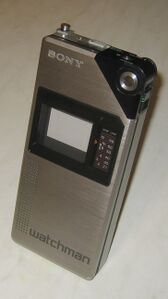 A Sony FD-210 Watchman
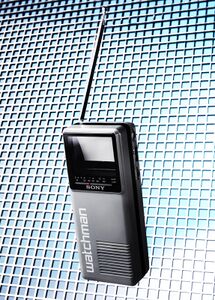 Sony FD-10 Pocket Watchman
.jpg)


