Biology:Steppe rat snake
| Steppe rat snake | |
|---|---|

| |
Scientific classification 
| |
| Kingdom: | Animalia |
| Phylum: | Chordata |
| Class: | Reptilia |
| Order: | Squamata |
| Suborder: | Serpentes |
| Family: | Colubridae |
| Genus: | Elaphe |
| Species: | E. dione
|
| Binomial name | |
| Elaphe dione (Pallas, 1773)
| |
| Synonyms[1] | |
| |
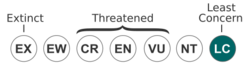
Elaphe dione, commonly known as Dione's rat snake, the steppe rat snake, or the steppes rat snake, is a species of snake in the family Colubridae. The species is native to Asia and Eastern Europe. There are no subspecies that are recognized as being valid. A large specimen from Putyatin Island measured up to 90 cm (3.0 ft) in length.[2]
Etymology
The specific name, dione, refers to the Greek mythological figure Dione who was the mother of Aphrodite.[3]
Habitat
E. dione is found in eastern Ukraine, southern and southeastern Russia, Central Asia, Iran, Afghanistan, Mongolia, parts of China, and Korea.[4][1] It is found in a wide variety of habitats including forest, shrubland, grassland, rocky areas, desert, freshwater wetlands, and disturbed areas, at altitudes from sea level to 3,580 m (2.22 mi).[4]
Behavior
An adult female mates with two or more males, sometimes copulating with two males at the same time.[5] E. dione is oviparous,[1] and adult females lay a clutch of 3–15 eggs in July or August,[4] though some can lay a clutch of up to 24 eggs.[6]
References
- ↑ 1.0 1.1 1.2 Elaphe dione at the Reptarium.cz Reptile Database
- ↑ Ratnikov, V. (2022). "Comparative Osteology of Two Far Eastern Species of Ratsnakes (Serpentes: Colubridae), Elaphe dione (Pallas, 1773) and E. schrenckii (Strauch, 1873), for the Purpose of Palaeontological Studies". Asian Herpetological Research 13 (1): 1–22. doi:10.16373/j.cnki.ahr.210021.
- ↑ Beolens, Bo; Watkins, Michael; Grayson, Michael (2011). The Eponym Dictionary of Reptiles. Baltimore: Johns Hopkins University Press. xiii + 296 pp. ISBN 978-1-4214-0135-5. (Elaphe dione, p. 73).
- ↑ 4.0 4.1 4.2 Cite error: Invalid
<ref>tag; no text was provided for refs namediucn status 19 November 2021 - ↑ Do, M.S.; Choi, J.H.; Lee, H.-T.; Lee, S.-C. (2004). "Mating System and Behavior of Steppe Rat Snake (Elaphe dione) in South Korea". Russian Journal of Herpetology 31 (1): 56–59. doi:10.30906/1026-2296-2024-31-1-56-59.
- ↑ Pokhilyuk, Nikita E. (2022). "Notes on Captive Breeding of Three Snake Species (Colubridae) from the Russian Far East". Jordan Journal of Natural History 9 (1): 19–23.
Further reading
- Boulenger GA (1894). Catalogue of the Snakes in the British Museum (Natural History). Volume II., Containing the Conclusion of the Colubridæ Aglyphæ. London: Trustees of the British Museum (Natural History). (Taylor and Francis, printers). xi + 382 pp. + Plates I-XX. (Coluber dione, pp. 44–45). doi:10.5962/bhl.title.8316
- Pallas PS (1773). Reise durch verschiedenen Provinzen des Russischen Reichs, Zweiter Theil. [=Travels through different provinces of the Russian Empire, Volume 2]. Saint Petersburg: Kaiserlichen Akademie der Wissenschaften. 744 pp. (Coluber dione, new species, p. 717). (in German and Latin).
- Shannon FA (1956). "The Reptiles and Amphibians of Korea". Herpetologica 12 (1): 22–49. JSTOR 3889565
- Stejneger L (1907). Herpetology of Japan and Adjacent Territory. United States National Museum Bulletin 58. Washington, District of Columbia: Smithsonian Institution. xx + 577 pp. (Elaphe dione, new combination, pp. 315–318, Figure 272).
Wikidata ☰ Q533192 entry
 |  |


