Engineering:Hwasong-11A
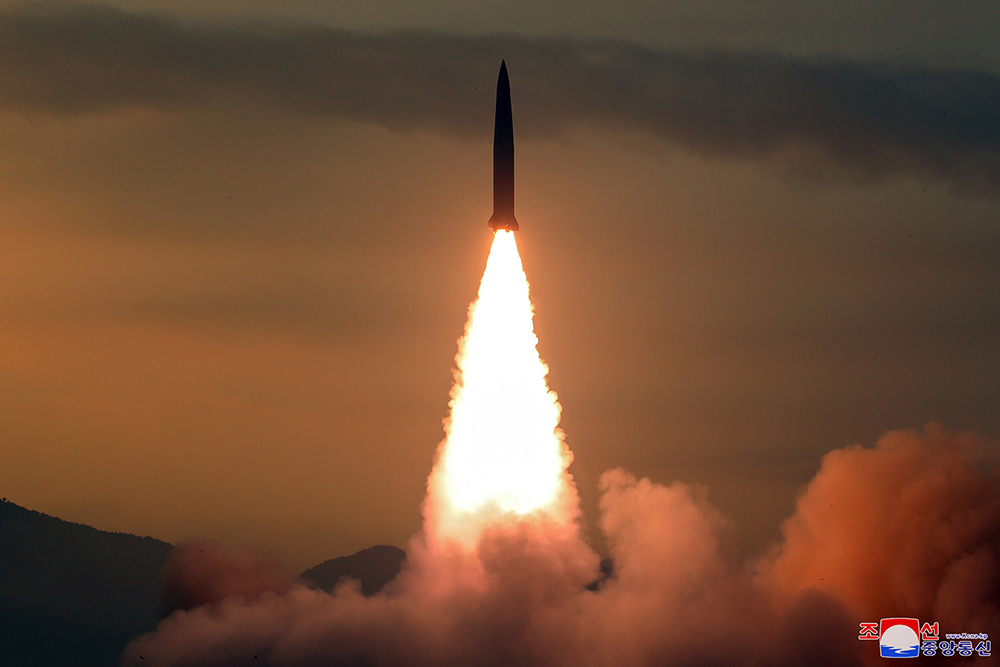
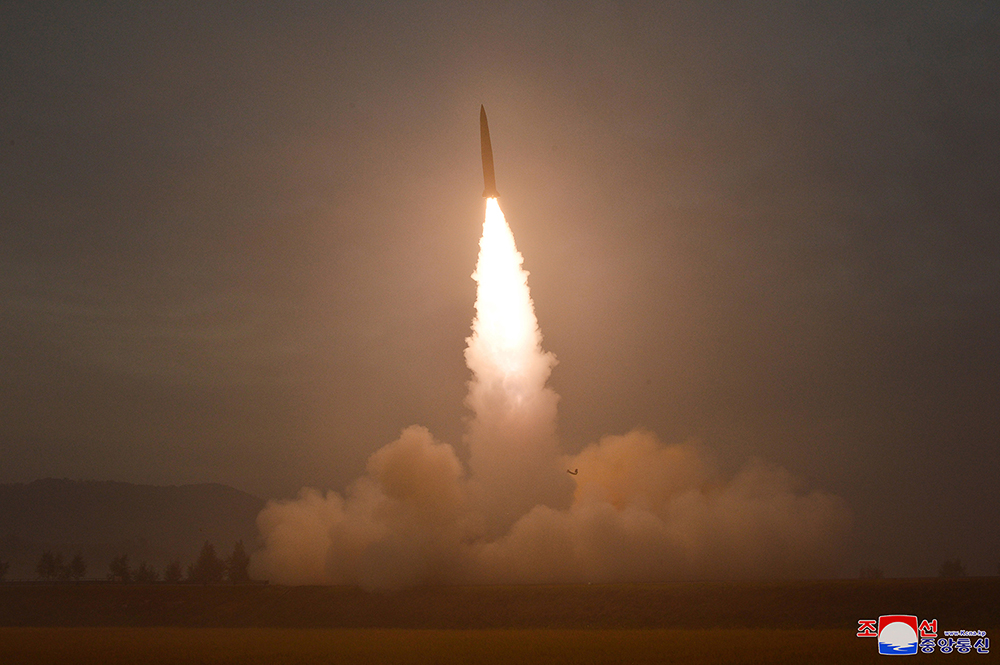
The Hwasong-11A (Korean: 《화성포-11가》형; lit. Mars Artillery Type 11A), also known as KN-23 under the United States naming convention and other names,[lower-alpha 1] is a North Korean single-stage, solid-fueled short-range ballistic missile. Unveiled in February 2018 and first test-fired in May 2019, Hwasong-11A is the most notable variant of Hwasong-11 series of solid-fueled SRBMs. Analysts believe the missile, with its quasi-ballistic trajectory and a range of up to 900 km (560 mi), may be able to penetrate South Korean missile defenses. It can be launched from road-mobile platforms, railway car and silo. Variants of the Hwasong-11A include a larger warhead version, a smaller version and an underwater-launched version. The missile has been reported to be used by Russian forces during the Russo-Ukrainian war.
Description
Missile
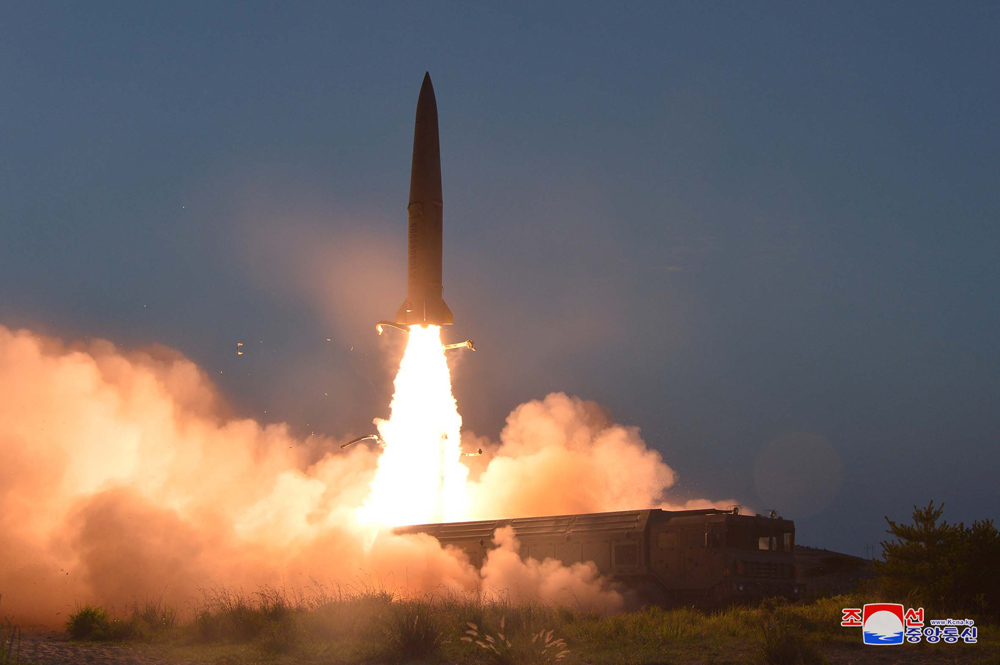
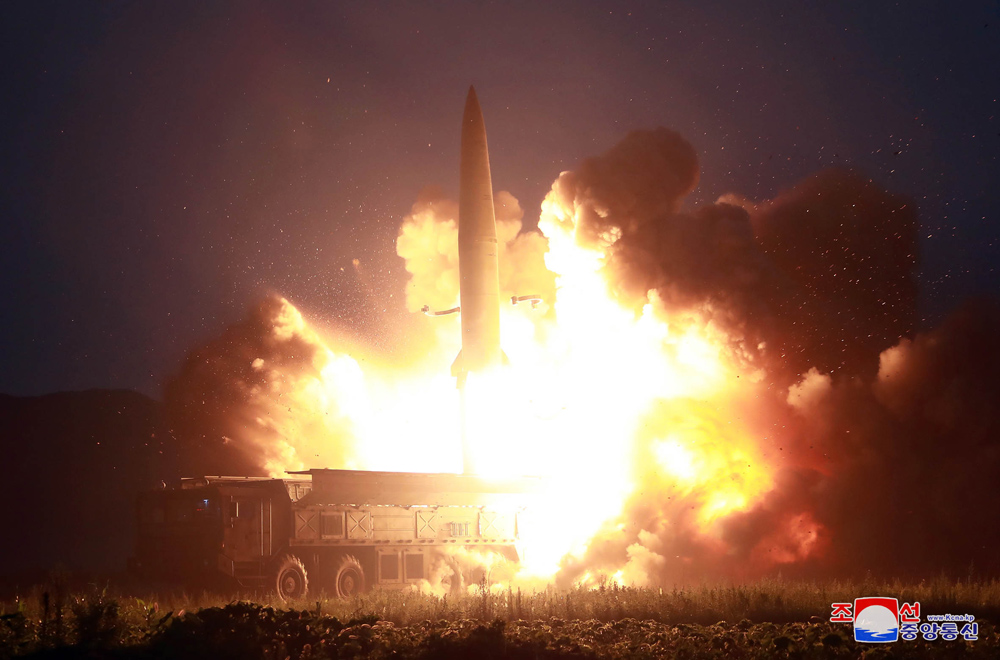
The Hwasong-11A bears an external resemblance to the Russian Iskander-M and South Korean Hyunmoo-2B short-range ballistic missiles (SRBMs), being distinguished by its elongated cable raceway, different jet vane actuators and smooth base. Like the Iskander-M, it flies in a quasi-ballistic trajectory, flattening out below an altitude of about 50 km (31 mi) where the atmosphere is dense enough so the missile's fins can change course along its flight path.[1][2][3] However, it is significantly larger than the Iskander, with estimated length and diameter to be 8.77 m (28.8 ft) and 1.1 m (3 ft 7 in), respectively.[4] The mass estimation of Hwasong-11A is also different, with the Center for Strategic and International Studies giving a mass of 3,415 kg (7,529 lb),[2] while a 2026 assessment published by 38 North estimates it to be 8,729 kg (19,244 lb) for flight simulations.[4] The missile is painted army green,[5] as well as likely uses the same 1.1 m (3 ft 7 in) diameter motor as the Pukguksong-1. The motor is somewhat lengthened, having only one stage, compared to the Pukguksong-1. The motor has a very different structure, compared to the Iskander. Its TEL has more space for the missile, as it lacks the structure immediately after the cab.[6][7]
Data from test-fires shows a minimum range of 190 km (120 mi) using depressed trajectory,[4] with the maximum range being assessed as 900 km (560 mi),[8] putting all of South Korea within range.[3] With a 500 kg (1,100 lb) warhead, the missile has an estimated range of 450 km (280 mi).[2][9] The missile's warhead section has enough space for up to 1,500 kg (3,300 lb) of high explosives compared to 700 kg (1,500 lb) for Hwasong-5 (Scud-B) and 800 kg (1,800 lb) of 9K720 Iskander.[10] It can be conventional, likely unitary,[2] nuclear, or submunition,[11] which can devastate large areas with high firepower.[12] The Hwasong-11A is also capable of carrying the Hwasan-31 tactical nuclear warhead.[13] Its active steering capability could make it accurate to within 35–200 m (115–656 ft) CEP, depending whether the missile uses satellite guidance or INS alone.[1][10]
The Hwasong-11A's launch platform is diverse. It can be launched from a wheeled, four-axle transporter erector launcher (TEL), or a tracked one. Both are capable of carrying two missiles.[14][15] However, the four-axle truck used in test-fires is different from the truck used to carrying the missile during 8 February 2018 military parade.[16] Hwasong-11A also has railway-based mobile launch platform,[17][18] as well as silo-based launcher.[19]
The missile is likely to replace older liquid-fueled North Korean SRBMs, like the Hwasong-5 and Hwasong-6.[1] Being solid-fueled and capable of rapid firing from mobile launchers, Hwasong-11A is difficult for an opposing force to locate and target, meaning it is ideal for fast and precise tactical attacks. Once launched, it is very hard to detect and be intercepted by traditional missile defense systems, as the missile can fly at low altitude, conduct a terminal "pull-up" maneuver,[2][11] and have a short overall flight time.[3] For example, Hwasong-11A's trajectory is too low or too high for THAAD and MIM-104 Patriot to intercept reliably, respectively.[20] Its increased accuracy also reduces the number of missiles that would be needed to destroy a single target.[1] It is capable of following non-ballistic trajectories, including depressed ballistic trajectories, pitch down to approach target from directly above, and range-extension using aerodynamic lift.[4]
The Hwasong-11A is likely to feature some form of foreign involvement such as parts, as when compared to the later developed Hwasong-11B (KN-24), the Korean Central News Agency focuses mainly on the deployment of the missile, with little coverage on its research. While the Hwasong-11B are called "Juche projectiles", it is never mentioned for the Hwasong-11A. The focus on the combat-readiness of the system suggests that it had been deployed for a while but not tested, like the Hwasong-10.[5] It still bears significant differences from the 9K720 Iskander.[21]
Naming
As of 2026, North Korean state media refers to Hwasong-11A as Hwasongpho-11 Ka (《화성포-11가》형) and classified it as a tactical ballistic missile.[22] It was first mentioned directly during a test in May 2025.[23] Formerly, when the official designation of Hwasong-11A was revealed, its Korean name was "《화성-11가》형" (lit. Mars Type 11A),[24] sometimes romanized as Hwasong-11Ga, with the letter "Ga" being the first letter of the Korean alphabet.[4] The official designation can also be alternatively romanized as Hwasongpho-11Ga or Hwasong-11Ka.[25][26] However, as the missile and KN-02 Toksa, whose official designation is "Hwasong-11", are totally different missiles, the Hwasong-11A (and its subsequent variants) can not be called Hwasong-11.[27]
In its earlier launches, occurred between 2019 and 2023, North Korea called Hwasong-11A "tactical guided weapon", "tactical guided missile" and "tactical ballistic missile", without mentioning official designation.[3][28][29]
The Hwasong-11A has been known by its external designations and nicknames, with the United States and South Korea naming the missile KN-23 and 19-1 SRBM, respectively,[30][31] while analysts have also nicknamed it Kimskander (a portmanteau of Kim Jong Un and Iskander), given its similarities to the Russian counterpart.[32][33]
History
In mid-October 2017, North Korea apparently tested a solid-fueled engine in Hamhung, possibly a static test of Hwasong-11A's engine.[21]
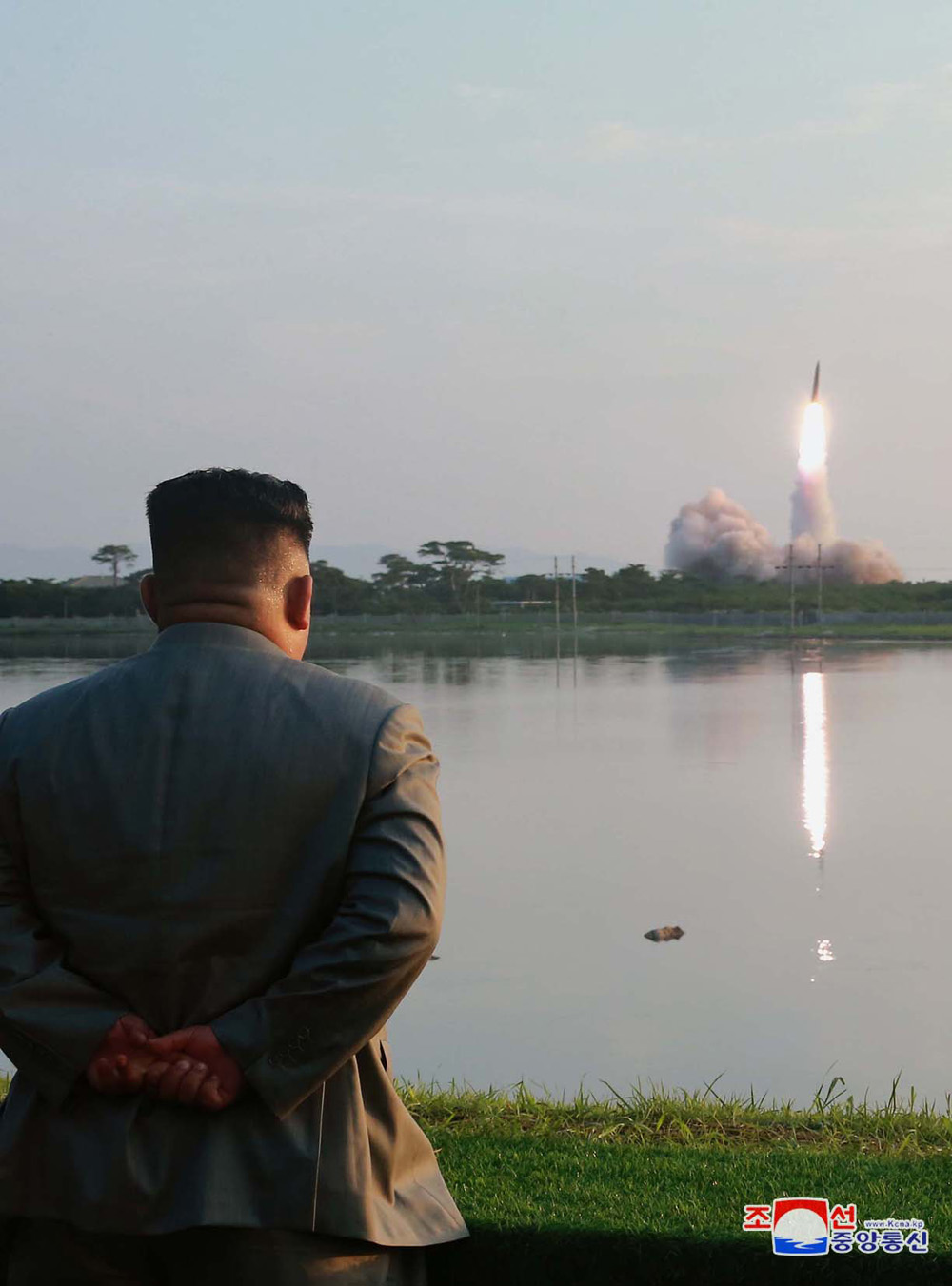
North Korea first displayed the Hwasong-11A publicly in a military parade on 8 February 2018.[3] More than a year later, on 4 May 2019, North Korea publicly tested Hwasong-11A for the first time. Five days later, North Korea test-fired another two missiles. On 17 May 2019, the missile was designated by the United States Forces Korea as KN-23.[2] Further test-fires were carried out on 25 July and 6 August 2019, as well as in 2021, 2022 and 2023.[34]
The official name of KN-23 was first suggested as Hwasong-11A in October 2021, after the confirmation of KN-24's official name.[35] During the "Weaponry Exhibition-2023" military exhibition held in July 2023, North Korea confirmed this designation.[24]
According to the International Institute for Strategic Studies (IISS), as of 2025, North Korea is possessing more than 17 Hwasong-11A launchers, in road- and rail-mobile variants.[36]: 268
Another launch of Hwasong-11A occurred on 8 May 2025, during a military drill that also involved KN-25.[37][38] It was the first known Hwasong-11A launch since 2023.[39] A further test flight of this missile occurred during a series of weapon tests occurred between 6 and 8 April 2026.[40][41]
Mass production
In November 2024, satellite imagery revealed that the buildings at the February 11 Plant (Hamhung), used to manufacture ballistic missiles (including Hwasong-11A), were expanded, likely related to increased production.[42]
Images published by North Korean state media during a Kim Jong Un's missile factory visit in December 2025 suggested that Hwasong-11A has been entered mass production, with approximately 90 non-warhead Hwasong-11A missiles being showed.[43]
Russian use in Ukraine
The missile has been identified to be used during the Russian invasion of Ukraine, since 2023. An unknown number of North Korean ballistic missiles were transferred to Russia in October 2023, according to declassified US intelligence informations. Based on debris left by Russian attacks on Ukrainian targets on 30 December 2023, the ring housing the control vanes have been identified as the characteristics of Hwasong-11A and Hwasong-11B missiles.[44] The barometer on the missile was found to have a Hangul character, and various parts of the missile were stamped with the possible factory name.[7]
According to the Conflict Armament Research (CAR), 75% of components in the guidance control system for the Hwasong-11A fired at Kharkiv are based on American parts.[45] They also indicated that some of the missiles were newly produced.[46]
During the Kharkiv strikes of 2 January 2024, Ukrainian authorities noted that the missiles used were of North Korean origin, noting that the shape and design were different than that of Iskander missiles. On 29 April 2024, the UNSC confirmed that the munitions used during the strike were that of Hwasong-11A missiles.[47][48]
On 7 May 2024, Ukrainian sources reported that the missiles have a high failure rate. According to these officials, half of the North Korean missiles lost their programmed trajectories and exploded in the air.[49] In August 2024, the CAR documented the debris of four additional North Korean ballistic missiles that landed in Ukraine. These debris, retrieved in Bila Tserkva, Vitrova Balka and Rozhivka, were identified as debris from North Korean missiles, likely from Hwasong-11A.[50] In December 2024, during an interview, Ukrainian military official Andrii Cherniak claimed that Russia had used around 60 Hwasong-11A missiles in their attacks against Ukraine.[51]
According to Ukraine, at the start of 2025, North Korea had supplied Russia 148 Hwasong-11A and 11B missiles.[52] In February 2025, it was also reported the Hwasong-11A missiles used by Russia in Ukraine had an improved CEP of 50–100 m (160–330 ft).[53][54] Ukraine also claimed that Russia launched Hwasong-11A in the 23 April 2025 Russian attack on civilians in Kyiv.[52] According to Reuters's information from a Ukrainian source, the Hwasong-11A missiles were armed with a 1,000 kg (2,200 lb) warhead.[55]
In May 2025, the Multilateral Sanctions Monitoring Team (MSMT) published images of Hwasong-11A's debris collected in Ukraine.[50]
In April 2026, a Ukrainian report revealed that North Korean ballistic missiles (including Hwasong-11A) used by Russia in 2024 were made using commercial electronics with outdated manufacturing methods (up to 50 years old) and used less energy-efficient fuel, requiring North Korean missiles to use larger engines to achieved the same range as Russian counterpart.[56] Ukraine also confirmed that Hwasong-11A is not a direct copy or licensed production of Russia's Iskander.[57]
List of tests
Confirmed tests
| Attempt | Date (Pyongyang Standard Time) | Location | Number of missiles tested | Outcome | Additional notes | References |
|---|---|---|---|---|---|---|
| 1 | 4 May 2019 | Hodo Peninsula, Kangwon Province | 2 | Success | These missiles reached an apogee of 60 km (37 mi) and a range of 240 km (150 mi). The footage was apparently manipulated, and the missiles were probably fired from two different vehicles. Kim Jong Un oversaw the test. | [6][34][58] |
| 2 | 9 May 2019 | Baegun, North Pyongan Province or Kusong | 2 | Success | Both missiles achieved 50 km (31 mi) apogee. One had a range of 420 km (260 mi) and the other had 270 km (170 mi). At least one missile may have used depressed trajectory. Kim Jong Un supervised the test-fire. | [34][59] |
| 3 | 25 July 2019 | Hodo Peninsula, Kangwon Province | 2 | Success | Both missiles again reaching 50 km (31 mi) in altitude, but demonstrating greater ranges of 430–690 km (270–430 mi), before landing in the Sea of Japan. Kim Jong Un supervised the test-fire. | [60][61][62] |
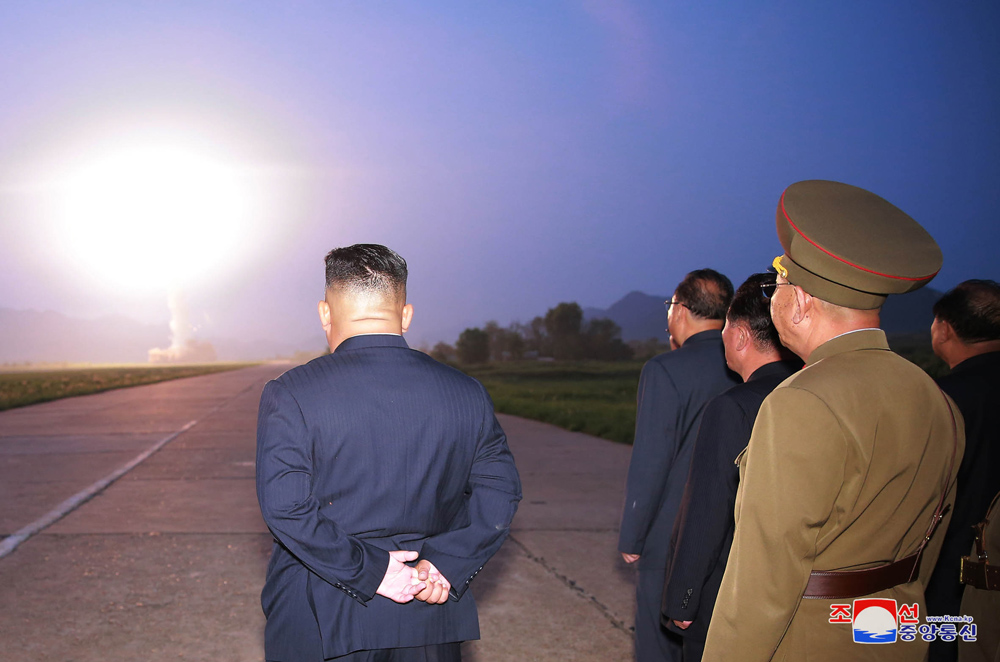
| 4 | 6 August 2019 | Kwail Airport, South Hwanghae Province | 2 | Success | Two missiles were launched, overflew Pyongyang and achieved an apogee of 37 km (23 mi) out to 450 km (280 mi). Kim Jong Un supervised the test-fire. | [34][63] |
| 5 | 27 January 2022 | Hungnam, Hamhung, South Hamgyong Province | 2 | Success | These missiles flew 190 km (120 mi) to a maximum altitude of 20 km (12 mi) and demonstrated depressed trajectory. North Korea stated the test was to confirm the power of an air burst conventional warhead. Taken together, this suggests that the missile is operational. | [28][34] |
| 6 | 1 October 2022 | Sunan District, Pyongyang | 2 | Success | These missiles achieved 50 km (31 mi) apogee. One missile flew 400 km (250 mi), the other flew 350 km (220 mi). Kim Jong Un oversaw the test. | [34][64] |
| 7 | 6 October 2022 | Samsok District, Pyongyang | 1 | Success | The missile achieved 50 km (31 mi) apogee and flew 800 km (500 mi). It was launched just about 15 minutes after the launch of a KN-25 (600 mm multiple rocket launcher) missile and may have used an irregular trajectory. Kim Jong Un oversaw the test. | [34][64][65] |
| 8 | 14 March 2023 | Jangyon County, South Hwanghae Province | 2 | Success | According to North Korea, these missiles hit the target 611.4 km (379.9 mi) away. South Korea said that these missiles had flown 620 km (390 mi). | [34][66][67] |
| 9 | 27 March 2023 | Chunghwa County, North Hwanghae Province or Ryokpho District, Pyongyang | 2 | Success | These missiles achieved 50 km (31 mi) apogee and flew 350 km (220 mi). According to North Korea, the missiles exploded at an altitude of about 500 m (1,600 ft) above a target near Kimchaek. The launch was a simulation test of an air-borne nuclear attack. | [29][34][68] |
| 10 | 8 May 2025 | Wonsan | At least 1 | Success | Kim Jong Un oversaw the test along with senior officials. The missile achieved 100 km (62 mi) apogee, flew 800 km (500 mi) and was launched along with KN-25 missiles. According to North Korea, the launch was to familiarize military units with the operation of the weapon systems (including Hwasong-11A) and assess the quick reaction reliability of the command and control system in any nuclear crisis. | [23][37][39] |
| 11 | 8 April 2026 | Wonsan | At least 1 | Success | South Korean military detected launches in the morning and in the afternoon on 8 April near Wonsan. The morning launch saw multiple ballistic missiles were fired and flew 240 km (150 mi). The afternoon launch involved another missile that travelled over 700 km (430 mi) while achieving 60 km (37 mi) apogee. Statement from North Korean state media mentioned a weapon test campaign occurred between 6–8 April, including the test of a Hwasong-11A missile armed with cluster warhead. According to North Korea, the submunition-armed Hwasong-11A "can reduce to ashes" targets within an area of 6.5–7 ha (16–17 acres) with full firepower. North Korea also conducted a test-fire of a missile engine using low-cost materials that may involve Hwasong-11A. The Korean Central News Agency did not publish any images of the test campaign. | [26][41][69] |
Alleged tests
Member states of the United Nations Security Council alleged that there were test-fires of Hwasong-11A on 5 June 2022 and 9 November 2022.[70][71] It is also possible that a test of Hwasong-11A took place in June 2023, with two missiles being launched and one of which travelled 900 km (560 mi).[8]
An alleged test-fire of Hwasong-11A took place on 4 January 2026,[72] but it is highly likely that it involved Hwasong-11E, based on the description of "hypersonic missile" by North Korean state media.[73]
According to German analyst Norbert Brügge, North Korea might launch Hwasong-11A during an undated test, with an image showing a TEL of Hwasong-7.[6]
Variants
Along with the base version, Hwasong-11A has some variants:
Railway-borne missile
Design and development
North Korea has expressed interest in rail-mobile ballistic missile launchers for a long time, likely started in late-1980s and early-1990s. However, due to international sanctions, this interest accelerated in early 2000s.[74] In early 2021, during the 8th Congress of the Workers' Party of Korea, a railway-borne missile regiment was founded.[75][76]
On 15 September 2021, North Korea test-fired two missiles from a modified railway car, rather than the typical road-mobile launcher.[77] These missiles appeared to be baseline Hwasong-11A versions, although North Korean state media did not mention it explicitly. They flew much further than any previous flight of the weapon, and went an even greater distance than the larger variant tested earlier in 2021. Such excess range could indicate it hadn't previously been tested out to its maximum range, or that the design underwent modifications such as a reduced payload or flight profile improvements. The launch railcar uses two side-by-side erector/launcher mechanisms like the side-by-side arrangement used in the TEL. The use of a rail-mobile system is unusual for an SRBM, as road-mobile launchers are easier for deploying and hiding relatively small missiles than the railway-borne. However, its enhanced mobility enables North Korea to launch missiles from anywhere in its rail network, and the train launchers can be disguised as passenger trains to avoid external surveillance, making it more difficult to be detected pre-launch. Adding railway launchers may also be an effort to further increase and diversify the country's SRBM missile force, since modifying existing railcars to fire missiles could be a way to supplement a limited number of launch trucks, or possibly to test the concept before applying it to intercontinental ballistic missiles (ICBMs). A rail-borne ICBM would have advantages over one carried by a wheeled TEL, as such large liquid-fueled missiles carried in railway cars would be able to move more places and be kept in a higher readiness state.[17][18][78]
On 14 January 2022, North Korea again tested railway-launched Hwasong-11A. The next day, the Korean Central News Agency released photos of the test.[79]
List of tests
| Attempt | Date (Pyongyang Standard Time) | Location | Number of missiles tested | Outcome | Additional notes | Reference(s) |
|---|---|---|---|---|---|---|
| 1 | 15 September 2021 | Yangdok County, South Hamgyong Province | 2 | Success | These missiles were launched with a five-minute interval, travelled 800 km (500 mi) to a maximum altitude of 60 km (37 mi) before landing inside Japan's exclusive economic zone. Pak Jong-chon oversaw the test. | [17][18][76] |
| 2 | 14 January 2022 | South of Uiju County, North Pyongan Province | 2 | Success | These missiles were launched without any prior notices, flew 430 km (270 mi) and achieved 36 km (22 mi) apogee. | [79][80][81] |
| 3 | 2 November 2022 | Unknown | Unknown | Unknown | Information based on images released by the Korean Central News Agency on 7 November 2022. The missile appears to be railway-borne. | [71][82] |
Silo-based missile
Design and development
On 19 March 2023, North Korea test-fired a ballistic missile during a drill claimed by North Korean state media as nuclear counterattack simulation.[83][84] The missile appeared to be Hwasong-11A, based on photos released by the Korean Central News Agency.[85] The missile was fired from an underground silo, located within the Sohae Satellite Launching Station and constructed for less than two months. It is the first known missile launch from silo of North Korea.[34][86] Images showed the rising, V-shaped exhaust flame, consistent with the launch from an underground silo.[87]
The use of silo can help North Korea fire missiles with little warning while avoiding outside surveillance.[88] However, given its vulnerability and operational unfavorables, the deployment of silo-based missiles may be limited, despite several economic advantages, including effective operation and maintenance cost, as well as low construction expense.[87]
List of tests
| Attempt | Date (Pyongyang Standard Time) | Location | Number of missiles tested | Outcome | Additional notes | References |
|---|---|---|---|---|---|---|
| 1 | 19 March 2023 | Sohae Satellite Launching Station | 1 | Success | The missile reached 50 km (31 mi) apogee, flew 800 km (500 mi) and was equipped with a simulated tacical nuclear warhead that detonated at an altitude of 800 m (2,600 ft). It may have utilized an irregular trajectory. Kim Jong Un and his daughter oversaw the test. | [19][34][89] |
Larger variant
Hwasong-11C is the larger version of Hwasong-11A, claimed to have a 2.5 tons warhead.[90] It was first tested on 25 March 2021, with North Korean state media calling it "new-type tactical guided projectile".[91]
A variant with 4.5 tons warhead, called Hwasong-11C-4.5, was tested on 1 July 2024 and 18 September 2024.[92][93]
Smaller variant
Hwasong-11D is the smaller variant of Hwasong-11A, with reduced range.[94] Its first test occurred on 16 April 2022 when North Korea called it "tactical guided weapon",[95] and a test launch occurred on 19 April 2026 resulted in the publication of the official designation by KCNA.[96]
Hypersonic glide vehicle variant
The Hwasong-11E is a Hwasong-11C-based variant of Hwasong-11A with hypersonic glide vehicle, first displayed in 2025 during a military exhibition.[97] It underwent a test launch on 4 January 2026.[98]
SLBM variant
Hwasong-11S is the underwater-launched version of Hwasong-11A.[90] It was tested on 19 October 2021 and 25 September 2022.[34]
See also
- Hwasong-11B (KN-24)
- 9K720 Iskander
- Hyunmoo-2
Notes
References
- ↑ 1.0 1.1 1.2 1.3 Elleman, Michael (9 October 2019). "North Korea’s New Short-Range Missiles: A Technical Evaluation". The Henry L. Stimson Center. https://www.38north.org/2019/10/melleman100919/.
- ↑ 2.0 2.1 2.2 2.3 2.4 2.5 "KN-23". Center for Strategic and International Studies. 1 July 2019. https://missilethreat.csis.org/missile/kn-23/.
- ↑ 3.0 3.1 3.2 3.3 3.4 "KN-23". https://www.missiledefenseadvocacy.org/missile-threat-and-proliferation/todays-missile-threat/north-korea/kn-23/.
- ↑ 4.0 4.1 4.2 4.3 4.4 Savelsberg, Ralph (3 March 2026). "Assessing the Maneuverability of North Korea's KN-23/Hwasong-11A SRBM". 38 North (The Henry L. Stimson Center). https://www.38north.org/2026/03/assessing-the-maneuverability-of-north-koreas-kn-23-hwasong-11a-srbm/.
- ↑ 5.0 5.1 Xu, Tianran; Shin, Jaewoo (2020-04-23). "A Tale of Two Missiles: Analysis of KCNA Reports on North Korea's KN-23 and KN-24 Short-Range Ballistic Missiles" (in en). https://datayo.org/p/stories/8jzzpJxnZhMCzDA6/a-tale-of-two-missiles-analysis-of-kcna-reports-on-north-koreas-kn-23-and-kn-24-short-range-ballistic-missiles.
- ↑ 6.0 6.1 6.2 Brügge, Norbert. "Pukguksong GLBM-2 and GLBM-3". Norbert Brügge. https://www.b14643.eu/Spacerockets/Specials/Pukguksong_GLBM-2/index.htm.
- ↑ 7.0 7.1 "Documenting a North Korean missile in Ukraine" (in en-US). Conflict Armament Research. 2024-01-19. https://storymaps.arcgis.com/stories/3a4e9d713f59426d9d1ea3881abecbf3.
- ↑ 8.0 8.1 Bạch Dương (23 January 2024). "Tên lửa KN-23 'bản sao Iskander-M' có thể bắn xa tới 900 km" (in vi). https://www.anninhthudo.vn/ten-lua-kn-23-ban-sao-iskander-m-co-the-ban-xa-toi-900-km-post565213.antd.
- ↑ "Report to Congress on North Korea's Nuclear Weapons and Missile Programs". United States Naval Institute. 26 January 2023. https://news.usni.org/2023/01/26/report-to-congress-on-north-koreas-nuclear-weapons-and-missile-programs.
- ↑ 10.0 10.1 Delory, Stéphane; Bondaz, Antoine; Maire, Christian (2023). "North Korean Short Range Systems: Military consequences of the development of the KN-23, KN-24 and KN-25". Foundation for Strategic Research. pp. 57, 77. https://www.nonproliferation.eu/hcoc/wp-content/uploads/2023/01/NORTH-KOREAN-SHORT-RANGE-SYSTEMS.pdf.
- ↑ 11.0 11.1 Đào Cảnh (2026-04-10). "Tên lửa Hwasong-11A đầu đạn bom chùm ‘biến mọi mục tiêu thành tro bụi’ trên diện tích 7 hecta". https://vietnamnet.vn/ten-lua-hwasong-11a-dau-dan-bom-chum-bien-muc-tieu-thanh-tro-bui-tren-7-hecta-2505177.html.
- ↑ "Hwasongpho-11 Ka, el peligroso misil de Corea del Norte que convierte en cenizas a sus enemigos". 2026-04-10. https://www.eluniverso.com/estados-unidos/servicio/hwasongpho-11-ka-el-peligroso-misil-de-corea-del-norte-que-convierte-en-cenizas-a-sus-enemigos-nota/.
- ↑ Trà Khánh (11 April 2023). "Giải mã đầu đạn hạt nhân Triều Tiên khiến Mỹ và đồng minh lo sợ" (in vi). https://vtcnews.vn/giai-ma-dau-dan-hat-nhan-trieu-tien-khien-my-va-dong-minh-lo-so-ar763933.html.
- ↑ Xu, Tianran (2 May 2022). "25 April 2022 DPRK Parade". p. 19. https://opennuclear.org/sites/default/files/2022-05/25%20April%202022%20DPRK%20parade_0_0.pdf.
- ↑ Hansen, Nick (1–4 December 2020). Nuclear-capable missiles (Report). Asia Pacific Leadership Network. p. 49. https://opennuclear.org/sites/default/files/2022-05/25%20April%202022%20DPRK%20parade_0_0.pdf. Retrieved 2026-05-12. "Both the 4 axle wheeled and tracked TELs carry two missiles."
- ↑ "DPRK Military Parade Viewbook 2022". 2022-04-21. p. 11. https://opennuclear.org/sites/default/files/2022-04/DPRK%20Parade%20ViewBook%2020220421.pptx_.pdf.
- ↑ 17.0 17.1 17.2 Van Diepen, Vann H. (17 September 2021). "It’s the Launcher, Not the Missile: Initial Evaluation of North Korea’s Rail-Mobile Missile Launches". The Henry L. Stimson Center. https://www.38north.org/2021/09/its-the-launcher-not-the-missile-initial-evaluation-of-north-koreas-rail-mobile-missile-launches/.
- ↑ 18.0 18.1 18.2 Xu, Tianran; Shin, Jaewoo; Furukawa, Katsuhisa (17 September 2021). "The First DPRK Missile Launch from a Rail-Mobile Launcher". https://opennuclear.org/sites/default/files/documents/publications/Report%20on%20DPRK%20Launch%20from%20a%20Rail%20Launcher-compressed.pdf.
- ↑ 19.0 19.1 Newdick, Thomas (2023-03-20). "Silo-Launched Ballistic Missile Capability Likely Tested By North Korea". Recurrent Ventures. https://www.twz.com/silo-launched-ballistic-missile-capability-likely-tested-by-north-korea.
- ↑ Danh Toại (16 May 2019). "Mỹ giải mã 'Kimskander' Triều Tiên: có thể vượt qua hệ thống phòng thủ". https://thanhnien.vn/my-giai-ma-kimskander-cua-trieu-tien-co-the-vuot-qua-he-thong-phong-thu-185850559.htm.
- ↑ 21.0 21.1 Lewis, Jeffrey (2019-06-05). "Preliminary Analysis: KN-23 SRBM" (in en-US). https://nonproliferation.org/preliminary-analysis-kn-23-srbm/.
- ↑ "DPRK Defence Science Research Institutes Conduct Tests of Important Weapon Systems". 2026-04-09. http://kcna.kp/en/article/q/e0a73fde2ace456973dac2f15920faa6.kcmsf.
- ↑ 23.0 23.1 "Joint Striking Drill of Long-range Artillery and Missile Systems of Sub-units of KPA on Eastern Front Conducted". 9 May 2025. http://kcna.kp/en/article/q/0bf90f4d74cc557f997fc1289b9d8e55.kcmsf.
- ↑ 24.0 24.1 JSF (30 July 2023). "Error: no
|title=specified when using {{Cite web}}". https://news.yahoo.co.jp/expert/articles/1330c9dbf74b936ff69767bbc403a565b7d4fb84. - ↑ Barannikova, Anastasia (15 March 2024). "Nuclear strategy of the DPRK: Doctrine evolution and future prospects". https://nautilus.org/napsnet/napsnet-special-reports/nuclear-strategy-of-the-dprk-doctrine-evolution-and-future-prospects/.
- ↑ 26.0 26.1 "Triều Tiên thử nghiệm thành công tên lửa đạn đạo mang đầu đạn chùm". Quang Ngai Newspaper and Radio, Television. 2026-04-09. https://quangngaitv.vn/trieu-tien-thu-nghiem-thanh-cong-ten-lua-dan-dao-mang-dau-dan-chum-6518174.html.
- ↑ JSF (2024-07-03). "Error: no
|title=specified when using {{Cite web}}". https://news.yahoo.co.jp/expert/articles/9d7e4522542858c342d3ee08fdd0d3cb9a821e64. - ↑ 28.0 28.1 Van Diepen, Vann H. (31 January 2022). "North Korea's Fifth and Sixth Rounds of January Missile Launches". 38 North (The Henry L. Stimson Center). https://www.38north.org/2022/01/north-koreas-fifth-and-sixth-rounds-of-january-missile-launches/.
- ↑ 29.0 29.1 "Army Unit in Charge of Important Operation Task in Central Front Conducts Missile Firing Drill". 28 March 2023. https://korea-dpr.com/army-unit-in-charge-of-important-operation-task-on-central-front-conducts-missile-firing-drill/.
- ↑ Anh Minh (2025-02-19). "Nga giúp Triều Tiên cải tiến tên lửa?". https://dantri.com.vn/the-gioi/nga-giup-trieu-tien-cai-tien-ten-lua-20250219183702571.htm.
- ↑ Noh, Ji-won (20 January 2020). "N. Korea’s “new large-caliber guided rockets” were actually SRBMs, S. Korean military says". https://english.hani.co.kr/arti/english_edition/e_northkorea/925128.html.
- ↑ Cohen, Zachary; Gaouette, Nicole; Jeong, Sophie; Starr, Barbara (25 July 2019). "North Korean missile launch a ‘new type of threat,’ South Korea says". https://edition.cnn.com/2019/07/24/politics/north-korea-projectile.
- ↑ "Chuyên gia Mỹ nghi Triều Tiên sao chép tên lửa tiên tiến Iskander của Nga". Thanh Hoa Newspaper and Radio, Television. 2019-05-16. https://truyenhinhthanhhoa.vn/chuyen-gia-my-nghi-trieu-tien-sao-chep-ten-lua-tien-tien-iskander-cua-nga-1808200936.htm.
- ↑ 34.00 34.01 34.02 34.03 34.04 34.05 34.06 34.07 34.08 34.09 34.10 34.11 "The CNS North Korea Missile Test Database". 2024-11-12. https://www.nti.org/analysis/articles/cns-north-korea-missile-test-database/.
- ↑ JSF (2021-10-14). "Error: no
|title=specified when using {{Cite web}}". https://news.yahoo.co.jp/expert/articles/b4c08fadce8e6884ce7ceb0525b47e30537bf0cf. - ↑ International Institute for Strategic Studies (12 February 2025). The Military Balance 2025 (1st ed.). Routledge. ISBN 978-1041049678.
- ↑ 37.0 37.1 "Triều Tiên tập trận, phóng nhiều tên lửa đạn đạo" (in vi). Hoa Binh Radio & Television Station. 2025-05-09. https://hoabinhtv.vn/tin-quoc-te/trieu-tien-tap-tran-phong-nhieu-ten-lua-dan-dao.
- ↑ Feng, John; Croucher, Shane (9 May 2025). "North Korea Photos Show Nuclear Counterattack Missile Test". https://www.newsweek.com/north-korea-photos-show-nuclear-counterattack-missile-test-2069986.
- ↑ 39.0 39.1 Van Diepen, Vann H. (2025-07-31). "North Korea Continues to Improve Nuclear Posture". The Henry L. Stimson Center. https://www.38north.org/2025/07/north-korea-continues-to-improve-nuclear-posture/.
- ↑ Van Diepen, Vann H. (22 April 2026). "Cluster Warhead Tests Underscore the Important Conventional Role of North Korea’s SRBMs". The Henry L. Stimson Center. https://www.38north.org/2026/04/cluster-warhead-tests-underscore-the-important-conventional-role-of-north-koreas-srbms/.
- ↑ 41.0 41.1 JSF (2026-04-10). "Error: no
|title=specified when using {{Cite web}}". https://news.yahoo.co.jp/expert/articles/baf87e26eaa23142a7b8426e38ebfafcdd949fbe. - ↑ Kent, Laurent (2024-11-26). "North Korea expands weapons plant that makes missiles used by Russia, researchers say". https://edition.cnn.com/2024/11/26/asia/north-korea-missile-plant-russia-ukraine-intl-hnk.
- ↑ Yang, Ji-ho (2025-12-26). "Error: no
|title=specified when using {{Cite web}}". https://www.chosun.com/politics/diplomacy-defense/2025/12/27/UALNJN2WJFC6LG4YXSANFDVRMM/. - ↑ Mason, Jeff; Smith, Josh (5 January 2024). "White House says Russia used missiles from North Korea to strike Ukraine". https://www.reuters.com/world/white-house-north-korea-recently-provided-russia-with-ballistic-missiles-2024-01-04/.
- ↑ Sokolin, Anton (21 February 2024). "North Korea used US parts in ballistic missile Russia fired at Ukraine: Report". NK News. Archived from the original on 2024-02-23. https://web.archive.org/web/20240223070255/https://www.nknews.org/2024/02/north-korea-used-us-parts-in-ballistic-missile-russia-fired-at-ukraine-report/.
- ↑ Sokolin, Anton (12 September 2024). "Newly made North Korean missile used in Russian strike on Ukraine: Report". https://www.nknews.org/2024/09/newly-made-north-korean-missile-used-in-russian-strike-on-ukraine-report/.
- ↑ "Ukraine shows evidence Russia fired North Korea missile at Kharkiv". 6 January 2024. https://www.reuters.com/world/ukraine-shows-evidence-russia-fired-north-korea-missile-kharkiv-2024-01-06/.
- ↑ Nichols, Michelle (29 April 2024). "Exclusive: UN experts say North Korea missile landed in Ukraine's Kharkiv". https://www.reuters.com/world/un-experts-say-north-korea-missile-landed-ukraines-kharkiv-2024-04-29/.
- ↑ Balmforth, Tom; Gauthier-Villars, David (7 May 2024). "Exclusive: Ukraine examines N.Korean missile debris amid fears of Moscow-Pyongyang axis". https://www.reuters.com/world/ukraine-examines-nkorean-missile-debris-amid-fears-moscow-pyongyang-axis-2024-05-07/.
- ↑ 50.0 50.1 "MSMT/2025/1". 2025-05-29. pp. 10, 12. https://msmt.info/view/save/2025/05/29/1085cade-a4b1-4405-94c0-7c980c24fd21-Unlawful_Military_Cooperation_including_Arms_Transfers_between_North_Korea_and_Russia_(MSMT_2025_1).pdf.
- ↑ "Tình báo Ukraine: Triều Tiên sẽ chuyển 150 tên lửa đạn đạo cho Nga". Hai Phong newspaper and radio, television. 2025-01-24. https://thhp3.vn/tinh-bao-ukraine-trieu-tien-se-chuyen-150-ten-lua-dan-dao-cho-nga-4038664.html.
- ↑ 52.0 52.1 Balmforth, Tom (24 April 2025). "Missile that killed 12 in Russian strike on Kyiv was North Korean, Zelenskiy says". https://www.reuters.com/world/europe/missile-that-killed-eight-russian-strike-kyiv-was-nkorean-kyiv-source-says-2025-04-24/.
- ↑ Firn, Mike, ed (10 February 2025). "North Korea’s increasingly accurate missiles raise concerns". https://www.rfa.org/english/korea/2025/02/11/north-missiles-precision-accuracy-ukraine/.
- ↑ Balmforth, Tom (6 February 2025). "Exclusive: Ukraine sees marked improvement in accuracy of Russia's North Korean missiles". https://www.reuters.com/business/aerospace-defense/ukraine-sees-marked-improvement-accuracy-russias-north-korean-missiles-2025-02-06/.
- ↑ McCurry, Justin (25 April 2025). "From ammunition to ballistic missiles: how North Korea arms Russia in the Ukraine war". Tokyo, Japan. https://www.theguardian.com/world/2025/apr/25/how-north-korea-arms-russia-in-ukraine-war.
- ↑ Loh, Matthew (17 April 2026). "North Korean ballistic missiles were made with outdated methods from up to 50 years ago: Ukraine MOD". https://www.businessinsider.com/north-korean-missiles-iskander-outdated-methods-ukraine-kn23-kn24-hwasong-2026-4.
- ↑ Thành Vinh (2026-04-17). "Ukraine giải mã cấu tạo tên lửa KN-23 và KN-24 của Triều Tiên". Nghe An Newspaper and Radio, Television. https://baonghean.vn/ukraine-giai-ma-cau-tao-ten-lua-kn-23-va-kn-24-cua-trieu-tien-10333274.html.
- ↑ "Supreme Leader Kim Jong Un Guides Strike Drill of Defence Units in Frontline Area and on Eastern Front". 5 May 2019. http://www.ryongnamsan.edu.kp/univ/en/revodaily/7647966b7343c29048673252e490f736.
- ↑ "Supreme Leader Kim Jong Un Guides Strike Drill of Defence Units in Forefront Area and on Western Front". 10 May 2019. http://www.ryongnamsan.edu.kp/univ/en/revodaily/54229abfcfa5649e7003b83dd4755294.
- ↑ "Triều Tiên nói phóng tên lửa để cảnh báo “những kẻ hiếu chiến” ở Seoul". Nghe An Newspaper and Radio, Television. 2019-07-26. https://truyenhinhnghean.vn/the-gioi/tin-tuc/201907/trieu-tien-noi-phong-ten-lua-de-canh-bao-nhung-ke-hieu-chien-o-seoul-1722cc2/.
- ↑ "Nhật Bản "giải mã" tên lửa mới phóng của Triều Tiên". Thanh Hoa Newspaper and Radio, Television. 2019-07-29. https://truyenhinhthanhhoa.vn/nhat-ban-giai-ma-ten-lua-moi-phong-cua-trieu-tien-1808219473.htm.
- ↑ "Supreme Leader Kim Jong Un Guides Power Demonstration Fire of New-Type Tactical Guided Weapon". 26 July 2019. http://kcna.co.jp/item/2019/201907/news26/20190726-01ee.html. For images, see 1 and 2.
- ↑ "Supreme Leader Kim Jong Un Watches Demonstration Fire of New-Type Tactical Guided Missiles". 7 August 2019. http://kcna.co.jp/item/2019/201908/news07/20190807-01ee.html. For images, see 1 and 2.
- ↑ 64.0 64.1 "Respected Comrade Kim Jong Un Guides Military Drills of KPA Units for Operation of Tactical Nukes". 10 October 2022. http://kcna.co.jp/item/2022/202210/news10/20221010-01ee.html. For images, see 1, 2, 3, 4.
- ↑ "Triều Tiên phóng 2 tên lửa tầm ngắn ra vùng biển phía Đông, Thủ tướng Nhật Bản phản đối mạnh mẽ". Gia Lai Newspaper and Radio, Television. 2022-10-06. https://gialaitv.vn/trieu-tien-phong-2-ten-lua-tam-ngan-ra-vung-bien-phia-dong-thu-tuong-nhat-ban-phan-doi-manh-me/.
- ↑ "North Korea confirms firing of two ground-to-ground ballistic missiles Tuesday". 15 March 2023. https://koreajoongangdaily.joins.com/2023/03/15/national/northKorea/GGM-ground-to-ground-missile-north-korea/20230315095648866.html.
- ↑ "Missile Launching Drill Conducted in DPRK". 15 March 2023. http://kcna.co.jp/item/2023/202303/news15/20230315-01ee.html.
- ↑ "Triều Tiên xác nhận thử tên lửa, đánh dấu vụ thử thứ 7 trong tháng". Gia Lai Newspaper and Radio, Television. 28 March 2023. https://gialaitv.vn/trieu-tien-xac-nhan-thu-ten-lua-danh-dau-vu-thu-thu-7-trong-thang/.
- ↑ Kim, Soo-yeon (2026-04-09). "(LEAD) N. Korea says test-fired tactical ballistic missile tipped with cluster bomb warhead". https://en.yna.co.kr/view/AEN20260409000351315.
- ↑ "S/2022/668". United Nations. 7 September 2022. pp. 23, 31. https://docs.un.org/en/S/2022/668.
- ↑ 71.0 71.1 "S/2023/171". United Nations. 7 March 2023. pp. 182–183. https://docs.un.org/en/S/2023/171.
- ↑ "Triều Tiên mở rộng năng lực răn đe hạt nhân". Quang Ngai Newspaper and Radio, Television. 2026-01-05. https://quangngaitv.vn/trieu-tien-mo-rong-nang-luc-ran-de-hat-nhan-6512965.html. "KCNA không cung cấp thông tin chi tiết về loại tên lửa được phóng, nhưng quân đội Hàn Quốc nhận định đây có thể là Hwasong-11A. [KCNA did not provide detailed information about the missiles, but South Korean military analyzed that it may have been Hwasong-11A.]"
- ↑ "Triều Tiên thử tên lửa siêu thanh, khẳng định 'lực lượng hạt nhân sẵn sàng chiến tranh'" (in vi). Bac Ninh Newspaper and Radio – Television. 2026-01-05. https://bacninhtv.vn/tin-tuc/24/191025/trieu-tien-thu-ten-lua-sieu-thanh-khang-dinh-luc-luong-hat-nhan-san-sang-chien-tranh.
- ↑ Bermudez Jr., Joseph S. (2021-09-30). "What is the Significance of North Korea’s Rail-mobile Ballistic Missile Launcher?". Center for Strategic and International Studies. https://beyondparallel.csis.org/what-is-the-significance-of-north-koreas-rail-mobile-ballistic-missile-launcher/.
- ↑ Trevithick, Joseph (2021-09-16). "North Korea Is Now Launching Ballistic Missiles From Trains And That’s A Big Deal (Updated)". Recurrent Ventures. https://www.twz.com/42394/north-korea-is-now-launching-ballistic-missile-from-trains-and-thats-a-big-deal.
- ↑ 76.0 76.1 "Pak Jong Chon Guides Test Firing Drill of Railway-borne Missile Regiment". 2021-09-16. http://kcna.co.jp/item/2021/202109/news16/20210916-01ee.html.
- ↑ "Cận cảnh tên lửa phóng từ tàu hỏa của Triều Tiên nhằm "nắn gân" đối thủ" (in vi). Bac Ninh Newspaper and Radio – Television. 2021-09-16. https://bacninhtv.vn/tin-tuc/76/116648/can-canh-ten-lua-phong-tu-tau-hoa-cua-trieu-tien-nham-nan-gan-doi-thu.
- ↑ "Triều Tiên thông báo phóng thử tên lửa thành công từ tàu hỏa" (in vi). Ninh Binh News & Radio, Television Station. 2021-09-16. https://nbtv.vn/trieu-tien-thong-bao-phong-thu-ten-lua-thanh-cong-tu-tau-hoa-15742.html.
- ↑ 79.0 79.1 Shin, Hyonhee (2022-01-15). "North Korea tests railway-borne missile in latest launch amid rising tension with U.S." (in english). Reuters. https://www.reuters.com/world/asia-pacific/north-korea-used-railway-born-missile-fridays-test-kcna-2022-01-14/.
- ↑ "Firing Drill of Railway-borne Missile Regiment Held". 2022-01-15. http://kcna.co.jp/item/2022/202201/news15/20220115-01ee.html.
- ↑ JSF (2022-01-15). "Error: no
|title=specified when using {{Cite web}}" (in ja). https://news.yahoo.co.jp/expert/articles/0d9d63e92a6a051186b2e4e3094c83b2c74d8272. - ↑ JSF (2022-11-07). "Error: no
|title=specified when using {{Cite web}}" (in ja). https://news.yahoo.co.jp/expert/articles/5652fd5b89ecf5d0d90bf6514f8957cb6b282c0f. - ↑ "Triều Tiên xác nhận tiến hành diễn tập phản công hạt nhân chiến thuật" (in vi). Ninh Binh News & Radio, Television Station. 2023-03-20. https://nbtv.vn/trieu-tien-xac-nhan-tien-hanh-dien-tap-phan-cong-hat-nhan-chien-thuat-54274.html.
- ↑ Kim, Tong-hyung (20 March 2023). "North Korea: Latest missile simulated nuclear counterattack". Seoul, South Korea. https://apnews.com/article/north-korea-kim-jong-un-nuclear-missile-8b92c652009c79751c33cbb49886e920.
- ↑ "N. Korea Presumed to Have Used Silo in the Latest Missile Launch". 20 March 2023. https://world.kbs.co.kr/service/news_view.htm?lang=e&Seq_Code=176571.
- ↑ Panda, Ankit (21 March 2023). "North Korea’s new silo-based missile raises risk of prompt preemptive strikes". NK News. https://www.nknews.org/pro/north-koreas-new-silo-based-missile-raises-risk-of-prompt-preemptive-strikes/.
- ↑ 87.0 87.1 Van Diepen, Vann H. (2023-03-29). "North Korea “Tactical Nuke” Drill: Claims on Command/Control and Hints of A First-ever Silo Launch". The Henry L. Stimson Center. https://www.38north.org/2023/03/north-korea-tactical-nuke-drill-claims-on-command-control-and-hints-of-a-first-ever-silo-launch/.
- ↑ Shin, Hyonhee; Park, Minwoo (20 March 2023). "North Korea's use of missile silo could mean less warning of launches - analysts". https://www.reuters.com/world/asia-pacific/north-koreas-use-missile-silo-could-mean-less-warning-launches-analysts-2023-03-20/.
- ↑ "Triều Tiên tuyên bố tập trận phản công hạt nhân chiến thuật". Gia Lai Newspaper and Radio, Television. 2023-03-20. https://gialaitv.vn/trieu-tien-tuyen-bo-tap-tran-phan-cong-hat-nhan-chien-thuat/.
- ↑ 90.0 90.1 Xu, Tianran (8 August 2023). "Brief on 27 July 2023 Parade of the DPRK". https://opennuclear.org/publication/brief-27-july-2023-parade-dprk.
- ↑ "Giải mã loại tên lửa "xịn" của Triều Tiên vừa được phóng" (in vi). Lang Son Newspaper and Radio, Television. 2021-03-26. https://langsontv.vn/news/462/23493/giai-ma-loai-ten-lua-xin-cua-trieu-tien-vua-duoc-phong.
- ↑ "Triều Tiên xác nhận phóng tên lửa đạn đạo mang đầu đạn siêu lớn" (in vi). Bac Ninh Newspaper and Radio – Television. 2024-07-02. https://bacninhtv.vn/tin-tuc/24/166246/trieu-tien-xac-nhan-phong-ten-lua-dan-dao-mang-dau-dan-sieu-lon.
- ↑ Reddy, Shreyas (19 September 2024). "North Korea tests 'explosive power' of new ballistic missile". https://www.nknews.org/2024/09/north-korea-tests-explosive-power-of-new-ballistic-missile/.
- ↑ Gwadera, Zuzanna (24 August 2024). "North Korea doubles down on short-range ballistic-missile production" (in en). https://www.iiss.org/online-analysis/missile-dialogue-initiative/2024/08/north-korea-doubles-down-on-short-range-ballistic-missile-production/.
- ↑ "Triều Tiên thử vũ khí mới giúp tăng năng lực hạt nhân" (in vi). Bac Ninh Newspaper and Radio – Television. 2022-04-17. https://bacninhtv.vn/tin-tuc/76/126596/trieu-tien-thu-vu-khi-moi-giup-tang-nang-luc-hat-nhan.
- ↑ "DPRK Missile Administration Test-fires Tactical Ballistic Missiles". 2026-04-20. http://kcna.kp/en/article/q/aa541a4be49df857315330bd6e542208.kcmsf.
- ↑ Trevithick, Joseph (2025-10-06). "New North Korean Hypersonic Missile Unveiled At Pyongyang Arms Expo". Recurrent Ventures. https://www.twz.com/land/new-north-korean-hypersonic-missile-unveiled-at-pyongyang-arms-expo.
- ↑ "When Pyongyang is afraid, opportunity emerges". 2026-01-05. https://www.koreatimes.co.kr/opinion/editorial/20260105/ed-when-pyongyang-is-afraid-opportunity-emerges.
 |  |