Biology:Archidendron bubalinum
| Archidendron bubalinum | |
|---|---|

| |
| Archidendron bubalinum sapling | |

| |
| Seed pods of Archidendron bubalinum (below) and Parkia speciosa (above) | |
Scientific classification 
| |
| Kingdom: | Plantae |
| Clade: | Tracheophytes |
| Clade: | Angiosperms |
| Clade: | Eudicots |
| Clade: | Rosids |
| Order: | Fabales |
| Family: | Fabaceae |
| Subfamily: | Caesalpinioideae |
| Clade: | Mimosoid clade |
| Genus: | Archidendron |
| Species: | A. bubalinum
|
| Binomial name | |
| Archidendron bubalinum (Jack) I.C.Nielsen
| |
| Synonyms[2][3] | |
|
List
| |
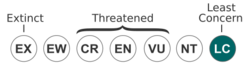
Archidendron bubalinum is a species of flowering plant in the family Fabaceae. Trees are leguminous and produce edible beans. It is found throughout the tropical forests of Southeast Asia, where the edible seeds or beans are important locally as a side dish or as an ingredient in traditional cuisine. Many parts of the plant are used medicinally to treat various diseases by communities across its range, and the wood is valuable in traditional carpentry and architecture as a source of lumber. It was described by William Jack in 1822.
Description
Habit
Archidendron bubalinum is an unarmed tree with grey to grey-yellowish bark that grows up to 20-25 m in height,[4] with a trunk that can reach upwards of 25 m in diameter.[5] The branchlets are cylindrical and taper at the ends, reddish to light brown when dry, with a scaly, glabrescent (lacking hairs) to puberulous (very finely haired) outermost layer.[6] The white to pale yellow sapwood, much like the twigs and seeds, are reported to smell like garlic when freshly cut.[7]
-
 Trunk
Trunk -
 Grey bark of a sapling
 -
 Sapling
 -
 Two pairs of pinnate leaves


Leaves
Leaves are compound and arranged pinnately, each composed of 1–2 alternating pairs of soft, chartaceous (paper-like) and elliptic to ovate-elliptic leaflets. Each individual leaflet is supported by a petiolule and approximately 6–16 cm long by 3–8 cm wide. The base of the leaves are triangular and symmetrical, while the apex or ends of the leaves are broadly acuminate (tapered). Both surfaces of the leaflet are glabrous (hairless) and covered lightly with reticulate veins. Main veins are positioned centrally or nearly centrally on a leaflet, while lateral veins are prominulous (protrudes slightly) on both surfaces.[6][7][8] The rachides present between each petiolule are around 0.5–4 cm long, though can sometimes reach up to 6 cm. Small glands, in particular extrafloral nectaries,[9] are present below the junction of the leaves. Glands are also occasionally found on leaflets between the junctions of the petiolules. Aforementioned glands are circular, ranging from being sunken to semiglobular or flat in appearance and sessile.[6]
-
 Young leaf
 -
 Extrafloral nectary occasionally found between the junctions of the petiolules of leaflets
 -
 Extrafloral nectary found below the junction of leaves
 -
 Dorsal view of leaflet, showing main and lateral veins


Inflorescence
Trees produce sweet-smelling inflorescences arranged in panicles[10] that are usually around 1–2 cm in length and grow terminally on leaflets. Individual inflorescences contain around 5 small white to creamy yellow colored flowers[4] that are pollinated by insects.[10] Flowers can be subsessile, that is, attached to the inflorescence by a small pedicel to being completely sessile and lacking one. These pedicels can be up to 2 cm long. Each flower is composed of small campanulate (bell-shaped) to broadly funnel-shaped or funnel-shaped calyx and corolla. The calyxes, in specific, are 1.5–2.5 mm in length, with rusty-coloured tomentose (densely woolly) hairs and broadly triangular five-toothed ends that are 0.5 mm long each. The corollas, however, are larger at 2.5–5 mm long, puberulous and five-parted.[8] Petals are triangular-ovate to narrowly elliptic in shape, often recurved and are each 2 mm long. Flowers also have white stamens that are partly fused at the base with staminal tubes equalling the length of the corolla tube.[8][6] The ovaries of each flower are approximately 1 mm and glabrous (hairless), with a 1–3 mm long stipe.[7]

Pod
Seed pods are approximately 1.5 cm in diameter and 5–10 cm in length. They can vary from being straight to slightly curved and cylindrical to slightly compressed in shape. Pods have woody, greenish outsides with a densely puberulous (finely haired) or nearly glabrous (hairless) reddish inside and dehisce along both sutures. Seeds are thick and eliptical or discoid in shape, though terminal seeds are turbinate-truncate (inversely conical) and slightly compressed; both types of seed are around 1.5 cm in diameter.[7] Testa (skin) of immature seeds are creamy yellow in color, while mature testa are black and cover the seeds in a thin, brittle shell.[10] These seeds completely fill the entire cavity of the pod; the central seeds are around 1.2 cm thick, while terminal seeds are 1.5 cm in height.[7] Seeds release a fetid odor comparable to the seeds of Parkia speciosa and Archidendron jiringa,[4] but are edible and consumed in all stages of maturity.[11]
-
 Unopened seed pod
 -
 Open seed pod
 -
 Seeds with testa and no testa


Habitat and ecology
Archidendron bubalinum is native to the tropical forests of southern Thailand, Peninsular Malaysia and Sumatra, but has been introduced to Myanmar, the Andaman Islands and Bangladesh.[2] Trees are usually found growing in lowland primary and secondary forest in sandy loam or lateritic soils. They normally inhabit areas with elevations up to 100 m, but sometimes ascend to elevations of 900 m.[5] A. bubalinum is faced with the threat of habitat loss and decreasing population due to deforestation caused by palm oil plantations.[12]
Trees of A. bubalinum often emerge in early regeneration forest or regrowth,[5] becoming a dominant species within them.[13] Inflorescences are reported to bloom from January to October.[14]: 7 The seeds are dispersed by mammals,[14]: 6 and along with the foliage, are a recorded food source for the Sumatran orangutan[15][16] and the Tapanuli orangutan.[17]
Taxonomy
Archidendron bubalinum is a member of the likely polyphyletic Archidendron ser. Clypeariae whose members are mostly found throughout West Malesia, Mainland Southeast Asia and the Philippines. Its closest relative is Archidendron microcarpum.[18]
| Clypeariae |
| |||||||||||||||||||||||||||||||||
History
First described by Scottish botanist William Jack in 1822 with Sumatra as the type locality, it was placed in the genus Inga as Inga bubalina.[8] The type specimen collected is now unknown regarding its whereabouts.[19]
In 1844, English botanist George Bentham then combined Inga bubalina under Pithecellobium bigeminum var. bubalinum, mistakenly based on a specimen of Archidendron microcarpum collected in Penang.[19] However, he believed the seed pod from that specimen belonged to a species of Cassia, near Cassia fistula.[20] This classification was then revised in 1875 when Bentham accepted the pod as belonging to the specimen, while also referring to two other specimens, renamed Pithecellobium bigeminum var. bubalinum as Pithecellobium bubalinum.[21] Tangentially, in 1876, German botanist Wilhelm Sulpiz Kurz misinterpreted Pithecellobium bubalinum as a member of genus Albizzia. Based on it and an additional two different specimens, one actually being a specimen of Archidendron bigeminum from the Nicobar Islands,[19] he referred Pithecellobium bubalinum under Albizzia bubalina.[22]
In a taxonomic revision of the genera Archidendron and Pithecellobium by Danish botanist Ivan Christian Nielsen in 1979, multiple species that were formerly in Pithecellobium were moved to Archidendron. This move included the transfer and renaming of Pithecellobium bubalinum to Archidendron bubalinum.[19]
Nomenclature and etymology
A. bubalinum is known in Malaysia as kerdas, keredas antan,[23] genuak, or gerduak[24] and in Indonesia as kabau or jolang-jaling.[25]
The specific epithet is from Latin (būbalīna; būbalīnum), derived from its local Malay name, which also means water buffalo (karbau).[8]
Uses
Traditional medicine
Consumption of the seeds are believed to detoxify the kidneys, help with urinal incontinence by acting as a diuretic,[26][14] constipation, prevent or lower the risk of diabetes.[4][27] They are also believed to aid in regulating blood sugar, controlling hypertension, preserving youthfulness,[4] while also reducing the risk of cardiovascular diseases[27] and certain cancers.[28] The bark is also used medicinally, namely as a febrifuge.[29]
In some areas of Indonesia, it is used as a remedy to treat coughs and diseases like smallpox and gout.[26] However, in Malaysia, certain communities of Orang Asli like the Temuan use the roots and seeds as medicine to treat diabetes. The roots are decocted and the seeds are eaten raw, both unripe and ripe, to prevent urination that is believed to be fatal.[30] It is also used for this purpose by the Jambi people in Sumatra by dry roasting cooked seeds, finely grounding them, and then mixing the ground seeds with water. This mixture is drunk two times a day.[12][31]
Culinary
Nutritional value
| Nutritional value per 100 g (3.5 oz) | |
|---|---|
| Energy | 130 kcal (540 kJ) |
25.2 g | |
| Dietary fibre | 2.9 g |
0.3 g | |
6.7 g | |
| Threonine | 9 mg |
| Isoleucine | 4.45 mg |
| Leucine | 7.8 mg |
| Lysine | 9.9 mg |
| Methionine | 0.9 mg |
| Phenylalanine | 4.42 mg |
| Tyrosine | 9.9 mg |
| Valine | 4 mg |
| Arginine | 4 mg |
| Histidine | 4.1 mg |
| Alanine | 3 mg |
| Aspartic acid | 11.3 mg |
| Glutamic acid | 17.3 mg |
| Glycine | 6 mg |
| Serine | 10.5 mg |
| Vitamins | Quantity %DV† |
| Vitamin A equiv. | 2% 165 μg |
| Thiamine (B1) | 70% 0.8 mg |
| Riboflavin (B2) | 8% 0.1 mg |
| Niacin (B3) | 2% 0.3 mg |
| Vitamin C | 19% 16 mg |
| Minerals | Quantity %DV† |
| Calcium | 0% 4 mg |
| Copper | 10% 0.2 mg |
| Iron | 4% 0.5 mg |
| Phosphorus | 29% 204 mg |
| Potassium | 8% 397.8 mg |
| Sodium | 0% 1 mg |
| Zinc | 5% 0.5 mg |
| Other constituents | Quantity |
| Water | 67.2 g |
| |
| †Percentages are roughly approximated using US recommendations for adults. Source: [32][33] | |
Fresh seeds have a high moisture content, low fat content, and high crude protein content of 6-10% (fresh weight), but a poor chemical score of 32% due to having low amounts of valine and methionine.[29] They are rich in both essential amino acids like threonine and lysine and non-essential amino acids such as aspartic acid and glutamic acid.[32]
The seeds also contain a significant amount of antinutrients, with a tannin content of 0.0002 mg, a trypsin inhibitor content of 0.25 TIU/mg, and a phytic acid content of 2.02 mg in dry matter.[32] Hemagglutinins have also been detected in the seeds.[29]
Food

Young seeds are traditionally eaten by locals in Malaysia and Indonesia as an appetiser or side dish in the form of a salad known as ulam.[11] They can also be prepared by boiling or frying the seeds, which are then seasoned with salt and spices.[34] Mature seeds are usually roasted and ground and used as a condiment in certain Padang and Malay influenced dishes like curries, gulai,[11] and sambal.[12][35] Some communities consume sprouted seeds, locally referred to lahang, to reduce the smell. The young leaflets are also eaten as a salad as it has the same aroma profile as the beans.[12] The seeds of this species are less preferred in younger generations due to its off-putting smell.[36]
Similarly to its relative Archidendron jiringa,[37] djenkolic acid, a non-proteinogenic amino acid[38] is present in large amounts within the seeds. Due to its toxic effects, it has to be removed from the seeds via boiling them two or three times.[7]
Other uses
The tree provides hard, durable wood that is valued in traditional architecture for making canoes, canoe paddles, houseposts, kitchen utensils, knife handles, scabbards, boxes and coffins. It is also used as fuel.[29] The foliage however can be used as animal feed for livestock.[39][11]
Gallery
-
 Pile of mature seeds
 -
 Seeds of Archidendron bubalinum being sold in a market in Bengkulu, Sumatra.


See also
External links
References
- ↑ Rahman, W. (2023). "Archidendron bubalinum". IUCN Red List of Threatened Species 2023. doi:10.2305/IUCN.UK.2023-1.RLTS.T163456524A163456773.en. https://www.iucnredlist.org/species/163456524/163456773. Retrieved 2 May 2026.
- ↑ 2.0 2.1 "Archidendron bubalinum (Jack) I.C.Nielsen | Plants of the World Online | Kew Science" (in en). https://powo.science.kew.org/taxon/urn:lsid:ipni.org:names:475039-1#synonyms.
- ↑ "Archidendron bubalinum (Jack) I.C.Nielson". https://www.catalogueoflife.org/data/taxon/G8T6.
- ↑ 4.0 4.1 4.2 4.3 4.4 Awab, Idris. "KERDAS – pembuka selera yang baunya menyucuk hidung" (in Malay). Journal Jabatan Pertanian Malaysia. http://odlsystem2.utm.my/5394/1/KERDAS%E2%80%93pembukaselerayangbaunya.pdf.
- ↑ 5.0 5.1 5.2 Fern, Ken. "Archidendron bubalinum - Useful Tropical Plants". https://tropical.theferns.info/viewtropical.php?id=Archidendron%20bubalinum.
- ↑ 6.0 6.1 6.2 6.3 I.C.Nielson. Flora of Thailand: Leguminosae - Mimosoideae. Forest Herbarium, Royal Forest Department. p. 212. https://botany.dnp.go.th/eflora/floraspecies.html?tdcode=00859. Retrieved 20 April 2026.
- ↑ 7.0 7.1 7.2 7.3 7.4 7.5 Nielsen, Ivan Christian; Hopkins, H. C. Fortune (1992) (in en). Flora Malesiana. Series I, Spermatophyta - Mimosaceae (Leguminosae - Mimosoideae). 1. 11. pp. 1–226. https://www.biodiversitylibrary.org/item/90410#page/105/mode/1up.
- ↑ 8.0 8.1 8.2 8.3 8.4 William Jack (1822). "Description of Malayan Plants" (in English). Malayan Miscellanies 2 (7): 77–78. https://books.google.com/books?id=vxYIAAAAQAAJ. Retrieved 19 April 2026.
- ↑ Brigitte Fiala; K. Eduard Linsenmair (March 1995). "Distribution and abundance of plants with extrafloral nectaries in the woody flora of a lowland primary forest in Malaysia". Biodiversity and Conservation 4 (2): 165–182. doi:10.1007/BF00137783. Bibcode: 1995BiCon...4..165F. https://www.researchgate.net/publication/226324220. Retrieved 25 April 2026.
- ↑ 10.0 10.1 10.2 CL, Naimah. "Pithecellobium Bubalinum: Kerdas, The Local Appetizer". https://www.frim.gov.my/quicklinks/pithecellobium-bubalinum-kerdas-the-local-appetizer/.
- ↑ 11.0 11.1 11.2 11.3 Eric, Putra Perdana; Ruyani, Aceng; Yanti, Fitri April (2024). "Local Potential of Kabau (Archidendron bubalinum (Jack) I.C Nielsen): A Comprehensive Literature of Traditional Uses, Phytochemistry, Pharmacology and Learning Resources Potential". Indonesian Journal of Integrated Science Education 6 (2): 227–239. https://ejournal.uinfasbengkulu.ac.id/index.php/ijisedu/article/download/10075/5896. Retrieved 30 April 2026.
- ↑ 12.0 12.1 12.2 12.3 Dewi Komariah; Alex Hartana (2016). "VARIASI MORFOLOGI KABAU (ARCHIDENDRON BUBALINUM) DAN PEMANFAATANNYA DI SUMATRA" (in Indonesian). Floribunda 5 (5): 157–164. https://www.ptti.or.id/journal/index.php/Floribunda/article/view/135. Retrieved 22 April 2026.
- ↑ Asep Sadili; Dolly Priatna; Sutanto (April 2021). "Dynamics of vegetation structure and composition in early regeneration forest in the Danau Bangko Protected Area, Jambi, Indonesia". Indonesian Journal of Applied Environmental Studies 2 (1): 52–61. doi:10.33751/injast.v2i1.2891. https://journal.unpak.ac.id/index.php/InJAST/article/download/3339/2259#page=54. Retrieved 24 April 2026.
- ↑ 14.0 14.1 14.2 Daud, Nurul Aida Syazalina (2022). Genus Archidendron F.Muell. (Fabaceae) in Southeast Asia (SEA) : Distribution of the species and its flowering-fruiting pattern based on the specimens from Kew Herbarium (K) (PDF). UNiMAS Institutional (Bachelor of Science with Honours thesis). Sarawak: Universiti Malaysia Sarawak. Retrieved 30 April 2026.
- ↑ Iqbar, Iqbar; Safriana, Rosy; Fauziah, Fauziah (7 May 2024). "Feeding behavior and diet preferences of Sumatran orangutans (Pongo abelii Lesson 1827) at Soraya Research Station, Mount Leuser National Park, Indonesia". Biodiversitas Journal of Biological Diversity 25 (4). doi:10.13057/biodiv/d250449. https://www.researchgate.net/publication/381848203. Retrieved 17 May 2026.
- ↑ Banjarnahor, Freentika Agnesia; Sidabutar, Hudson (30 June 2025). "Analisis Vegetasi Pohon Pakan Orangutan Sumatera (Pongo abelli) di Resort Cinta Raja, Taman Nasional Gunung Leuser, Provinsi Sumatera Utara". BIO-CONS : Jurnal Biologi Dan Konservasi 7 (1): 91–103. doi:10.31537/biocons.v7i1.2197. https://jurnal.unipar.ac.id/index.php/biocons/article/download/2197/2044. Retrieved 17 May 2026.
- ↑ Patana, P; Zahra, M; Rivai, M I (2021). "Vegetation diversity of feeding plant of Tapanuli Orangutan (Pongo tapanuliensis) in the land of other uses around the Batang Toru Forest Area, North Sumatera". IOP Conference Series. 782. IOP Publishing Ltd. pp. 1–7. doi:10.1088/1755-1315/782/3/032015.
- ↑ Brown, Gillian K.; Aju, Javier; Bayly, Michael J.; Murphy, Daniel J.; McLay, Todd G. B. (2022). "Phylogeny and classification of the Australasian and Indomalayan mimosoid legumes Archidendron and Archidendropsis (Leguminosae, subfamily Caesalpinioideae, mimosoid clade)". PhytoKeys (205): 299–333. doi:10.3897/phytokeys.205.79381. ISSN 1314-2011. PMID 36762019. Bibcode: 2022PhytK.205..299B.
- ↑ 19.0 19.1 19.2 19.3 Nielsen, Ivan (1979). "Notes on the genera Archidendron F. v. Mueller and Pithecellobium Martius in Mainland S. E. Asia". Adansonia 19 (1): 16–17. doi:10.5962/p.297165. Bibcode: 1979Adan...19....3N. https://www.biodiversitylibrary.org/item/281175#page/18/mode/1up. Retrieved 27 April 2026.
- ↑ Bentham, George (1844). "Notes on Mimoseae, with a Synopsis of Species". London Journal of Botany 3: 207. https://www.biodiversitylibrary.org/item/6314#page/211/mode/1up. Retrieved 27 April 2026.
- ↑ Bentham, George (1875). "Revision of Suborder Mimoseae". The Transactions of the Linnaean Society 30: 576. https://www.biodiversitylibrary.org/item/88072#page/648/mode/1up. Retrieved 27 April 2026.
- ↑ Kurz, Wilhelm S. (1876). "A Sketch of the Vegetation of the Nicobar Islands". The Journal of the Asiatic Society of Bengal 45: 129. https://www.biodiversitylibrary.org/page/37118273#page/144/mode/1up. Retrieved 27 April 2026.
- ↑ "keredas" (in Malay). https://prpm.dbp.gov.my/cari1?keyword=keredas.
- ↑ "Archidendron bubalinum" (in en). https://www.mybis.gov.my/sp/4120.
- ↑ "Buah Kabau alias Jolang-jaling, Tumbuhan Ajaib dari Hutan Tropis yang Menyimpan 8 Manfaat Kesehatan" (in id). rakyatempatlawang.com. Disway (Mael). 23 October 2023. https://rakyatempatlawang.disway.id/gaya-hidup/read/650476/buah-kabau-alias-jolang-jaling-tumbuhan-ajaib-dari-hutan-tropis-yang-menyimpan-8-manfaat-kesehatan.
- ↑ 26.0 26.1 Styani, Erna; Irawan, Candra; Hanafi, Hanafi; Sulistiawaty, Lilis; Imalia, Imalia (December 2018). "Liquid Chromatograph – Mass Spectrophotometer and Anti Uric Acid Potential Studies of Ethyl Acetate Extract of Archidendron bubalinum (Jack) I.C. Nielsen Fruit Seed Shell". Proceedings of the International Conference on Science and Technology (ICST 2018). 1. Atlantic Press. pp. 293–297. doi:10.2991/icst-18.2018.62. ISBN 978-94-6252-650-1.
- ↑ 27.0 27.1 Pasla, Bambang Niko (11 December 2023). "8 Manfaat Kabau untuk Kesehatan" (in id). https://bnp.jambiprov.go.id/8-manfaat-kabau-untuk-kesehatan/.
- ↑ Ibrahim, Norazmunira (July 2017). Antioxidant activity of pithecellobium bubalinum in several preparation of seed intake (PDF) (Bachelor of Science (Honours) Biology thesis). Negeri Sembilan: Universiti Teknologi MARA. Retrieved 30 April 2026.
- ↑ 29.0 29.1 29.2 29.3 Lim, Tong Kwee (2012). "Archidendron bubalinum". Edible medicinal and non-medicinal plants. Dordrecht, New York: Springer. pp. 541–543. doi:10.1007/978-94-007-1764-0_68. ISBN 978-94-007-1764-0. https://books.google.com/books?id=6fJyQDil1rYC. Retrieved 4 May 2026.
- ↑ Ong, H. C.; Azliza, M. A. (2015). "Medicinal Plants for Diabetes by the Orang Asli in Selangor, Malaysia". Studies on Ethno-Medicine 9 (1): 77–84. doi:10.1080/09735070.2015.11905423. ISSN 0973-5070. http://krepublishers.com/02-Journals/S-EM/EM-09-0-000-15-Web/S-EM-09-1-15-Abst-PDF/S-EM-9-1-077-292-15-Azliza-M-A/S-EM-9-1-077-292-15-Azliza-M-A-Tx%5B8%5D.pdf.
- ↑ Riasari, Hesti; Hartati, Rika; Anggadiredja, Kusnandar; Sukrasno, Sukrasno (March 2021). "Histochemical Investigation on Archidendron Bubalinum (Jack) Nielsen.) from Lampung, Sumatera, Indonesia". International Journal of Applied Pharmaceutics 13 (3): 12–16. doi:10.22159/ijap.2021.v13s3.02. ISSN 0975-7058. https://www.researchgate.net/publication/350066848. Retrieved 30 April 2026.
- ↑ 32.0 32.1 32.2 Fitriani, Aprilia; Santoso, Umar; Supriyadi, Supriyadi (23 January 2021). "Conventional Processing Affects Nutritional and Antinutritional Components and In Vitro Protein Digestibility in Kabau (Archidendron bubalinum)". International Journal of Food Science 2021: 1–8. doi:10.1155/2021/3057805.
- ↑ "Kabau, segar" (in id). https://www.panganku.org/id-ID/view.
- ↑ Adnan; Navia, Zidni Ilman; Jamil, Muhammad; Suwardi, Adi Bejo (2023). "The diversity and traditional knowledge of wild edible vegetables in Aceh, Indonesia". Ethnobotany Research and Applications 26 (49): 2–16. doi:10.32859/era.26.49.1-16. https://ethnobotanyjournal.org/index.php/era/article/download/5527/1824. Retrieved 30 April 2026.
- ↑ Farozi, Ahmad (30 June 2015). "Sambal Kabau Khas Linggau, Rasa dan Aromanya Bikin Selera Makan Bertambah" (in id-ID). Sripoku.com. TribunNews. https://palembang.tribunnews.com/2015/06/30/sambal-kabau-khas-linggau-rasa-khasnya-bikin-selera-makan-bertambah.
- ↑ Rahmawati, Fri; Kurniaty, Linggom; Bintang, Maria (2020). "Antioxidant potential and identification of active compounds on Kabau seed (Archidendron bubalinum) flesh and husk extract". Jurnal Kimia Sains Dan Aplikasi 23 (3): 83–88. doi:10.14710/jksa.23.3.83-88. https://www.researchgate.net/publication/340764206. Retrieved 30 April 2026.
- ↑ Fern, Ken. "Archidendron jiringa - Useful Tropical Plants". https://tropical.theferns.info/viewtropical.php?id=Archidendron+jiringa.
- ↑ "L-djenkolic acid (CHEBI:6211)". https://www.ebi.ac.uk/chebi/CHEBI:6211.
- ↑ Suwardi, Adi Bejo; Syamsuardi, Syamsuardi; Mukhtar, Erizal; Nurainas, Nurainas (25 February 2023). "The diversity and traditional knowledge of wild edible fruits in Bengkulu, Indonesia". Ethnobotany Research and Applications 25 (15): 1–17. doi:10.32859/era.25.15.1-17. https://ethnobotanyjournal.org/index.php/era/article/download/4259/1613. Retrieved 4 May 2026.
Wikidata ☰ Q5687300 entry
 |  |


