Social:Fakkham script
| Fakkham Thai Lanna script | |
|---|---|
 Detail from the replica of Wat Chiang Man inscription (CM1) in Fakkham script | |
| Type | Abugida
|
| Languages | Lao, Isan, and others |
Time period | c. 1400 - 1900 CE[1] |
Parent systems | Proto-Sinaitic alphabet
|
Child systems | Tai Noi,[1][2] Lai Tay, Thai Nithet |
Sister systems | Thai |
Template:Brahmic The Fakkham script (Thai: อักษรฝักขาม, "Tamarind pod-script") or Thai Lanna script is a Brahmic script, used historically in the Lan Na Kingdom. The script was frequently used in Lan Na stone inscriptions.
Origin
The Fakkham script, was derived from the old Sukhothai script (also known as Proto-Thai script), and used extensively in Lan Na between the beginning of the 15th century until the early 20th century.[1] The Fakkham script was possibly introduced to Lan Na by a religious mission from Sukhothai.[3] The script was named after its similarity to the shape of tamarind pods,[4] because the letters became elongated and somewhat more angular rather than square and perpendicular like its ancestor the Sukhothai script. Several letters had noticeable "tails" extending above and below the main writing line.[5]
History
The Fakkham script was used extensively in the territories controlled by the kings of Chiang Mai, the Lan Na kingdom, between the beginning of the 15th until the early 20th centuries.[1] It has been speculated that the Fakkham script was the official script of Lan Na and other northern kingdoms, since the script was used in diplomatic notes of the Lan Na kingdom sent to China.[6] The Lan Na kingdom used the Fakkham script as their secular script used for official inscriptions, important letters and other documents, while the Tai Tham script was used for religious texts.[4]
A number of ancient inscriptions in the script have been discovered in the Bo Kaeo, Luang Nam Tha and Sayabouri provinces of Laos.[7] The Fakkham script can be found on various royal steles around Vientiane, dating from the beginning of the second quarter of the 16th century.[2]
The Fakkham script can be considered the prototype for the Lao script.[2] It has been suggested that the script is the source of the White, Black, and Red Tai writing systems found in eastern Yunnan, northern Laos, and Vietnam.[5]
-
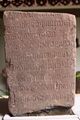 Stone inscription in Fakkham script from Thailand
 -
 The Wat Chiang Man inscription (CM1) in Fakkham script (replica)
 -
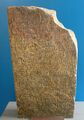 The Wat Lam Chang Inscription in Thai Lanna alphabet, 1444.
 -
Wat Chetuphon Inscrpition, 1916 CE, the last inscription in Fakkham script in the traditional sense.Wat Chetuphon Inscrpition, 1916 CE, the last inscription in Fakkham script in the traditional sense.


Consonants
Fakkham script has 44 consonants: 41 original consonants derived from Sukhothai script and 3 adopted letters from Tai Tham (shown as yellow rows in the table below) i.e. ฌ, ฒ, and อฺย (or ຢ in Lao script). That is to say, Fakkham script in general has 43 similar consonants to modern Thai with an extra letter of อฺย (Lao ຢ). Fakkham script does not contain the letter ฮ. However, the letter later appears in Thai Nithet script,[8] a descendant script emerged in the 15th century (and used in Lanna until the 18th century, but very limited) as a hybrid between Fakkham and Tai Tham.
Some features of Fakkham script are different from modern Thai script. For example, ฎ and ฏ in Fakkham have the same form (see table below). Readers need to rely on the context to know which word is pronounced as ฎ /d/ or ฏ /t/. However, the spelling of such words is equivalent to the modern Thai counterparts. Besides, consonant letters like ฆ, ฑ, ว, and ฬ may have alternative forms, slightly different from the originals. Tai Tham consonant letters are also observed to be used concurrently with Fakkham consonant letters, especially among the inscriptions form the late 18th century in Lanna.
Some Fakkham consonant letters have the subscription form i.e. ข, ค, ญ, ฐ, ถ, ธ, น, บ, ป, พ, ม, ย, อฺย, ร, ล, and ษ. Most of these letters' subscription form are borrowed from Tai Tham or Thai Nithet (or even Khom Thai script). However, these subscription forms are more prevalent among some specific Pali–Sanskrit loanwords (e.g. รฤกฺษ, องฺค, ทุกฺข, ธัมฺม, etc.) but scarcely found in words with Tai–Kadai roots.
Despite the fact that Fakkham script and modern Thai script are closely similar in shape and form, the pronunciation of Fakkham consonant letters do differ drastically form Thai. Since Fakkham is used to transcribe the languages of Lanna (Northern Thai, Tai Khuen, and Tai Lue), the pronunciation of each letter is corresponded to Tai Tham equivalent letters and not modern Thai. For example, the word รา written in Fakkham is pronounced as /haː˧/ as in Northern Thai and not /raː˧/ like in standard Thai. Each Fakkham consonant can be classified into 3 classes (ไตรยางศ์) like Thai, Lao, and Tai Tham, but the classification is comparable with that of Tai Tham, instead of Thai or Lao.
| Fakkham Script | Thai | Lao | IPA | Class | |||
|---|---|---|---|---|---|---|---|
| Consonants | Subscription
Forms |
Initial | Final | ||||
| rowspan="7" Script error: No such module "Vertical header". | 56x56px | ก | ກ | [k] | [k̚] | High | |
| 57x57px | 54x54px[9] | ข | ຂ | [x], [kʰ] | [k̚] | High | |
| 55x55px | ฃ | [x] | — | High | |||
| 59x59px | 59x59px[10] | ค | ຄ | [k] | [k̚] | Low | |
| 61x61px | ฅ | [x] | — | Low | |||
| 65x65px,59x59px,72x72px | ฆ | [x], [kʰ] | [k̚] | Low | |||
| 63x63px | ง | ງ | [ŋ] | [ŋ] | Low | ||
| rowspan="6" Script error: No such module "Vertical header". | 59x59px | จ | ຈ | [t͡ɕ] | [t̚] | High | |
| 60x60px | ฉ | [s], [t͡ɕʰ] | — | High | |||
| 60x60px | ช | ຊ | [t͡ɕ] | [t̚] | Low | ||
| 55x55px | ซ | [s] | [t̚] | Low | |||
| 63x63px[lower-alpha 1][11] | ฌ | [s], [t͡ɕʰa᷄] | [t̚] | Low | |||
| 70x70px | 74x74px[12] | ญ | [ɲ] | [n] | Low | ||
| rowspan="6" Script error: No such module "Vertical header". | 59x59px | ฎ | [d] | [t̚] | Mid | ||
| 59x59px | ฏ | [t] | [t̚] | High | |||
| 69x69px | 65x65px[lower-alpha 1], 75x75px[13] | ฐ | [tʰ] | [t̚] | High | ||
| 55x55px[14], 66x66px[lower-alpha 1][15] | ฑ | [d], [tʰ] | [t̚] | Low | |||
| 56x56px[lower-alpha 1][16] | ฒ | [tʰ] | [t̚] | Low | |||
| 57x57px | ณ | [n] | [n] | Low | |||
| rowspan="6" Script error: No such module "Vertical header". | 57x57px | ด | ດ | [d] | [t̚] | Mid | |
| 56x56px | ต | ຕ | [t] | [t̚] | High | ||
| 56x56px | 74x74px[17] | ถ | ຖ | [tʰ] | [t̚] | High | |
| 54x54px | ท | ທ | [t] | [t̚] | Low | ||
| 63x63px | 81x81px,70x70px[lower-alpha 1][18] | ธ | [tʰ] | [t̚] | Low | ||
| 54x54px | 63x63px[19] | น | ນ | [n] | [n] | Low | |
| rowspan="8" Script error: No such module "Vertical header". | 52x52px | 60x60px[lower-alpha 1][20] | บ | ບ | [b] | [p̚] | Mid |
| 75x75px | ป | ປ | [p] | [p̚] | High | ||
| 58x58px | ผ | ຜ | [pʰ] | – | High | ||
| 80x80px | ฝ | ຝ | [f] | – | High | ||
| 57x57px | 65x65px[lower-alpha 1][21] | พ | ພ | [p] | [p̚] | Low | |
| 75x75px | ฟ | ຟ | [f] | [p̚] | Low | ||
| 54x54px | ภ | [pʰ] | [p̚] | Low | |||
| 56x56px | 64x64px[lower-alpha 2][lower-alpha 3][22] | ม | ມ | [m] | [m] | Low | |
| rowspan="12" Script error: No such module "Vertical header". | 56x56px | 66x66px[lower-alpha 1] | ย | ຍ | [ɲ] | – | Low |
| 84x84px[lower-alpha 1] | 78x78px[lower-alpha 1][23] | อฺย | ຢ | [j] | – | Mid | |
| 57x57px | 73x73px,65x65px[lower-alpha 1] | ร | ຣ | [r],[lower-alpha 4] [l],[lower-alpha 4] [h] | [n] | Low | |
| 56x56px | 69x69px[24], 76x76px[25] | ล | ລ | [l] | [n] | Low | |
| 66x66px,61x61px | ว | ວ | [w] | – | Low | ||
| 59x59px | ศ | [s] | [t̚] | High | |||
| 58x58px | 62x62px[lower-alpha 2] | ษ | [s] | [t̚] | High | ||
| 59x59px | ส | ສ | [s] | [t̚] | High | ||
| 62x62px | ห | ຫ | [h] | – | High | ||
| 74x74px,70x70px | ฬ | [l] | [n] | Low | |||
| 58x58px | อ | ອ | [ʔ] | – | Mid | ||
| Unattested | ฮ | ຮ | [h] | – | Low | ||
- Notes
Numerals
Fakkham numerals are very similar to both Lanna Tham numerals and modern Lao numerals. The digits 7 and 9 each have two common variant forms that are used interchangeably.[26]
| Arabic numeral | 0 | 1 | 2 | 3 | 4 | 5 | 6 | 7 | 8 | 9 | ||
|---|---|---|---|---|---|---|---|---|---|---|---|---|
| Fakkham | 59x59px | 61x61px | 58x58px | 63x63px | 59x59px | 56x56px | 62x62px | 66x66px | 65x65px | 62x62px | 70x70px | 68x68px |
| Thai | ๐ | ๑ | ๒ | ๓ | ๔ | ๕ | ๖ | ๗ | ๘ | ๙ | ||
| Lao | ໐ | ໑ | ໒ | ໓ | ໔ | ໕ | ໖ | ໗ | ໘ | ໙ | ||
| Lanna Tham | ᪐ | ᪑ | ᪒ | ᪓ | ᪔ | ᪕ | ᪖ | ᪗ | ᪘ | ᪙ | ||
References
- ↑ 1.0 1.1 1.2 1.3 Vimonkasam, Kannika (1981) (in TH). Fakkham scripts found in Northern Thai inscriptions. Silpakorn University. pp. 45.
- ↑ 2.0 2.1 2.2 Lorrillard, Michel (Jan 2004). The Diffusion of Lao Scripts. The literary heritage of Laos. https://hal.archives-ouvertes.fr/hal-02358511/document.
- ↑ Poonotoke, Dhawat (1995). "A comparative study of Isan and Lanna Thai literature". Thai Literary Traditions: 253–4.
- ↑ 4.0 4.1 Veidlinger, Daniel M. (2006-01-01). Spreading the Dhamma: Writing, Orality, And Textual Transmission in Buddhist Northern Thailand.
- ↑ 5.0 5.1 Hartmann, John F. (1986). "The Spread of South Indic Scripts in Southeast Asia". Crossroads: An Interdisciplinary Journal of Southeast Asian Studies 3 (1): 6–20. https://www.jstor.org/stable/40860228.
- ↑ Iijima, Akiko (2009-03-31). "Preliminary Notes on "the Cultural Region of Tham Script Manuscripts"". Senri Ethnological Studies 74. doi:10.15021/00002574. http://doi.org/10.15021/00002574.
- ↑ Lorrillard, Michel (2009-03-31). "Scripts and History : the Case of Laos". Senri Ethnological Studies 74. doi:10.15021/00002575. http://doi.org/10.15021/00002575.
- ↑ เครือไทย, พรรณเพ็ญ (2003). อักษรไทยนิเทศ. เชียงใหม่: มหาวิทยาลัยเชียงใหม่. ISBN 9746576968.
- ↑ (1) Jomtham inscription (จารึกจอมถ้ำ) 1502 AD (2045 BE), line 8, สุกฺข [sukkha]; (2) Inscription No. 31 (นน. 238), line 12, ทุกฺข [tukkha]
- ↑ Suntraram 1 Inscription (จารึกสุนทราราม 1) 1615 AD (2158 BE), line 17, องฺค [onka]
- ↑ Wat Phrathat Lampang Luang temple inscription No.3 (จารึกพระธาตุลำปางหลวง 3), 1796 AD (2339 BE), side 1, line 16, สมเดฌ [somdet]
- ↑ Suntraram Inscription (จารึกสุนทราราม) 1616 AD (2159 BE), line 5, พรฺญา [pha-nya]
- ↑ Hongsawadi Sri Sattayathitthan Inscription (จารึกหงสาวดีศรีสัตยาธิษฐาน), 15th century, side 1, line 14, สัตยาธิษฺฐาน
- ↑ Pa Tab Matao Inscription (จารึกป่าตับมะเต่า), 15th century, line 4 and 8, ทัณฑ
- ↑ Wat Phrathat Lampang Luang temple inscription No.3 (จารึกพระธาตุลำปางหลวง 3), 1796 AD (2339 BE), side 2, line 9, เทสฑบาน [thetthaban]
- ↑ (1) Wat Buppharam Inscription (จารึกวัดบุปผาราม), 1529 AD (2072 BE), line 2, อาสาฒโหรา; (2) Wat Sri Suphan (จารึกวัดศรีสุพรรณ), 1509 AD (2052 BE), side 1, line 16, อาศาฒ
- ↑ Suntraram Inscription (จารึกสุนทราราม) 1616 AD (2159 BE), line 1, ติตฺถี [tit-thii]
- ↑ Found in various places in Wat Phrathat Lampang Laung Inscrption No. 3 (จารึกพระธาตุลำปางหลวง 3), 1769 AD (2339 BE); Suwanprasat Inscription (จารึกสุวรรณปราสาท), 1804 AD (2347 BE); Buppharam Inscription (จารึกบุปผาราม), 1529 AD (2072 BE); Suntraram Inscription (จารึกสุทราราม), 1615 AB (2158 BE); etc.
- ↑ Kangsadan Inscription (จารึกกังสดาล), 1860 AD (2403 BE), line 9, เปน
- ↑ Wat Phrathat Lampang Luang temple inscription No.3 (จารึกพระธาตุลำปางหลวง 3), 1796 AD (2339 BE), line 5, ตราบ [thalab]
- ↑ Wat Phrathat Lampang Luang temple inscription No.3 (จารึกพระธาตุลำปางหลวง 3), 1796 AD (2339 BE), line 8, เทพฺพดา; (2) Wat Chetuphon Inscription (จารึกวัดเชตุพน), 1916 AD (2459 BE), line 19, กรุงเทพฺพ์
- ↑ (1) Wat Phrathat Lampang Luang temple inscription No.3 (จารึกพระธาตุลำปางหลวง 3), 1796 AD (2339 BE), side 2, line 5, คัมชู; Line 9, พรหมฺม; (2) Suntraram Inscription No.1 (จารึกสุนทราราม), 1615 AD (2158 BE), line 10, อุตมฺม
- ↑ Inscription No.29 (นน. 237)
- ↑ Suwannaram Inscription No.1 (จารึกสุวณณาราม 1), side 1, line 1, ฉลู
- ↑ Wat Chetuphon Inscription (จารึกวัดเชตุพน), 1916 AD (2459 BE), line 16, มูลฺล
- ↑ Wimonkasem, Kannika (1981). Akson Fak Kham Found in Northern Thai Inscriptions. Bangkok: Silpakorn University. p. 78.
External links

 |  |


