Astronomy:NGC 1369
| NGC 1369 | |
|---|---|
| File:250px legacy surveys image of NGC 1369. | |
| Observation data (J2000 epoch) | |
| Constellation | Eridanus (constellation) |
| Right ascension | 03h 36m 45.2737s[1] |
| Declination | −36° 15′ 22.660″[1] |
| Redshift | 0.004763[1] |
| Helio radial velocity | 1428 km/s[1] |
| Distance | 64.2 ± 4.5 Mly (19.69 ± 1.38 Mpc)[1] |
| Group or cluster | Fornax Cluster |
| Apparent magnitude (V) | 13.74[1] |
| Characteristics | |
| Type | SB0/a(rs)[1] |
| Mass | 0.68×10¹⁰ (Stellar mass) [2]/3.5×1010 (Total Mass)[3] M☉ |
| Size | ~25,800 ly (7.91 kpc) (estimated)[1] |
| Apparent size (V) | 1.5 x 1.4[1] |
| Other designations | |
| ESO 358- G 034, FCC 176, MCG-06-09-004, PGC 13330[1] | |
NGC 1369 is a barred lenticular galaxy located 59 million light years away[4] in constellation of Eridanus. The galaxy was discovered by astronomer Julius Schmidt on January 19, 1865,[5] and is a member of the Fornax Cluster.[6] NGC 1369 is a host to a supermassive black hole with an estimated mass of 1.8 million solar masses.[7]
Surrounding NGC 1369 is a population of a least 11 known globular clusters.[8]
Physical characteristics
In the disk of NGC 1369, there are two bright, diffuse spiral arms which break of a relatively weak bar structure. These arms quickly fade in the diffuse outer disk.[9] Despite the presence of spiral arms, the galaxy is very red which actually makes NGC 1369 a lenticular galaxy.[10] Also, the galaxy is devoid of atomic and molecular gas,[11] and does not show any indications of ionised-gas emission as a result of star formation. Observations in X-rays have shown that it is infalling in a transional region of the Fornax Cluster between the high and low-density regions of the cluster where the X-ray emission is still present. As a result, ram-pressure stripping would have acted to stop star formation once the galaxy entered into the cluster core,[12] causing it to transion from a spiral galaxy to a lenticular galaxy.[11]
Supernova
One supernova has been observed in NGC 1369: SN 1969A (type unknown, mag. 17) was discovered by Enrique Chavira on 8 January 1969.[13][14]
See also
References
- ↑ 1.00 1.01 1.02 1.03 1.04 1.05 1.06 1.07 1.08 1.09 "Results for object NGC 1369". http://ned.ipac.caltech.edu/byname?objname=NGC+1369. Retrieved 2024-06-28.
- ↑ Martín-Navarro, I.; Pinna, F.; Coccato, L.; Falcón-Barroso, J.; Ven, G. van de; Lyubenova, M.; Corsini, E. M.; Fahrion, K. et al. (2021-10-01). "Fornax 3D project: Assessing the diversity of IMF and stellar population maps within the Fornax Cluster" (in en). Astronomy & Astrophysics 654: A59. doi:10.1051/0004-6361/202141348. ISSN 0004-6361. Bibcode: 2021A&A...654A..59M. https://www.aanda.org/articles/aa/abs/2021/10/aa41348-21/aa41348-21.html.
- ↑ Firth, P.; Drinkwater, M. J.; Evstigneeva, E. A.; Gregg, M. D.; Karick, A. M.; Jones, J. B.; Phillipps, S. (2007-11-01). "Compact stellar systems around NGC 1399". Monthly Notices of the Royal Astronomical Society 382 (3): 1342–1352. doi:10.1111/j.1365-2966.2007.12474.x. ISSN 0035-8711. Bibcode: 2007MNRAS.382.1342F.
- ↑ "Your NED Search Results". https://ned.ipac.caltech.edu/cgi-bin/objsearch?objname=NGC+1369&extend=no&hconst=73&omegam=0.27&omegav=0.73&corr_z=1&out_csys=Equatorial&out_equinox=J2000.0&obj_sort=RA+or+Longitude&of=pre_text&zv_breaker=30000.0&list_limit=5&img_stamp=YES.
- ↑ "New General Catalog Objects: NGC 1350 - 1399". https://cseligman.com/text/atlas/ngc13a.htm#1369.
- ↑ Ferguson, Henry C. (1989-08-01). "Population Studies in Groups and Clusters of Galaxies. II. A Catalog of Galaxies in the Central 3.5 Degrees of the Fornax Cluster". The Astronomical Journal 98: 367. doi:10.1086/115152. ISSN 0004-6256. Bibcode: 1989AJ.....98..367F. https://ui.adsabs.harvard.edu/abs/1989AJ.....98..367F.
- ↑ Arzoumanian, Zaven; Baker, Paul T.; Brazier, Adam; Brook, Paul R.; Burke-Spolaor, Sarah; Becsy, Bence; Charisi, Maria; Chatterjee, Shami et al. (2021-06-01). "The NANOGrav 11 yr Data Set: Limits on Supermassive Black Hole Binaries in Galaxies within 500 Mpc". The Astrophysical Journal 914 (2): 121. doi:10.3847/1538-4357/abfcd3. ISSN 0004-637X. Bibcode: 2021ApJ...914..121A.
- ↑ Fahrion, K.; Lyubenova, M.; Hilker, M.; Ven, G. van de; Falcón-Barroso, J.; Leaman, R.; Martín-Navarro, I.; Bittner, A. et al. (2020-05-01). "The Fornax 3D project: Globular clusters tracing kinematics and metallicities" (in en). Astronomy & Astrophysics 637: A26. doi:10.1051/0004-6361/202037685. ISSN 0004-6361. Bibcode: 2020A&A...637A..26F. https://www.aanda.org/articles/aa/abs/2020/05/aa37685-20/aa37685-20.html.
- ↑ "NGC 1369 - SAB(s)a". https://kudzu.astr.ua.edu/devatlas/NGC_1369______BVI_sum_____.html.
- ↑ Fuller, C.; Davies, J. I.; Auld, R.; Smith, M. W. L.; Baes, M.; Bianchi, S.; Bocchio, M.; Boselli, A. et al. (2014-05-01). "The Herschel Fornax Cluster Survey II: FIR properties of optically selected Fornax cluster galaxies". Monthly Notices of the Royal Astronomical Society 440 (2): 1571–1589. doi:10.1093/mnras/stu369. ISSN 0035-8711. Bibcode: 2014MNRAS.440.1571F.
- ↑ 11.0 11.1 Raj, M. A.; Iodice, E.; Napolitano, N. R.; Spavone, M.; Su, H. -S.; Peletier, R. F.; Davis, T. A.; Zabel, N. et al. (2019-08-01). "The Fornax Deep Survey with the VST. VII. Evolution and structure of late type galaxies inside the virial radius of the Fornax cluster". Astronomy and Astrophysics 628: A4. doi:10.1051/0004-6361/201935433. ISSN 0004-6361. Bibcode: 2019A&A...628A...4R. https://ui.adsabs.harvard.edu/abs/2019A&A...628A...4R.
- ↑ Iodice, E.; Sarzi, M.; Bittner, A.; Coccato, L.; Costantin, L.; Corsini, E. M.; van de Ven, G.; de Zeeuw, P. T. et al. (2019-07-01). "The Fornax3D project: Tracing the assembly history of the cluster from the kinematic and line-strength maps". Astronomy and Astrophysics 627: A136. doi:10.1051/0004-6361/201935721. ISSN 0004-6361. Bibcode: 2019A&A...627A.136I. https://ui.adsabs.harvard.edu/abs/2019A&A...627A.136I.
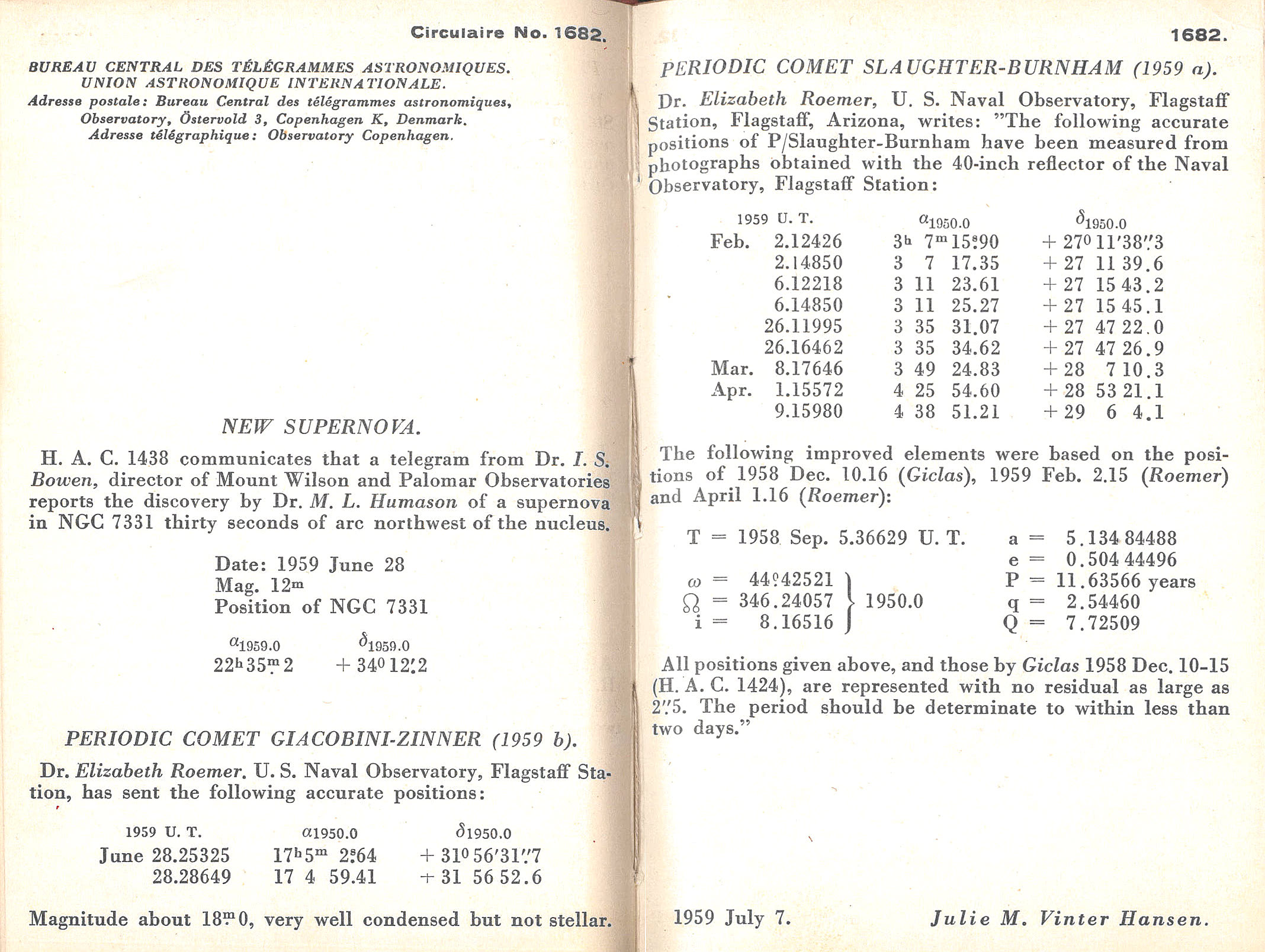
- ↑ Haro, G.; Chavira, E. (14 January 1969). "SUPERNOVA IN ANONYMOUS GALAXY". Central Bureau for Astronomical Telegrams (IAU) 2126: 1. http://www.cbat.eps.harvard.edu/IAUCs/IAUC1682.jpg. Retrieved 30 May 2026.
- ↑ "SN 1969A". IAU. https://www.wis-tns.org/object/1969A.
External links
- NGC 1369 on WikiSky: DSS2, SDSS, GALEX, IRAS, Hydrogen α, X-Ray, Astrophoto, Sky Map, Articles and images
Coordinates:  03h 36m 45.2737s, −36° 15′ 22.660″


 |  |