Engineering:DFS SG 38 Schulgleiter
| SG 38 Schulgleiter | |
|---|---|
 SG.38 reproduction | |
| General information | |
| Type | Primary glider |
| National origin | Germany |
| Designer | Schneider, Rehberg and Hofmann |
| Number built | about 10,000 |
| History | |
| Introduction date | 1938 |
| First flight | 1938 |
| Developed from | Stamer Lippisch Zögling |
The Schneider DFS 108-14 SG-38 Schulgleiter (School glider) is a German high-wing, cable-braced, single-seat primary glider that was designed by Schneider, Rehberg and Hofmann at Edmund Schneider's factory at Grunau in 1938, hence the designation. It was produced by several builders, including Deutsche Forschungsanstalt für Segelflug (DFS).[1][2]
Design and development
The SG 38 was designed to be a training glider for basic flight training by the Nationalsozialistisches Fliegerkorps (NSFK). The usual launch method was by bungee cord from a sloped hill. Because training was conducted solely by solo flight the aircraft had to be very easy to fly and also easy to repair.[1]
The high-wing design uses a kingpost and cable bracing. The primary structure of the glider is of wood, with the wings, tail surfaces and inverted "V" kingpost all finished in doped aircraft fabric covering. The pilot sits on a simple seat in the open air, without a windshield.
The basic configuration was similar to earlier gliders such as the Stamer Lippisch Zögling and the Grunau IX, but the SG 38 was an entirely new design. Improvements included enlarged tail surfaces for better stability, a separate skid mounted on shock-absorbing springs, and an updated seat for the pilot.[3]
Operational history

The SG-38 played a critical role in pilot training for the Luftwaffe in the Second World War, as a simple, but robust, trainer for the rapid increase in the number of pilots needed by Germany. It was commonly flown by bungee launch on the slopes of the Wasserkuppe[2] and the hills of Saarmund.[4]
From 1949 to 1951 Spain's AISA produced 50 licence-built aircraft.[5]
In the UK, Elliotts of Newbury built a copy of the SG.38 called the Elliotts Primary EoN; its version first flown in 1948 and used by the RAF as the Eton TX.1.
During WW2, from 1940 to 1944, the Chinese Nationalist Air Force also used the copied SG-38 glider for basic pilot training in south-west China.
Aircraft on display
- Danmarks Flymuseum, Stauning Vestjylland Airport, Denmark[6]
- Deutsches Museum, Munich, Germany[1]
- Flyhistorisk Museum, Sola, near Stavanger, Norway
- Museo del Aire, Madrid, Spain[5]
- Musée de l'Air et de l'Espace, Paris – Le Bourget Airport, France[7]
- Museu do Ar, Sintra, Portugal[8]
- National Museum of the United States Air Force, Dayton, Ohio, USA[2]
- Shuttleworth Collection, Old Warden, Bedfordshire, England[9]
Specifications (SG 38)
Data from [10]
General characteristics
- Crew: One
- Length: 6.28 m (20 ft 7 in)
- Wingspan: 10.41 m (34 ft 2 in)
- Height: 2.43 m (8 ft 0 in)
- Wing area: 16 m2 (170 sq ft)
- Aspect ratio: 6.76
- Empty weight: 100 kg (220 lb)
- Gross weight: 210 kg (463 lb)
Performance
- Maximum speed: 115 km/h (71 mph, 62 kn)
- Never exceed speed: 115 km/h (71 mph, 62 kn)
- Maximum glide ratio: 10:1 at 52 km/h
- Wing loading: 13.75 kg/m2 (2.82 lb/sq ft)
Bibliography
- Sinnhuber, Karl (2012). Salzburg To Stalingrad. UK: Milton Keynes. ISBN 9781471702228.
See also
Related development
Aircraft of comparable role, configuration and era
Related lists
Images
-
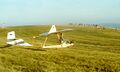 SG-38 bungee launch
 -
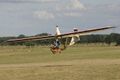 SG-38 landing
 -
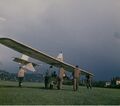 SG-38 being carried to the launch point
 -
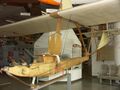 SG-38 in the Deutsches Museum Munich, Germany


References
- ↑ 1.0 1.1 1.2 Deutsches Museum (n.d.). "Basic Training Glider SG 38, 1938". http://www.deutsches-museum.de/en/collections/transport/aeronautics/sailplanes/basic-training-glider-sg-38/.
- ↑ 2.0 2.1 2.2 National Museum of the United States Air Force (n.d.). "Schneider Schulgleiter SG 38". http://www.nationalmuseum.af.mil/factsheets/factsheet.asp?id=16888.
- ↑ Sailplanes 1920-1945, Martin Simons, EQIP, 2001
- ↑ Sinnhuber 2012, p. 9.
- ↑ 5.0 5.1 Museo del Aire (n.d.). "Fotografía del Aisa Schneider Shulgleiter". http://www.ejercitodelaire.mde.es/ea/pag?idDoc=CC080F0B0240A9D7C125747A002415EA&idImg=1850315910A615E1C125747A0026FC8B.
- ↑ "Website DFm". 2015. http://flymuseum.dk/fly?id=193:hoffmann-rehberg-schneider-sg-38&catid=34.
- ↑ "List'In MAE" (in fr). 2011. http://www.pyperpote.tonsite.biz/listinmae/index.php?option=com_content&view=category&id=41:hall-e-apres-guerresaint-exuperyaviation-civi&Itemid=54&layout=default&limitstart=20.
- ↑ "Força Aérea Portuguesa – Museu do Ar – Sintra" (in Portuguese). Museu do Ar. http://www.emfa.pt/www/po/musar/s-003.006.001-aeronaves.
- ↑ "1938 Schneider SG38 (EoN Primary)". http://www.shuttleworth.org/collection/eonprimary/.
- ↑ Flugzeug-Typenbuch, Helmut Schneider, Hermann Beyer Verlag, Leipzig 1939
Template:Edmund Schneider aircraft Template:DFS aircraft
Swedish military aircraft designations 1926–current | |||||||||||||||||||||||||||||||||||||||||||||||||||||||||
|---|---|---|---|---|---|---|---|---|---|---|---|---|---|---|---|---|---|---|---|---|---|---|---|---|---|---|---|---|---|---|---|---|---|---|---|---|---|---|---|---|---|---|---|---|---|---|---|---|---|---|---|---|---|---|---|---|---|
| By role |
| ||||||||||||||||||||||||||||||||||||||||||||||||||||||||
| Post–1940 unified sequence | |||||||||||||||||||||||||||||||||||||||||||||||||||||||||
Italics Pre-unification designations
! rowspan="3" colspan="2" width="14%" style="border-bottom:2px solid grey;" | Date/Time (UTC) ! Configuration ! Serial number ! Launch site ! Outcome |- |style="text-align:center;background-color:#e3e9e9;" | Payload |style="text-align:center;background-color:#e3e9e9;" | Separation orbit |style="text-align:center;background-color:#e3e9e9;" | Operator |style="text-align:center;background-color:#e3e9e9;" | Function |- | colspan="4" style="text-align:center;background-color:#e4dfdf;border-bottom:2px solid grey;" | Remarks |- Parameter 1=time required!
This is a navigational template created using {{navbox}}. It can be transcluded on pages by placing Initial visibilityThis template's initial visibility currently defaults to To change this template's initial visibility, the
Templates using the classes TemplateDataA navigational box that can be placed at the bottom of articles.
Template transclusions
 Not doneLatin pronunciation: [{{{1}}}] Not doneLatin pronunciation: [{{{1}}}]
| rowspan="1" colspan="2" style="border-top:2px solid #aabbcc;" | | style="border-top:2px solid #aabbcc;" | | style="border-top:2px solid #aabbcc;" | | style="border-top:2px solid #aabbcc;" | | style="border-top:2px solid #aabbcc;" | |- |- Vietnamese pronunciation: [{{{1}}}]-4500 — – -4000 — – -3500 — – -3000 — – -2500 — – -2000 — – -1500 — – -1000 — – -500 — – 0 —  Done Done To doRussian pronunciation: [{{{1}}}]Greek pronunciation: [{{{1}}}] To doRussian pronunciation: [{{{1}}}]Greek pronunciation: [{{{1}}}] Danish pronunciation: [{{{1}}}]Northern Sami pronunciation: [{{{1}}}]Mandarin pronunciation: [{{{ipa}}}]Cantonese pronunciation: [{{{1}}}]Entry from DFS SG 38 Schulgleiter from TCI Europe, retrieved on {{{Date}}} Danish pronunciation: [{{{1}}}]Northern Sami pronunciation: [{{{1}}}]Mandarin pronunciation: [{{{ipa}}}]Cantonese pronunciation: [{{{1}}}]Entry from DFS SG 38 Schulgleiter from TCI Europe, retrieved on {{{Date}}}
This is a navigational template created using {{navbox}}. It can be transcluded on pages by placing Initial visibilityThis template's initial visibility currently defaults to To change this template's initial visibility, the
Templates using the classes TemplateDataA navigational box that can be placed at the bottom of articles.
 In progressPalomares, M. L. D. and Pauly, D., eds. (2011). "{{{1}}} {{{2}}}" in SeaLifeBase. April 2011 version.Turkish pronunciation: [{{{1}}}]Finnish pronunciation: [{{{1}}}]Froese, Rainer and Pauly, Daniel, eds. (2006). "{{{1}}} {{{2}}}" in FishBase. April 2006 version. In progressPalomares, M. L. D. and Pauly, D., eds. (2011). "{{{1}}} {{{2}}}" in SeaLifeBase. April 2011 version.Turkish pronunciation: [{{{1}}}]Finnish pronunciation: [{{{1}}}]Froese, Rainer and Pauly, Daniel, eds. (2006). "{{{1}}} {{{2}}}" in FishBase. April 2006 version.
|- | ... | — | — | — | — | — | — |-Old Norse pronunciation: [{{{1}}}]Salish pronunciation: [{{{1}}}]Basque pronunciation: [{{{1}}}]{{{1}}}data-sort-value="" style="background: #ececec; color: #2C2C2C; vertical-align: middle; font-size: smaller; text-align: center; " class="table-na" | UnreleasedNorwegian pronunciation: [{{{1}}}] (aged {{{4}}})Hungarian pronunciation: [{{{1}}}]Quechua pronunciation: [{{{1}}}]Arabic pronunciation: [{{{1}}}]Punjabi pronunciation: [{{{1}}}]Afrikaans pronunciation: [{{{1}}}]Romanian pronunciation: [{{{1}}}]Hebrew pronunciation: [{{{1}}}][INVALID OR MISSING PARAMETER IN TEMPLATE DFS SG 38 Schulgleiter]Uto-Aztecan pronunciation: [{{{1}}}]Tamil pronunciation: [{{{1}}}]Hindustani pronunciation: [{{{1}}}]Swedish pronunciation: [{{{1}}}]Kazakh pronunciation: [{{{1}}}]Lao pronunciation: [{{{1}}}]Tibetan pronunciation: [{{{1}}}]Khmer pronunciation: [{{{1}}}]data-sort-value="" style="vertical-align:middle; text-align:center" class="table-na" | —{{{1}}}Welsh pronunciation: [{{{1}}}] Partially doneAthabaskan pronunciation: [{{{1}}}]Māori pronunciation: [{{{1}}}]IPA: [{{{1}}}]Bulgarian pronunciation: [{{{1}}}]Korean pronunciation: [{{{1}}}]Icelandic pronunciation: [{{{1}}}]Sanskrit pronunciation: [{{{1}}}]Bengali pronunciation: [{{{1}}}]Indonesian pronunciation: [{{{1}}}]Serbo-Croatian pronunciation: [{{{1}}}]CROSBI {{{1}}} 1 Assigned to multiple types Partially doneAthabaskan pronunciation: [{{{1}}}]Māori pronunciation: [{{{1}}}]IPA: [{{{1}}}]Bulgarian pronunciation: [{{{1}}}]Korean pronunciation: [{{{1}}}]Icelandic pronunciation: [{{{1}}}]Sanskrit pronunciation: [{{{1}}}]Bengali pronunciation: [{{{1}}}]Indonesian pronunciation: [{{{1}}}]Serbo-Croatian pronunciation: [{{{1}}}]CROSBI {{{1}}} 1 Assigned to multiple types
! rowspan="3" colspan="2" width="14%" style="border-bottom:2px solid grey;" | Date/Time (UTC) ! Configuration ! Serial number ! Launch site ! Outcome |- |style="text-align:center;background-color:#e3e9e9;" | Payload |style="text-align:center;background-color:#e3e9e9;" | Separation orbit |style="text-align:center;background-color:#e3e9e9;" | Operator |style="text-align:center;background-color:#e3e9e9;" | Function |- | colspan="4" style="text-align:center;background-color:#e4dfdf;border-bottom:2px solid grey;" | Remarks |- Parameter 1=time required!
This is a navigational template created using {{navbox}}. It can be transcluded on pages by placing Initial visibilityThis template's initial visibility currently defaults to To change this template's initial visibility, the
Templates using the classes TemplateDataA navigational box that can be placed at the bottom of articles.
Template transclusions
Not doneLatin pronunciation: [{{{1}}}]
| rowspan="1" colspan="2" style="border-top:2px solid #aabbcc;" | | style="border-top:2px solid #aabbcc;" | | style="border-top:2px solid #aabbcc;" | | style="border-top:2px solid #aabbcc;" | | style="border-top:2px solid #aabbcc;" | |- |- Vietnamese pronunciation: [{{{1}}}]-4500 — – -4000 — – -3500 — – -3000 — – -2500 — – -2000 — – -1500 — – -1000 — – -500 — – 0 — Done To doRussian pronunciation: [{{{1}}}]Greek pronunciation: [{{{1}}}]Danish pronunciation: [{{{1}}}]Northern Sami pronunciation: [{{{1}}}]Mandarin pronunciation: [{{{ipa}}}]Cantonese pronunciation: [{{{1}}}]Entry from DFS SG 38 Schulgleiter from TCI Europe, retrieved on {{{Date}}}
This is a navigational template created using {{navbox}}. It can be transcluded on pages by placing Initial visibilityThis template's initial visibility currently defaults to To change this template's initial visibility, the
Templates using the classes TemplateDataA navigational box that can be placed at the bottom of articles.
In progressPalomares, M. L. D. and Pauly, D., eds. (2011). "{{{1}}} {{{2}}}" in SeaLifeBase. April 2011 version.Turkish pronunciation: [{{{1}}}]Finnish pronunciation: [{{{1}}}]Froese, Rainer and Pauly, Daniel, eds. (2006). "{{{1}}} {{{2}}}" in FishBase. April 2006 version.
|- | ... | — | — | — | — | — | — |-Old Norse pronunciation: [{{{1}}}]Salish pronunciation: [{{{1}}}]Basque pronunciation: [{{{1}}}]{{{1}}}data-sort-value="" style="background: #ececec; color: #2C2C2C; vertical-align: middle; font-size: smaller; text-align: center; " class="table-na" | UnreleasedNorwegian pronunciation: [{{{1}}}] (aged {{{4}}})Hungarian pronunciation: [{{{1}}}]Quechua pronunciation: [{{{1}}}]Arabic pronunciation: [{{{1}}}]Punjabi pronunciation: [{{{1}}}]Afrikaans pronunciation: [{{{1}}}]Romanian pronunciation: [{{{1}}}]Hebrew pronunciation: [{{{1}}}][INVALID OR MISSING PARAMETER IN TEMPLATE DFS SG 38 Schulgleiter]Uto-Aztecan pronunciation: [{{{1}}}]Tamil pronunciation: [{{{1}}}]Hindustani pronunciation: [{{{1}}}]Swedish pronunciation: [{{{1}}}]Kazakh pronunciation: [{{{1}}}]Lao pronunciation: [{{{1}}}]Tibetan pronunciation: [{{{1}}}]Khmer pronunciation: [{{{1}}}]data-sort-value="" style="vertical-align:middle; text-align:center" class="table-na" | —{{{1}}}Welsh pronunciation: [{{{1}}}] Partially doneAthabaskan pronunciation: [{{{1}}}]Māori pronunciation: [{{{1}}}]IPA: [{{{1}}}]Bulgarian pronunciation: [{{{1}}}]Korean pronunciation: [{{{1}}}]Icelandic pronunciation: [{{{1}}}]Sanskrit pronunciation: [{{{1}}}]Bengali pronunciation: [{{{1}}}]Indonesian pronunciation: [{{{1}}}]Serbo-Croatian pronunciation: [{{{1}}}]CROSBI {{{1}}} 2 Not unified with main sequence | |||||||||||||||||||||||||||||||||||||||||||||||||||||||||


 |  |


