Engineering:Soyuz TMA-22
| Operator | Roscosmos |
|---|---|
| COSPAR ID | 2011-067A |
| SATCAT no. | 37877 |
| Mission duration | 165d, 07h, 31m |
| Spacecraft properties | |
| Spacecraft type | Soyuz-TMA 11F732 |
| Manufacturer | Energia |
| Crew | |
| Crew size | 3 |
| Members | Anton Shkaplerov Anatoli Ivanishin Daniel C. Burbank |
| Callsign | Astraeus |
| Start of mission | |
| Rocket | Soyuz-FG |
| Launch site | Baikonur 1/5 |
| End of mission | |
| Landing date | 27 April 2012, 11:45 UTC[1] |
| Orbital parameters | |
| Reference system | Geocentric |
| Regime | Low Earth |
| Docking with ISS | |
| Docking port | Poisk zenith |
| Docking date | 16 November 2011 05:24 UTC |
| Undocking date | 27 April 2012 08:15 UTC |
| Time docked | 163d 2h 51m |
 From left to right: Daniel C. Burbank, Anton Shkaplerov and Anatoli Ivanishin Soyuz programme (Crewed missions) | |
Soyuz TMA-22 was a crewed spaceflight to the International Space Station (ISS). TMA-22 was the 111th flight of a Soyuz spacecraft, and transported three members of the Expedition 29 crew to the ISS. The spacecraft docked to the ISS on 16 November 2011,[2] and remained docked to serve as an emergency escape vehicle until its undocking on 27 April 2012.[3] Soyuz TMA-22 successfully landed in Kazakhstan on 27 April 2012 11:45 GMT.[1]
TMA-22 was the final flight of a Soyuz-TMA vehicle, following the design's replacement by the modernized TMA-M series.[4] The launch of Soyuz TMA-22 was originally scheduled for 30 September 2011, but was delayed until 14 November following the launch failure of the Progress M-12M resupply vehicle on 24 August 2011.[5] Soyuz TMA-22 was the first crewed mission to dock with the ISS since the Retirement of the American Space Shuttle fleet at the end of the STS-135 mission in July 2011.
Crew
| Position[6] | Crew Member | |
|---|---|---|
| Commander |  Anton Shkaplerov, Roscosmos Anton Shkaplerov, RoscosmosExpedition 29 First spaceflight | |
| Flight Engineer 1 | Anatoli Ivanishin, Roscosmos Expedition 29 First spaceflight | |
| Flight Engineer 2 |  Daniel C. Burbank, NASA Daniel C. Burbank, NASAExpedition 29 Third and last spaceflight | |
Backup crew
| Position | Crew Member | |
|---|---|---|
| Commander | Gennady Padalka, Roscosmos
| |
| Flight Engineer 1 | Sergei Revin, Roscosmos
| |
| Flight Engineer 2 | Joseph M. Acaba, NASA
| |
Mission profile

Rescheduling of launch
Soyuz TMA-22's launch was rescheduled from late September 2011 to 14 November, due to the failed launch of the uncrewed Progress M-12M cargo spacecraft on 24 August 2011.[7] The incident was caused by a blocked fuel line leading to the gas generator of the third-stage RD-0110 engine of the spacecraft's Soyuz-U booster. After the loss of Progress M-12M, all Russian crewed spaceflights were temporarily suspended, due to the similarities between the failed engine and the third-stage engine in use on the crewed Soyuz-FG booster.[8] A Russian commission blamed the Progress M-12M failure on a single human error, and put additional procedures in place to prevent the problem from recurring. On 30 October 2011, Russia successfully launched the uncrewed Progress M-13M cargo spacecraft atop a Soyuz-U booster, clearing the way for the Soyuz TMA-22 launch.
Launch

Soyuz TMA-22 was launched on schedule from the Gagarin's Start launchpad at Baikonur Cosmodrome, Kazakhstan, at 04:14:03 UTC on 14 November 2011.[9] Soyuz Commander Shkaplerov sat in the Soyuz's center seat, with flight engineer Ivanishin strapped in to his left and NASA astronaut Burbank sitting to his right. The Soyuz-FG rocket carrying Soyuz TMA-22 was launched in blizzard-like conditions, with high winds and temperatures as low as −5 °C (23 °F). Nonetheless, conditions were deemed to be within acceptable parameters for launch.[10]
The rocket followed a nominal ascent trajectory, and successfully inserted Soyuz TMA-22 into orbit approximately nine minutes after the launch. Once in orbit, the spacecraft deployed its two solar panels and communications antennas as planned.
Docking
Soyuz TMA-22 docked with the ISS at 05:24 GMT on 16 November 2011, about nine minutes earlier than planned.[2] The spacecraft docked at the MRM-2 Poisk module, while Soyuz TMA-22 and the ISS were flying 400 kilometres (250 mi) above the southern Pacific Ocean. The Soyuz crew entered the ISS at around 6:39 GMT, and were greeted by Expedition 29 crewmembers Mike Fossum, Sergei Volkov and Satoshi Furukawa. Burbank, Shkaplerov and Ivanishin received congratulatory satellite calls from Russian dignitaries and family members before participating in a safety briefing led by Expedition 29 commander Fossum.[11]
Deorbit
Soyuz TMA-22 undocked from the ISS on 27 April 2012 at 8:15 AM (GMT), carrying Burbank, Shkaplerov and Ivanishin, and landed safely near Arkalyk, Kazakhstan, at 11:45 AM the same day.[1] The spacecraft's departure ended Expedition 30, and left astronauts Oleg Kononenko, André Kuipers and Don Pettit aboard the station to begin Expedition 31.
-
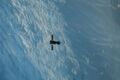 Soyuz TMA-22 following its departure from the ISS.
 -
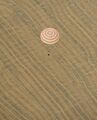 The Soyuz TMA-22 capsule shortly before landing.
 -
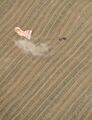 The capsule shortly after landing.
 -
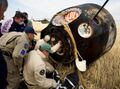 Russian support personnel assist crew members in leaving the capsule.
 -
 The crew members seated in chairs outside the capsule after landing.


References
- ↑ 1.0 1.1 1.2 "Soyuz TMA-22 returns to Earth with three outbound ISS crewmembers". NASASpaceflight.com, 27 April 2012.
- ↑ 2.0 2.1 "Russian, U.S. crew safely dock with space station". Reuters, 16 November 2011.
- ↑ "Soyuz return from ISS set for April 27". Space Daily, 29 March 2012. Retrieved 2012-04-05.
- ↑ Chris Gebhardt (24 October 2011). "ISS Community reviews Station Progress, Anomalies, and Upcoming Flights". NASAspaceflight.com. http://www.nasaspaceflight.com/2011/10/iss-community-reviews-station-progress-anomalies-upcoming-flights/.
- ↑ "Russian Space Agency names next crew to ISS" . Xinhua, 24 October 2011.
- ↑ NASA HQ (2009). "NASA and its International Partners Assign Space Station Crews". NASA. http://www.nasa.gov/home/hqnews/2009/oct/HQ_09-233_Space_Station_Crews.html.
- ↑ Robert Z. Pearlman (2 September 2011). "Soyuz TMA-22 launch delayed by loss of Progress". collectSPACE. http://www.collectspace.com/ubb/Forum31/HTML/000333.html.
- ↑ Pete Harding (16 November 2011). "Soyuz TMA-22 docks to International Space Station – de-crew averted". NASAspaceflight.com. http://www.nasaspaceflight.com/2011/11/soyuz-tma-22-docks-iss-de-crew-averted/.
- ↑ William Harwood (14 November 2011). "Three men fly Soyuz capsule to space from snowy pad". Spaceflight Now. http://www.spaceflightnow.com/station/exp29/111113launch/.
- ↑ Jason Davis (14 November 2011). "Three humans, Angry Bird launch to ISS". ASTROSAUR.US. http://www.astrosaur.us/2011/11/14/three-humans-angry-bird-launch-to-iss/.
- ↑ Denise Chow (16 November 2011). "Three men and an Angry Bird move into space station". Space on NBC News. https://www.nbcnews.com/id/wbna45307187.
External links
- YouTube video of Soyuz TMA-22's rollout and launch.
- Soyuz TMA-22 astronaut {{Twitter}} template missing ID and not present in Wikidata..
| Main topics |  | ||||||||||||||||||||||||||
|---|---|---|---|---|---|---|---|---|---|---|---|---|---|---|---|---|---|---|---|---|---|---|---|---|---|---|---|
| Past missions (by spacecraft type) |
| ||||||||||||||||||||||||||
| Current missions | |||||||||||||||||||||||||||
| Future missions |
| ||||||||||||||||||||||||||
Uncrewed missions are designated as Kosmos instead of Soyuz; exceptions are noted "(uncrewed)". The † sign designates failed missions. Italics designates cancelled missions. | |||||||||||||||||||||||||||
| 1998–2004 |
|  | ||||||||||||||||||||||||||||||||||||||||||||||||||||||||
|---|---|---|---|---|---|---|---|---|---|---|---|---|---|---|---|---|---|---|---|---|---|---|---|---|---|---|---|---|---|---|---|---|---|---|---|---|---|---|---|---|---|---|---|---|---|---|---|---|---|---|---|---|---|---|---|---|---|---|
| 2005–2009 | ||||||||||||||||||||||||||||||||||||||||||||||||||||||||||
| 2010–2014 | ||||||||||||||||||||||||||||||||||||||||||||||||||||||||||
| 2015–2019 |
| |||||||||||||||||||||||||||||||||||||||||||||||||||||||||
| 2020–2024 | ||||||||||||||||||||||||||||||||||||||||||||||||||||||||||
| Individuals | ||||||||||||||||||||||||||||||||||||||||||||||||||||||||||
| Vehicles |
| |||||||||||||||||||||||||||||||||||||||||||||||||||||||||
Ongoing spaceflights in bold
! rowspan="3" colspan="2" width="14%" style="border-bottom:2px solid grey;" | Date/Time (UTC) ! Configuration ! Serial number ! Launch site ! Outcome |- |style="text-align:center;background-color:#e3e9e9;" | Payload |style="text-align:center;background-color:#e3e9e9;" | Separation orbit |style="text-align:center;background-color:#e3e9e9;" | Operator |style="text-align:center;background-color:#e3e9e9;" | Function |- | colspan="4" style="text-align:center;background-color:#e4dfdf;border-bottom:2px solid grey;" | Remarks |- Parameter 1=time required!
This is a navigational template created using {{navbox}}. It can be transcluded on pages by placing Initial visibilityThis template's initial visibility currently defaults to To change this template's initial visibility, the
Templates using the classes TemplateDataA navigational box that can be placed at the bottom of articles.
Template transclusions
 Not doneLatin pronunciation: [{{{1}}}] Not doneLatin pronunciation: [{{{1}}}]
| rowspan="1" colspan="2" style="border-top:2px solid #aabbcc;" | | style="border-top:2px solid #aabbcc;" | | style="border-top:2px solid #aabbcc;" | | style="border-top:2px solid #aabbcc;" | | style="border-top:2px solid #aabbcc;" | |- |- Vietnamese pronunciation: [{{{1}}}]-4500 — – -4000 — – -3500 — – -3000 — – -2500 — – -2000 — – -1500 — – -1000 — – -500 — – 0 —  Done Done To doRussian pronunciation: [{{{1}}}]Greek pronunciation: [{{{1}}}] To doRussian pronunciation: [{{{1}}}]Greek pronunciation: [{{{1}}}] Danish pronunciation: [{{{1}}}]Northern Sami pronunciation: [{{{1}}}]Mandarin pronunciation: [{{{ipa}}}]Cantonese pronunciation: [{{{1}}}]Entry from Soyuz TMA-22 from TCI Europe, retrieved on {{{Date}}} Danish pronunciation: [{{{1}}}]Northern Sami pronunciation: [{{{1}}}]Mandarin pronunciation: [{{{ipa}}}]Cantonese pronunciation: [{{{1}}}]Entry from Soyuz TMA-22 from TCI Europe, retrieved on {{{Date}}}
This is a navigational template created using {{navbox}}. It can be transcluded on pages by placing Initial visibilityThis template's initial visibility currently defaults to To change this template's initial visibility, the
Templates using the classes TemplateDataA navigational box that can be placed at the bottom of articles.
 In progressPalomares, M. L. D. and Pauly, D., eds. (2011). "{{{1}}} {{{2}}}" in SeaLifeBase. April 2011 version.Turkish pronunciation: [{{{1}}}]Finnish pronunciation: [{{{1}}}]Froese, Rainer and Pauly, Daniel, eds. (2006). "{{{1}}} {{{2}}}" in FishBase. April 2006 version. In progressPalomares, M. L. D. and Pauly, D., eds. (2011). "{{{1}}} {{{2}}}" in SeaLifeBase. April 2011 version.Turkish pronunciation: [{{{1}}}]Finnish pronunciation: [{{{1}}}]Froese, Rainer and Pauly, Daniel, eds. (2006). "{{{1}}} {{{2}}}" in FishBase. April 2006 version.
|- | ... | — | — | — | — | — | — |-Old Norse pronunciation: [{{{1}}}]Salish pronunciation: [{{{1}}}]Basque pronunciation: [{{{1}}}]{{{1}}}data-sort-value="" style="background: #ececec; color: #2C2C2C; vertical-align: middle; font-size: smaller; text-align: center; " class="table-na" | UnreleasedNorwegian pronunciation: [{{{1}}}] (aged {{{4}}})Hungarian pronunciation: [{{{1}}}]Quechua pronunciation: [{{{1}}}]Arabic pronunciation: [{{{1}}}]Punjabi pronunciation: [{{{1}}}]Afrikaans pronunciation: [{{{1}}}]Romanian pronunciation: [{{{1}}}]Hebrew pronunciation: [{{{1}}}][INVALID OR MISSING PARAMETER IN TEMPLATE Soyuz TMA-22]Uto-Aztecan pronunciation: [{{{1}}}]Tamil pronunciation: [{{{1}}}]Hindustani pronunciation: [{{{1}}}]Swedish pronunciation: [{{{1}}}]Kazakh pronunciation: [{{{1}}}]Lao pronunciation: [{{{1}}}]Tibetan pronunciation: [{{{1}}}]Khmer pronunciation: [{{{1}}}]data-sort-value="" style="vertical-align:middle; text-align:center" class="table-na" | —{{{1}}}Welsh pronunciation: [{{{1}}}] Partially doneAthabaskan pronunciation: [{{{1}}}]Māori pronunciation: [{{{1}}}]IPA: [{{{1}}}]Bulgarian pronunciation: [{{{1}}}]Korean pronunciation: [{{{1}}}]Icelandic pronunciation: [{{{1}}}]Sanskrit pronunciation: [{{{1}}}]Bengali pronunciation: [{{{1}}}]Indonesian pronunciation: [{{{1}}}]Serbo-Croatian pronunciation: [{{{1}}}]CROSBI {{{1}}} Future spaceflights in italics Partially doneAthabaskan pronunciation: [{{{1}}}]Māori pronunciation: [{{{1}}}]IPA: [{{{1}}}]Bulgarian pronunciation: [{{{1}}}]Korean pronunciation: [{{{1}}}]Icelandic pronunciation: [{{{1}}}]Sanskrit pronunciation: [{{{1}}}]Bengali pronunciation: [{{{1}}}]Indonesian pronunciation: [{{{1}}}]Serbo-Croatian pronunciation: [{{{1}}}]CROSBI {{{1}}} Future spaceflights in italics
! rowspan="3" colspan="2" width="14%" style="border-bottom:2px solid grey;" | Date/Time (UTC) ! Configuration ! Serial number ! Launch site ! Outcome |- |style="text-align:center;background-color:#e3e9e9;" | Payload |style="text-align:center;background-color:#e3e9e9;" | Separation orbit |style="text-align:center;background-color:#e3e9e9;" | Operator |style="text-align:center;background-color:#e3e9e9;" | Function |- | colspan="4" style="text-align:center;background-color:#e4dfdf;border-bottom:2px solid grey;" | Remarks |- Parameter 1=time required!
This is a navigational template created using {{navbox}}. It can be transcluded on pages by placing Initial visibilityThis template's initial visibility currently defaults to To change this template's initial visibility, the
Templates using the classes TemplateDataA navigational box that can be placed at the bottom of articles.
Template transclusions
Not doneLatin pronunciation: [{{{1}}}]
| rowspan="1" colspan="2" style="border-top:2px solid #aabbcc;" | | style="border-top:2px solid #aabbcc;" | | style="border-top:2px solid #aabbcc;" | | style="border-top:2px solid #aabbcc;" | | style="border-top:2px solid #aabbcc;" | |- |- Vietnamese pronunciation: [{{{1}}}]-4500 — – -4000 — – -3500 — – -3000 — – -2500 — – -2000 — – -1500 — – -1000 — – -500 — – 0 — Done To doRussian pronunciation: [{{{1}}}]Greek pronunciation: [{{{1}}}]Danish pronunciation: [{{{1}}}]Northern Sami pronunciation: [{{{1}}}]Mandarin pronunciation: [{{{ipa}}}]Cantonese pronunciation: [{{{1}}}]Entry from Soyuz TMA-22 from TCI Europe, retrieved on {{{Date}}}
This is a navigational template created using {{navbox}}. It can be transcluded on pages by placing Initial visibilityThis template's initial visibility currently defaults to To change this template's initial visibility, the
Templates using the classes TemplateDataA navigational box that can be placed at the bottom of articles.
In progressPalomares, M. L. D. and Pauly, D., eds. (2011). "{{{1}}} {{{2}}}" in SeaLifeBase. April 2011 version.Turkish pronunciation: [{{{1}}}]Finnish pronunciation: [{{{1}}}]Froese, Rainer and Pauly, Daniel, eds. (2006). "{{{1}}} {{{2}}}" in FishBase. April 2006 version.
|- | ... | — | — | — | — | — | — |-Old Norse pronunciation: [{{{1}}}]Salish pronunciation: [{{{1}}}]Basque pronunciation: [{{{1}}}]{{{1}}}data-sort-value="" style="background: #ececec; color: #2C2C2C; vertical-align: middle; font-size: smaller; text-align: center; " class="table-na" | UnreleasedNorwegian pronunciation: [{{{1}}}] (aged {{{4}}})Hungarian pronunciation: [{{{1}}}]Quechua pronunciation: [{{{1}}}]Arabic pronunciation: [{{{1}}}]Punjabi pronunciation: [{{{1}}}]Afrikaans pronunciation: [{{{1}}}]Romanian pronunciation: [{{{1}}}]Hebrew pronunciation: [{{{1}}}][INVALID OR MISSING PARAMETER IN TEMPLATE Soyuz TMA-22]Uto-Aztecan pronunciation: [{{{1}}}]Tamil pronunciation: [{{{1}}}]Hindustani pronunciation: [{{{1}}}]Swedish pronunciation: [{{{1}}}]Kazakh pronunciation: [{{{1}}}]Lao pronunciation: [{{{1}}}]Tibetan pronunciation: [{{{1}}}]Khmer pronunciation: [{{{1}}}]data-sort-value="" style="vertical-align:middle; text-align:center" class="table-na" | —{{{1}}}Welsh pronunciation: [{{{1}}}] Partially doneAthabaskan pronunciation: [{{{1}}}]Māori pronunciation: [{{{1}}}]IPA: [{{{1}}}]Bulgarian pronunciation: [{{{1}}}]Korean pronunciation: [{{{1}}}]Icelandic pronunciation: [{{{1}}}]Sanskrit pronunciation: [{{{1}}}]Bengali pronunciation: [{{{1}}}]Indonesian pronunciation: [{{{1}}}]Serbo-Croatian pronunciation: [{{{1}}}]CROSBI {{{1}}} † - mission failed to reach ISS | ||||||||||||||||||||||||||||||||||||||||||||||||||||||||||


 |  |


